
Simply put, most websites die because they focus only on what they can control. They stress about content, building separate optimized pages, and designing their website. These are all internal factors inside your website, while ignoring off page SEO, which plays a major role in building authority and visibility outside your site.
However, most webmasters forget that the search engine judging your site doesn’t only look at your own information. The search engine analyzes the signals coming from the rest of the web what others are saying about you. And those search engines measure your website by the kind of presence you hold out there. This includes backlinks, mentions in blogs or web communities, social signals, and endorsements from influential people in your niche.
This is precisely where off page SEO is important. Off page optimization is not a method to alter your website via design or content, but a process of creating your reputation around the website on the entire World Wide Web and getting the search engines to consider your website a leading authority in its domain. By building powerful off page SEO, you enhance trust and credibility, promote your website to the right traffic sources and ultimately make your web space formidable enough against big competition to get you where you want to be.
What is Off Page SEO?
Off page SEO stands for everything you do outside your site to make it rank better and gain more authority.
Off page SEO is not editing your site. It is about building your reputation across the internet.
Without off page SEO:
- Your website stays unknown
- Your authority remains low
- Ranking becomes difficult
With strong off page SEO:


- Trust increases
- Visibility grows
- Rankings improve
What does Off Page SEO include?
Off page SEO includes multiple signals.
These include:
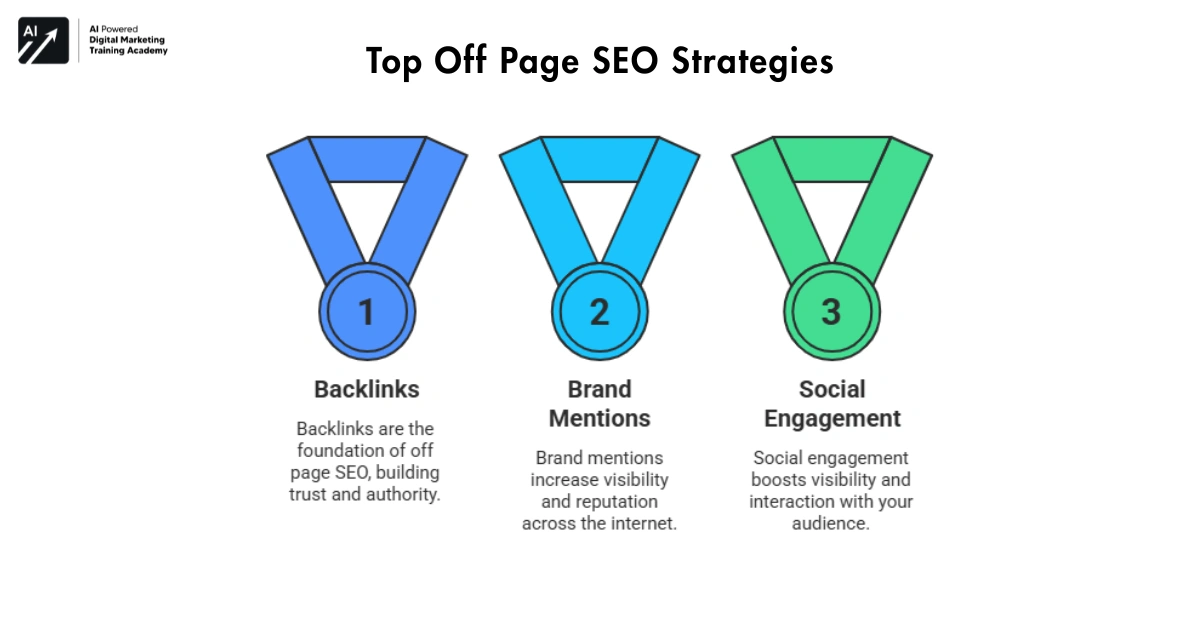
- Backlinks (link building)
- Brand mentions
- Social engagement
- Guest posting
- contacting popular people
Each signal tells Google one thing: Your website is valuable
Why Off Page SEO is Important
Content alone is not enough anymore. Thousands of websites may have similar content. So how does Google decide? It looks at authority.
Builds website authority
When other websites link to you, it acts like a vote. More trusted websites linking to you: Higher authority
Helps you compete with strong websites
- New websites struggle to rank.
- Not because content is bad.
- But because authority is low.
Off page SEO helps you:
- Compete with established domains
- Improve ranking strength
- Gain visibility
Brings real traffic, not just rankings
Backlinks also bring users. If your link is placed on a strong website: Users click and visit your site
This creates:
- Traffic
- Engagement
- Brand awareness
Step 1: Understanding Backlinks Clearly
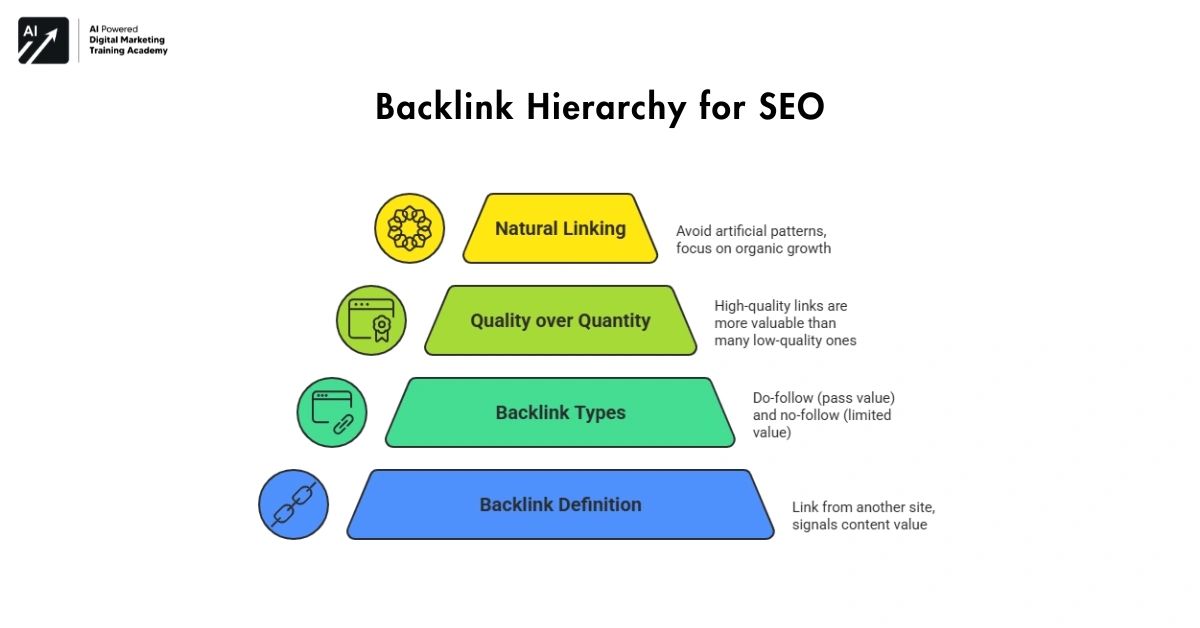
Backlinks are the core of off page SEO. However, most beginners do not understand them well.
What is a backlink?
A link to your website from another website which It acts as a signal: “This content is useful and worth sharing”
Types of backlinks
There are two types:
- Do-follow links → pass ranking value
- No-follow links → do not pass full value but still useful
Both types matter for a natural profile.
Quality vs quantity (critical mistake)
Many beginners focus on numbers and this is wrong. 10 high-quality backlinks
are better than 100 low-quality backlinks
Focus on:
- Relevant websites
- Trusted domains
- Natural linking patterns
Step 2: Link Building Strategies That Actually Work
Link building is not about shortcuts. It is about creating value and earning links.
Guest posting strategy
Guest posting means writing for other websites.
Benefits:
- Get backlinks
- Reach new audience
- Build authority
But avoid spammy sites where quality matters.
Broken link building
This is a smart strategy.
Steps:
- Find broken links on websites
- Suggest your content as replacement
- You solve a problem the you earn a link.
Skyscraper technique
Simple idea:
- Find content that already performs well
- Create better content
- Reach out to link sources
Better content attracts more links.
Step 3: Anchor Text Optimization
The clickable part of link is known as anchor text. Students generally ignore the anchor text.
Types of anchor text
- Exact match (keyword-based)
- Branded (your website name)
- Generic (click here)
- Partial match
Why anchor text matters
Google uses anchor text to understand your page topic.
Wrong usage can:
- Reduce ranking
- Look unnatural
Best practices
Be natural and do not over optimize and mix types balance is what counts.
Step 4: Brand Mentions and Trust Signals
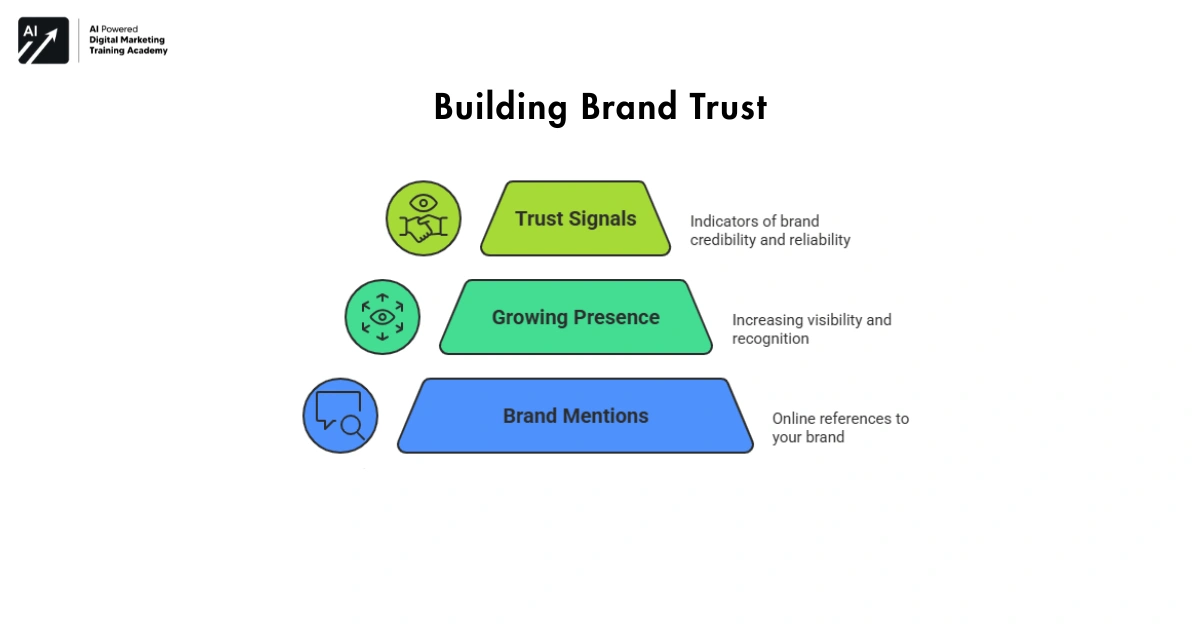
Google looks beyond links. It looks at brand presence.
What are brand mentions?
When your brand is mentioned online.
Even without a link.
Examples:
- Blogs
- Forums
- News articles
Why they matter
Mentions show:
- People talk about your brand
- Your presence is growing
This builds trust signals.
Step 5: Social Signals and Content Promotion
Posting the content is not enough you must promote it.
Role of social media in SEO
Social media helps:
- Increase visibility
- Drive traffic
- Attract backlinks
Promotion strategy
After publishing:
- Share on social platforms
- Engage with audience
- Repurpose content
Visibility creates opportunities.
Step 6: Local SEO and Citations
This is important if your business is local.
What are Sources?
Mentions of your business details:
- Name
- Address
- Phone number
Why citations matter
- Help local rankings
- Build trust
- Verify your business
Consistency is important.
Step 7: Influencer Outreach and Relationship Building
SEO is not only technical. It is also about connections.
Why outreach is important
You cannot wait for links.
You must:
- Reach out
- Build relationships
- Share your content
How to do outreach correctly
- Personalize your message
- Offer value
- Avoid generic emails
Spam kills opportunities.
Step 8: Page Authority and Domain Authority
Authority is built over time not instantly.
What affects authority
- Quality backlinks
- Content strength
- Brand signals
How to improve authority
- Get links from trusted sites
- Publish useful content
- Stay consistent
Authority compounds slowly.
Advanced Off Page SEO Strategies
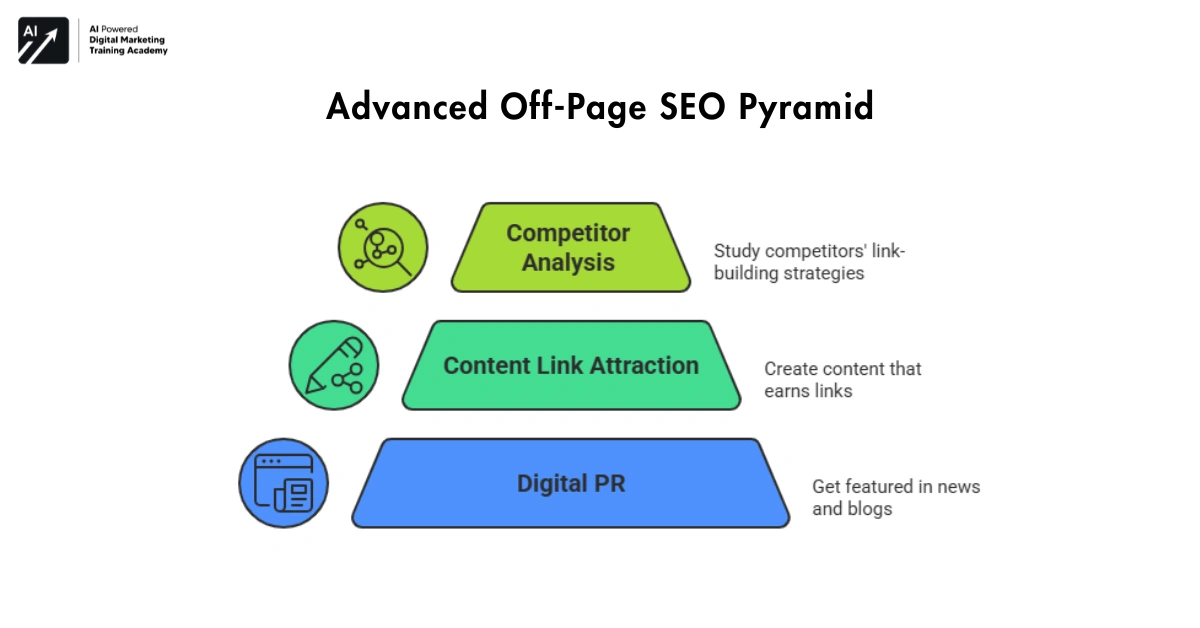
Basic methods bring slow growth. and advanced methods scale faster.
Digital PR strategy
Get featured in:
- News websites
- Online magazines
- Industry blogs
These links are powerful.
Content-based link attraction
Create content that naturally earns links:
- Case studies
- Research reports
- Data-driven posts
People link to useful information.
Competitor backlink analysis
Study competitors:
- Where they get links
- Which content attracts links
Then:
- Create better content
- Target same sources
Step 9: Search Intent Alignment in Off Page SEO
Even backlinks depend on intent.
Why intent matters here
People link to content that matches their needs.
If your content:
- Does not solve problems
- Does not add value
It will not attract links.
How to align content for links
Create content that:
- Provides thoughtfully and explicitly to questions with a clear understanding.
- Reveals new ideas or new ways of thinking.
- Is easy to reference
Link-worthy content gets shared.
Step 10: Content Distribution Strategy
Content without distribution fails.
Where to distribute content
- Social media
- Communities
- Forums
- Email lists
Why distribution matters
More visibility leads to:
- More backlinks
- More mentions
- More traffic
No visibility = no growth
Step 11: Trust Signals and E-E-A-T
Google values trust.
What builds trust
- Real author identity
- Accurate information
- Consistent branding
How to improve trust
- Avoid fake claims
- Use real examples
- Maintain transparency
Trust improves rankings.
Step 12: Off Page SEO Checklist
Before scaling, check basics.
Quick checklist
- Quality backlinks acquired
- Anchor text balanced
- Content promoted
- Brand mentions growing
- Social signals active
- Outreach done properly
Common Off Page SEO Mistakes
Mistakes can damage your website permanently.
Buying low-quality backlinks
Cheap links harm your site.
Over-optimizing anchor text
Too many exact keywords look unnatural.
Ignoring relevance
Irrelevant links have low value.
Step 13: How to Evaluate Backlink Quality (Critical Skill)
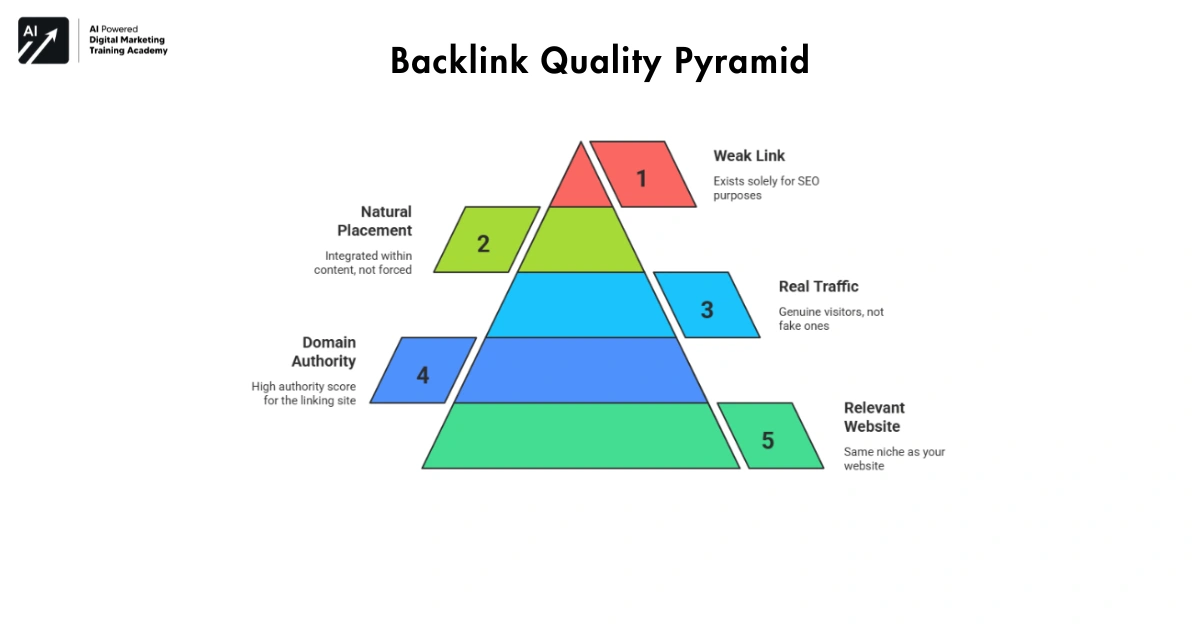
Most people build links and very few know how to judge them and that is a problem. Because bad links can harm your site.
What makes a backlink high quality?
Not all links are equal.
A strong backlink has:
- Relevant website (same niche)
- Good domain authority
- Real traffic (not fake sites)
- Natural placement inside content
If a link exists only for SEO: It is weak
Red flags to avoid
Stay away from links that have:
- Spammy websites
- Too many outgoing links
- Irrelevant content
- Paid link networks
These may give short-term results. But long-term damage is high.
Step 14: Link Velocity and Growth Pattern
Many beginners make this mistake. They build too many links too fast and that looks unnatural.
What is link velocity?
Link velocity means: How fast your website gains backlinks over time.
Why it matters
Google tracks patterns.
If your site suddenly gets:
- 100 links in a week
- Then nothing for months
It looks suspicious.
Best practice for safe growth
Keep growth natural:
- Build links gradually
- Stay consistent
- Focus on quality over speed
Slow growth builds strong authority.
Fast spikes create risk.
Step 15: Google Penalties and Link Risk Management
- This is where most people fail badly.
- They focus on building links.
- They ignore risks.
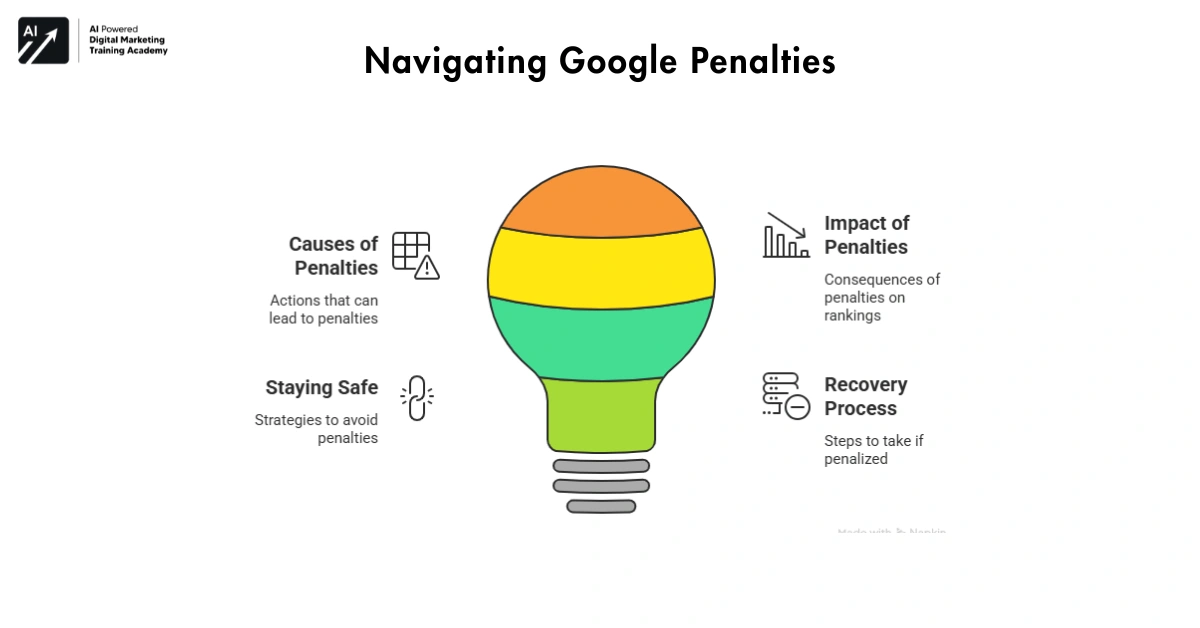
What causes penalties?
Google may penalize your site if you:
- Buy spam backlinks
- Use link farms
- Over-optimized anchor text
- Build unnatural patterns
Penalties reduce rankings sharply.
How to stay safe
Follow simple rules:
- Build links naturally
- Avoid shortcuts
- Focus on relevance
- Maintain diversity
SEO is not about tricks. It is about trust.
What to do if your site is affected
If rankings suddenly drop:
- Audit your backlinks
- Remove harmful links
- Use disavow tool carefully
Recovery takes time. Prevention is always better.
Conclusion
Off page SEO is not optional it is the foundation of your online reputation. You can build a perfect website with great content and design, but without signals from outside your site, search engines have no strong reason to trust or rank you. That is why, without off page SEO, growth remains slow, rankings stay low, and even high-quality content struggles to get visibility.
On the other hand, when you actively work on off page SEO, everything changes. Your authority starts to grow as other websites mention and link to you. Your traffic increases because more people discover your content beyond your own platform. Most importantly, trust builds not just with search engines, but with real users who see your presence across multiple channels.
The reality is simple: most websites stop at content creation, thinking that is enough. Very few go the extra step to build authority outside their website. And that gap is what creates winners and losers in search rankings. In the long run, it is not just about what you publish, but about who talks about you, who links to you, and how the internet perceives your brand.