
AI is transforming marketing in all industries. Today, brands need ideas quickly, smarter decisions, and better results. That has led many to want to learn AI marketing. But many beginners believe that using AI tools alone makes them experts. That is not true. Tools are simple, but marketing thinking takes time.
Many learners feel lost at the start. They see many online tools, videos, and classes. So, they feel dizzy and do not know where to start. Some learners think they need coding skills. Others think they need pricey software. But neither is needed. What is needed is people, problems, and goals.
If you are trying to understand how to become an AI marketer, this guide is for you. It describes the whole path in easy steps. Each step adds slowly to the previous one. That makes learning clear and calm, not scary. You will understand how AI helps research, content, SEO, social, ads, analytics, and automation.
This guide uses simple words and short sentences. It avoids complex ideas and confusing terms. The focus is on real skills you can practice daily. You will not just learn what AI tools do. You are learning how marketers think and decide. By the end, you will have a clear roadmap you can follow with confidence. Now, let us begin with the first step.
Step 1: Master Prompt Engineering for AI Marketing
 Prompt engineering is the first and foremost skill in AI marketing. A prompt is an instruction or a message that you give to an AI tool. The tool does not think of itself. It thinks only what you give it to think. That is why the better your prompt, the better your output.
When the prompt is weak, AI gives a nonsensical or useless answer. When the prompt is detailed and precise, AI gives useful and correct answers. That is why prompt engineering saves time and effort. And that is why marketers receive better ideas, faster content, better outputs without any hassle.
Prompt engineering is not about penning down long sentences. Prompt engineering is about penning down the right instructions. With more practice, you can master the art of guiding AI as your teammate, for content writing, research, ads, and even data analysis tasks. And the best part of all, prompt skills are not tool dependent.




When you learn prompt engineering at the very beginning, you put your foundation right. Once your foundation is right, learning and applying every other AI marketing skill becomes easy.
Why Prompt Engineering Matters
AI tools perform in patterns and instructions. They do not interpret feelings or intentions like humans do. Hence vague instructions give vague results. Clear prompts save errors and increase accuracy.
Prompt engineering also improves productivity. Instead of rewriting content again and again, good prompts deliver better drafts in one try. This helps marketers focus on strategy instead of editing. Over time, strong prompts lead to consistent and reliable output.
What You Should Learn
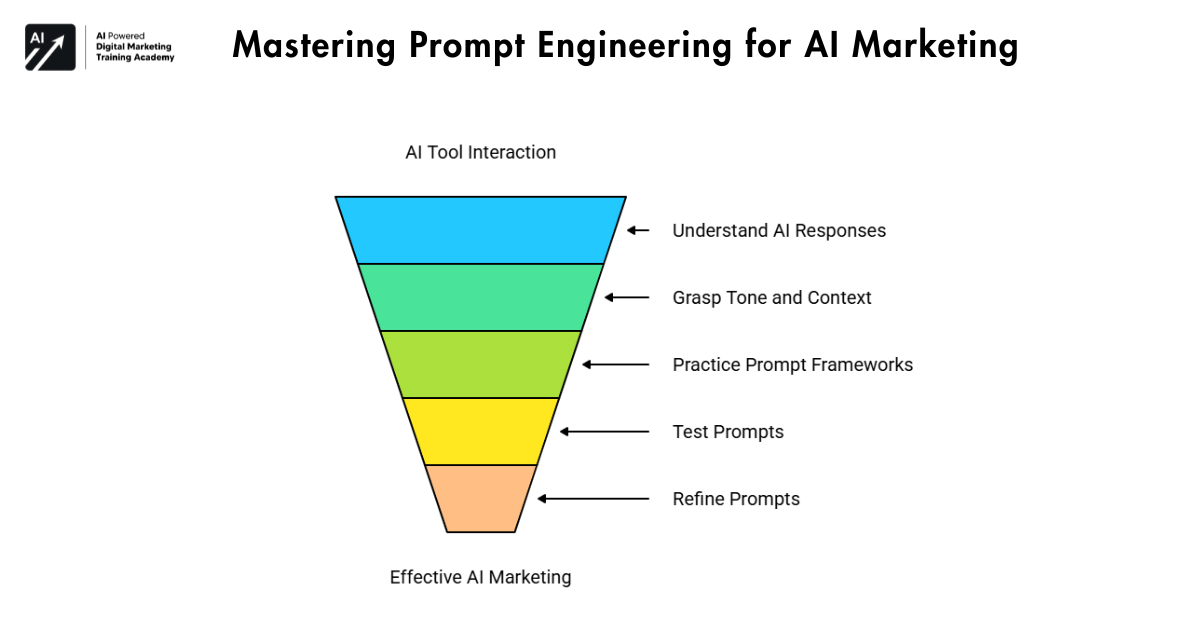
First, learn how AI responds to instructions. Next, understand how tone, format, and context affect results. Then, practice simple prompt frameworks used for marketing tasks. Also, test prompts for content, ads, and research. Finally, learn how to improve prompts by refining them stepwise.
Tools You Can Use
You can learn about prompt engineering with ChatGPT, Claude, Gemini, and more. We can quickly try and learn about it with daily practice.
Step 2: Master AI for Market Research
The basic structure of a marketing plan depends on market research which functions as its essential foundation. The entire process becomes disorganized when you choose to omit the first section of work because everything remains unbound. AI transforms this situation into a new challenge for organizations. The system improves flow by decreasing work effort for users who need to complete their tasks. People will find it easier to make decisions because the system provides more accurate details.
You have to understand your audience before you can create any content or advertising materials. You must discover their bothersome elements and their desired outcomes and their upcoming destination. AI performs exceptionally well in that particular area. The system gathers information from all available sources which include trends and reviews and forums and all other sources. The system analyzes social media posts to reveal what people show interest in.
You have transitioned from speculation to actual knowledge about your situation. The organization uses actual data to achieve better time efficiency and financial savings. Your marketing strategy will perform better because it becomes more precise and practical. Researching the right elements leads to all additional elements of your project achieving successful outcomes. Most of the time. The process still has potential problems, but it functions better than operating without any plans.
Learning AI-powered research early helps you build confidence. It trains you to think before acting. This habit separates smart marketers from beginners.
Why Research Comes First
Research shows you the truth about the market. It tells you what people want and what they avoid. Without research, even good ideas may fail.
AI speeds up this process. It gathers insights in minutes. You can test ideas quickly and improve them early.
How AI Helps in Research
AI analyzes competitors and highlights its gaps. It studies customer feedback and common complaints. It also identifies rising trends. This helps you plan content and offers with clarity.
Helpful Research Tools
Tool like Perplexity collect and summarize information in simple language. They make research easy, even for beginners.
Step 3: Learn AI for Organic Growth (SEO & AEO)
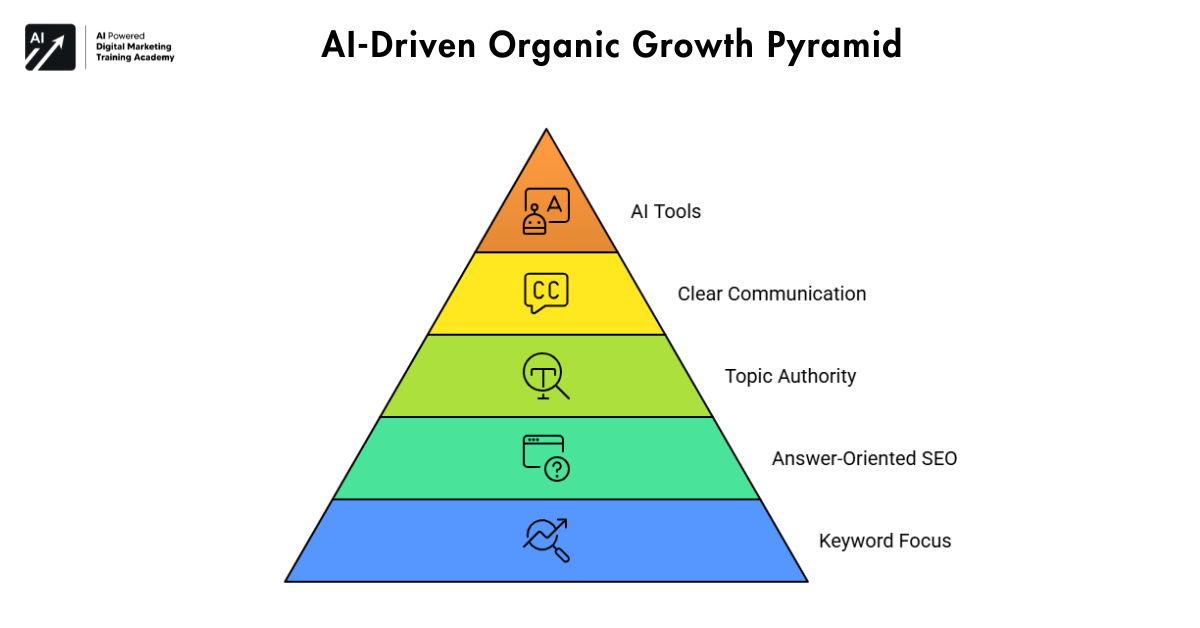 Organic growth helps people find your content without paid ads. In the past, SEO focused only on keywords. Today, it focuses on giving clear and helpful answers. AI plays a big role in this change. It helps marketers understand what people search for and how search engines rank content.
AI helps you plan content that matches real questions. It also helps structure articles, so they are easy to read. Content performs better in both search engines and AI-powered answer tools. Organic growth takes time, but it brings long-term results.
If you use AI for organic growth, you stop guessing. Instead, you follow data and intent. This leads to steady traffic and stronger trust. Learning this step helps patience and strategy, which are key marketing skills.
Why SEO Is About Answers Now
People search because they want solutions. Search engines reward content that solves problems clearly. AI tools also highlight content that gives direct answers.
Stuffing keywords no longer works. Clear language and simple explanations help structure matter more than tricks.
What You Need to Focus On
Focus on topic authority instead of single keywords. Cover a topic fully. Use headings to guide readers. Answer common questions in simple words.
Also, keep sentences short and clear. This helps both readers and search engines understand your content better.
SEO Tools That Help
Tools like SEMrush and Neuron Writer help plan and improve content. They guide the structure while keeping the writing natural.
Step 4: Master AI for Social Media Marketing
Social media marketing is not about posting. It is about building trust and talking to people. AI helps make social media work easily and smoothly. Instead of doing everything alone, AI helps you plan and improve your posts.
AI checks likes, comments and shares. It shows what people like the most. If a post does not do well, AI helps you fix it fast. AI also helps change your message for each platform. This makes your posts feel friendly and real.
When you use AI, you save time and energy. You feel less stress. You can spend more time thinking about ideas and plans. Over time, this helps your page grow and build strong bonds with your audience.
How AI Helps Social Media
AI helps write captions and suggest content ideas. It also helps choose hashtags. AI studies how people react to your posts. This helps you do better next time.
AI can reply to comments and messages faster. Fast replies help people trust you. AI also tells you the best time to post. This helps more people see your content.
Building Systems with AI
AI helps plan what to post and when to post. It can schedule posts ahead of time. It also checks how your posts are doing. These systems keep your account neat and active. They help you stay regular with posting, which is important for growth.
Useful Tools
Tools like Pictory AI and InVideo help make videos easily. They are simple and good for beginners. AI does not replace your ideas. It helps your ideas grow better and faster.
Step 5: Master AI for Landing Pages and Conversions
Landing pages play a very important role in marketing. They turn visitors into leads. Many people look only at traffic, but traffic alone does not bring results. Conversion is what truly matters. AI helps improve landing pages by making them clear, simple, and focused.
AI studies how users behave on a page. It shows where people stop reading and where they leave. Because of this, marketers can fix weak sections quickly. AI also helps write headlines, buttons, and messages that feel natural and helpful.
When landing pages improve, results improve. More people sign up, click, or buy. This step helps you think like a marketer who cares about results, not just someone who makes content.
Why Conversion Matters
Visitors decide fast. If a page feels confusing, they leave. Clear messages guide visitors step by step. AI helps test different versions of headlines and layouts. This helps find what works best without guessing.
What You Should Learn
Learn basic page structure and flow. Use AI to write simple headlines and calls to action. Test small changes and study results. Over time, this builds strong conversion skills.
Tools You Can Use
Tools like Canva AI and Lovable.dev help build landing pages without coding. They are easy and effective.
Step 6: Master AI for Image & Video Ads
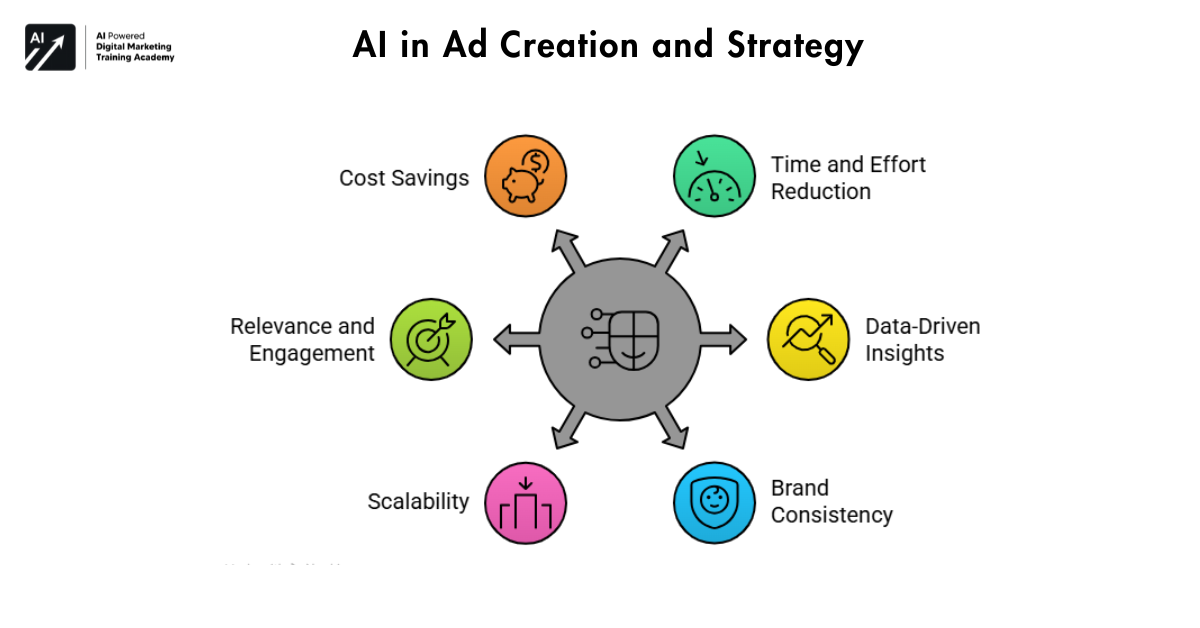 Ads help brands reach people fast. However, creating ads manually takes time and effort. AI makes this process easier and faster. It helps marketers create many ad ideas, visuals, and videos without stress. Because of this, marketers can test more and learn faster.
AI helps study what type of ads work best. It looks at colors, text, and formats. Then, it suggests better options. This removes guesswork and saves money. AI also helps keep ads consistent with brand style.
When you use AI for ads, you can scale campaigns easily. You can create many versions and test them quickly. Over time, this improves performance and confidence.
AI in Ad Strategy
AI helps plan ad campaigns based on goals. It suggests ideas that match audience needs. It also helps decide which formats work best. Because of this, ads feel more relevant and engaging.
Creating Ads with AI
AI tools help create images and videos in minutes. You can test many versions at once. This improves results and reduces cost. With regular testing, ads become stronger over time.
Ad Tools
Tools like Kling AI and Freepik AI help create visuals easily. They are beginner-friendly and powerful.
Step 7: Learn AI for Marketing Analytics
Marketing analytics helps you see what is working and not. Without it, marketing feels like thinking. AI makes this simple by changing data into easy information.
AI collects data from many platforms. It shows how many people click, watch, and buy. This helps you know which campaigns are doing well and improving.
Learning analytics helps you make quick decisions. You stop guessing and start using facts. Over time, this helps you grow and get better results.
Why Analytics Matters
Analytics show real performance. They reveal strengths and weaknesses. Without analytics, mistakes repeat. AI simplifies numbers into clear messages. Because of this, beginners understand data without stress.
What AI Can Do
AI tracks performance in real time. It highlights trends and patterns. It also predicts what actions may improve results. This helps marketers focus on what matters most.
Analytics Tools
Tools like ChatGPT and Julius AI explain reports in simple language. They turn data into easy insights.
Step 8: Master AI Agents & Automation
Automate your marketing work with AI agents and automation. No more repeating the same tasks again and again. Let AI agents automate your work. Focus on planning, creativity, and strategy.
AI agents can collect data, publish content, send reports, or even improve your workflow. That means faster and more organized work. Automation lowers human error and creates a consistent workflow.
Learning automation changes your work. You go from doing work to managing systems. Over time, that speeds and powers your marketing. This step is key to long-term growth.
What Are AI Agents
AI agents are tools that automate tasks without supervision. They can follow rules and workflows set up by marketers. They can do daily, weekly, or real-time tasks. That means consistent and predictable work.
Why Automation Is Important
Automation saves time and energy. It reduces mistakes and delays. That means marketers can focus on important work. Automation also helps scale up marketing work without hiring additional staff.
Tools for Agents
Tools like Zapier, Make, and N8N build workflows without code. They are flexible and easy.
Step 9: Stay Updated with AI Marketing Trends
 AI marketing changes very fast. New tools, features, and updates appear often. Marketers must keep learning and stay updated.
When you follow trends, you understand what is working now. You also see what is slowly becoming outdated. This helps you avoid wasting time on tools or methods that no longer give results. AI rewards those who adapt early.
Learning trends does not mean chasing every new tool. Instead, it means understanding ideas and testing them slowly. This habit keeps your skills fresh and your systems strong.
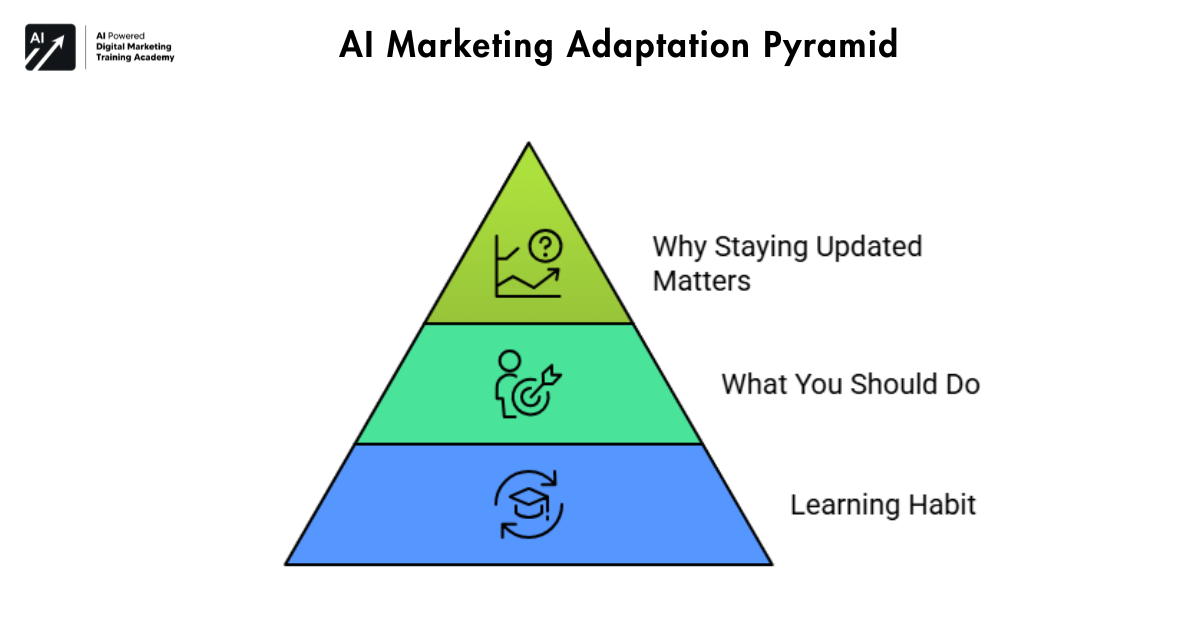
Why Staying Updated Matters
AI tools improve quickly. Old workflows stop working. If you do not update skills, results drop. Staying updated with trends and skills development. This keeps your marketing effective and competitive.
What You Should Do
Test new tools carefully. Learn updates in small steps. Build flexible systems that can change easily. This approach reduces risk and improves long-term growth.
Learning Habit
Spend time weekly to learn AI updates. Read, test, and reflect. This habit builds confidence and consistency.
Step 10: Practice With Real-World AI Marketing Projects
Learning without practice does not create skill. Real growth happens when you apply what you learn. This step focuses on execution. It turns knowledge into confidence and experience. Many people stop after learning tools, but strong marketers go further.
Working on real projects helps you understand mistakes. It shows what works and what does not. AI marketing becomes clearer when you see results with your own eyes. Because of this, practice is the most important step in the journey.
If you want to truly understand how to become an AI marketer, you must work on real problems. Projects teach you more than videos or courses ever can. They help you think independently and solve challenges creatively.
Why Execution Is Key
Execution builds confidence. When you work on projects, fear reduces. You start trusting your skills. AI tools behave differently in real situations. Practice helps you adjust and improve faster.
Projects You Should Build
Build SEO strategies, social media systems, landing pages, and ad campaigns. Use AI to support each task. These projects show your real ability and thinking process.
Capstone Project
A full capstone project combines research, content, ads, analytics, and automation. It proves your skill clearly.
Who Should Use This Roadmap
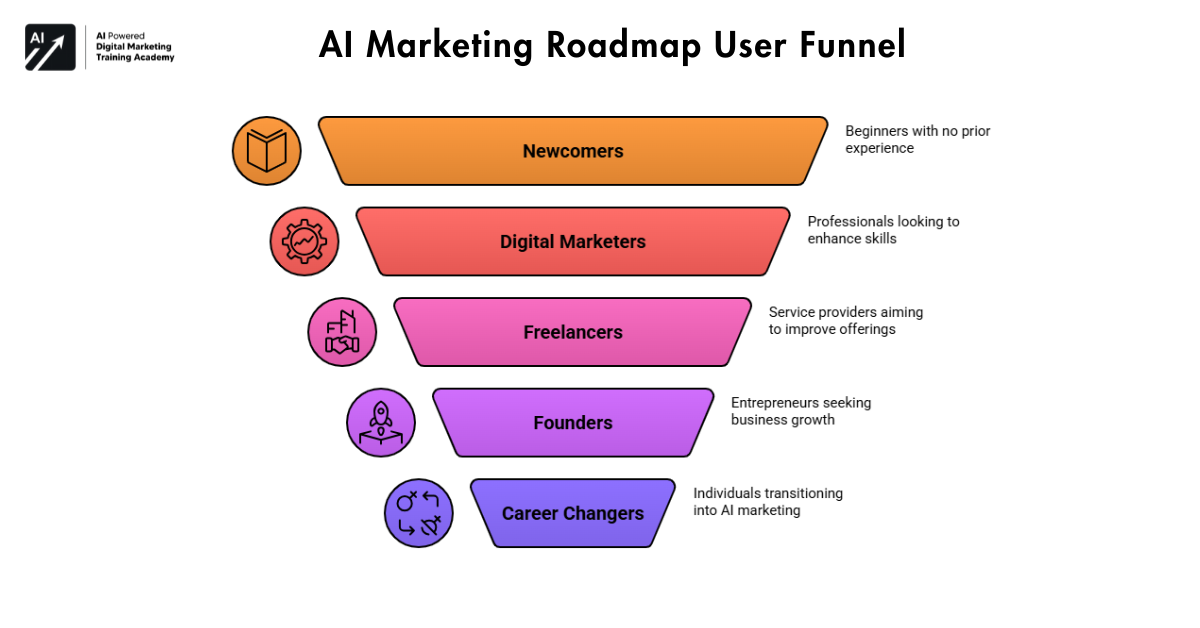 Are you ready to learn how to be a real marketer? Then this guide is for you. If you are new, no worries at all. It is super easy to follow step by step. The phases are slowly paced and clear.
Digital marketers use the roadmap to further their skill sets. AI helps them be more productive and efficient. Freelancers use the roadmap to offer better services and compete in the market. Founders use the roadmap to understand marketing systems and scale their businesses.
Career changers can also benefit from the roadmap. It offers them clear direction and actionable skills. Anyone who’s learning how to become an AI marketer can use this roadmap as a long-term strategy, not a quick hack.
Final thought
Marketers are not going to be replaced by AI. Marketers who know systems and how to think will be ahead of the pack. AI is just a tool. Strategy, clarity, execution still matter the most. And when you add them to AI, your results get better.
Learning how to become an AI marketer is not about speed. It is about consistency. Consistent small practice over a long period of time builds the discipline over time. And when you focus on learning, testing, and iterating, you will not rush. Growth comes from small steps.
If you want to master how to become an AI marketer, it’s time to begin today. And do it patiently. Build systems. Practice. Growth beats perfection.