

When you build a site, the most excellent decision you ever made was choosing the ideal hosting plan If your website is built on WordPress the home of over 40% of the web then choosing WordPress Hosting would be the ideal choice
It’s platform-optimized for better speed, better security, and easier management
But there are not that much option for hosting, how to choose the best? In this tutorial, we are going to explain what is WordPress Hosting
why you need it, what are its types, its advantages and disadvantages, and how you can choose the best host for your requirement
What Is WordPress Hosting Server?
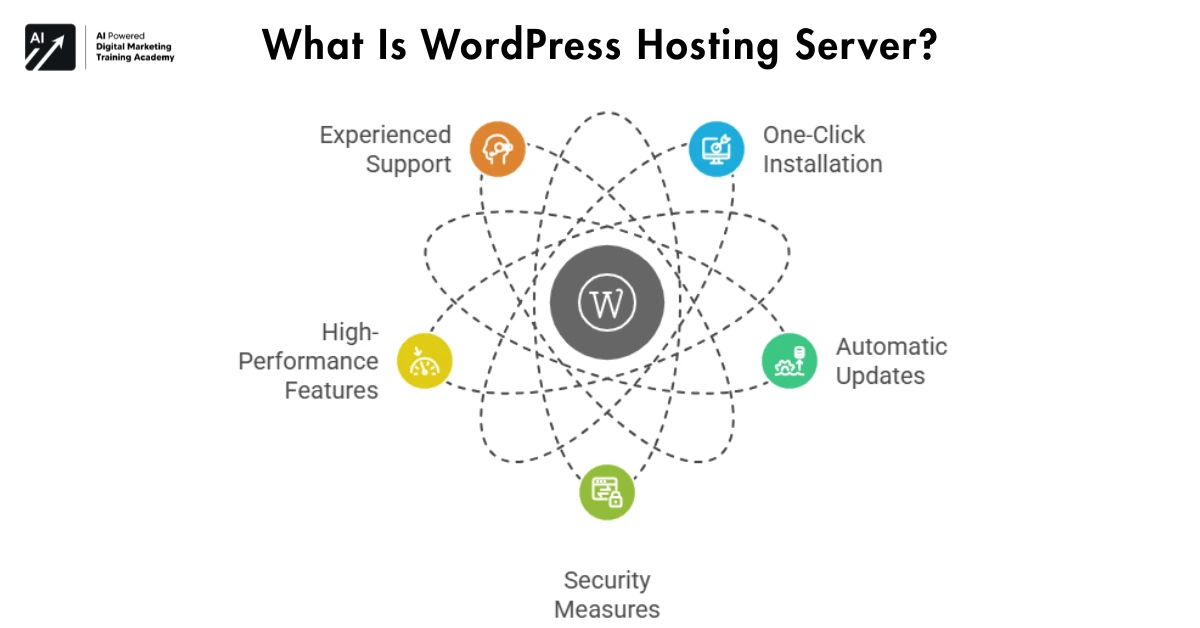
WordPress Hosting is hosting optimized and tuned specifically for WordPress sites
Yes, you theoretically can host WordPress on any type of hosting (e.g., shared hosting or VPS hosting),




but WordPress Hosting is here to provide you with improved performance, security, and ease of use of WordPress websites.
These advantages are typically packaged with such hosting
- One-click WordPress installation
- Automatic software updates
- Security measures optimized for WordPress
- Such high-performance features like caching and CDN
- Experienced support experts familiar with WordPress
WordPress Hosting Server Types
There are various types of WordPress Hosting, and each serves a different purpose and cost. That’s the summary
Shared WordPress Hosting
Shared hosting is ideal for beginners or small-traffic sites. Your site has a shared server with other sites and contributes to performance during traffic spikes
Pros
- Cost-effective
- Easy to install
- WordPress-compatible
Cons
- No scalability
- Gradients with heavy traffic
Managed WordPress Server Hosting
This is premium hosting where the host takes care of the technical work on your behalf updates, backups, and performance tuning
Pros
- High-end performance
- Backup daily
- Better security and automatic upgrades
- Professional support
Cons
- More expensive than shared hosting
- Less control of the server
VPS WordPress Server Hosting
VPS (Virtual Private Server) hosting offers dedicated server space within a shared hosting platform. It is a good compromise between tiny sites and high-traffic sites
Pros
- Improved performance
- Improved scalability
- Root access included
Disadvantages
- Requires technical know-how
- More costly than shared hosting
Dedicated WordPress Server Hosting
Rents you a whole server by yourself for your website. Ideal for business, high-traffic websites
Pros
- Full control
- Optimal performance
- High level of security
Cons
- Not affordable
- Involves professional server management
Cloud WordPress Server Hosting
Cloud-based on a cluster of servers, cloud hosting is more scalable and accessible.
Dynamically allocates resources according to usage.
Pros
- Flexibility in scalability
- High availability
- Pay-as-you-go pricing
Cons
- Levels of complexity varying
- Needs technical knowledge
Pros of WordPress Server Hosting
A WordPress-specific host service has some advantages
- Optimized Speed – WordPress-optimized performance servers
- Increased Security – Firewalls and malware scans specifically for WordPress threats
- Free Backups – Automatic daily backups of your content or a week or automatic backups
- WordPress Expert Support – WordPress experts on the platform at your disposal
- One-Click Tools – Stage, clone, or deploy sites in one click without code
Selecting the Best WordPress Host Company
In selecting a WordPress host, seek the following
- Performance Indicators: Uptime warranties (99.9%+) and quick loads
- Support: WordPress-friendly technical support 24/7 is a bare minimum
- Security: Firewalls, malware scanning, and SSL are essential
- Ease of Use: Simple dashboards and one-click installations are necessary
- Scalability: Will the hosting handle your traffic
- Price: Review renewal fees, bandwidth, and surprise fees
Best WordPress Hosting Services are
- Hostinger
- Bluehost
- SiteGround
- Kinsta
- WP Engine
Installing WordPress Hosting
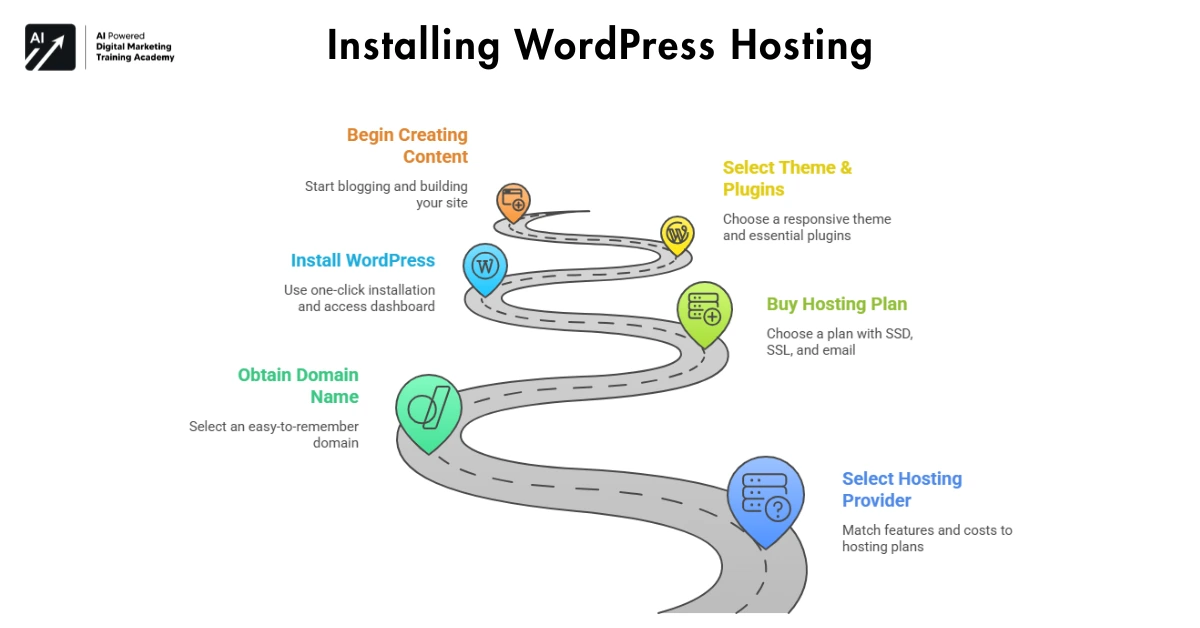
Install WordPress Hosting in minutes with the following steps
Step 1: Select Your Hosting Provider
Match feature and cost requirements to hosting plans
Step 2: Obtain a Domain Name
Select an easy-to-spell, easy-to-remember domain. The majority of hosts provide a free domain name with the hosting
Step 3: Buy the Hosting Plan
Select a plan that fits your requirements. Select plans that have SSD storage, SSL, and email
Step 4: Install WordPress
All the hosts offer one-click WordPress installation. At the time of installation, use yourdomain.com/wp-admin to access your dashboard
Step 5: Select a Theme & Install Plugins
Select a responsive theme and mandatory plugins such as Yoast SEO, Elementor, and WPForms
Step 6: Begin Creating Content
You are now all set to blog, create pages, and construct your site
When to Upgrade Your Hosting Plan?
When your site is suffering from
- Slower page loading
- More frequent downtime
Final Thoughts
WordPress Hosting isn’t an engineering decision its a strategic one that decides the performance, SEO, and user experience of your website.
Shared hosting is good enough for newbies, newbie bloggers, and startups, but when you grow,
think about scaling to managed or VPS WordPress hosting for performance and security requirements.
Now that you know the varieties, benefits, and worth of WordPress Hosting you can now make an informed decision on what will happen to your site