


If you want to grow your business, you can’t depend on guesswork anymore. You need data. You need insight. Most of all, you need to be tracking the right metrics.
Almost every business is advertising online, posting updates and spending money in a bid to promote themselves. Yet very few are seeing the kind of return they’d like. Often this is because the focus is on the wrong place.
Many are fixated on increasing likes, views and followers. While a high number of likes, views and followers can look impressive, having the right performance marketing key performance indicators (KPIs) in place will ensure that the brand is delivering on sales and growth.
In this blog, we will cover the performance marketing metrics that you should not miss tracking and also share some simple and actionable ways to improve them.
Why Performance Marketing Metrics Matter
 Before we dive in for each one, we need to talk about why these metrics actually matter.
Not all numbers are useful. Some numbers serve to beautify the text and do not provide real information to help you make the right decision.
Metrics in performance marketing are results driven and hold value as a reflection of your business’ achievements.




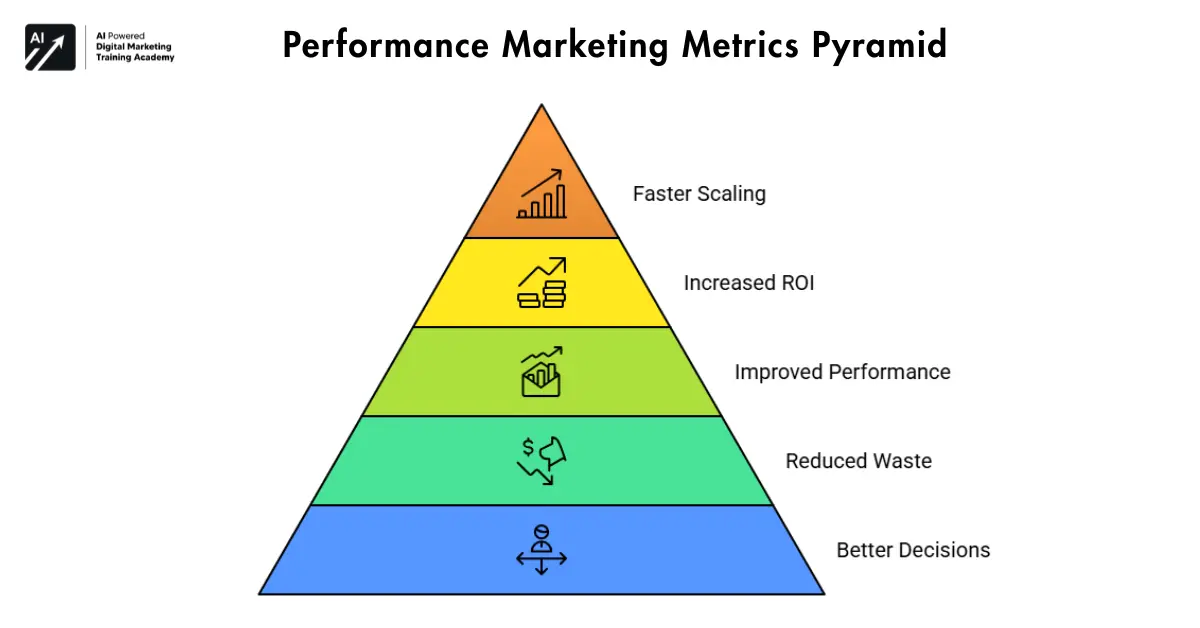
Here is why these metrics are important:
- They help you make better decisions
- They reduce waste of money
- They improve campaign performance
- They increase return on investment
- They help you scale your business faster
This all comes down to data. If you could determine which ad was actually causing conversions, versus which were just filler ads, this information would allow you to easily reallocate dollars to the winning ad and dial down spending to the less effective ones.
Same with your landing pages. If you could determine which pages were converting, and which pages were not, you could easily decide to make improvements to the pages that weren’t performing.
Measure Performance Marketing Metrics and Stop Guessing, Start Growing. Measuring performance marketing metrics helps businesses to better assess their marketing campaigns and also to understand their audience and customers’ behaviors in an effective way.
CTR (Click-Through Rate) – Your First Attention Signal
CTR stands for Click Through Rate. It shows how many people click your ad.
For example, if 100 people view your ad and 8 individuals click the ad, your CTR is 8%.
This is the very beginning of your marketing funnel. If they don’t click, they don’t come to your site.
Why CTR Matters
CTR tells you if your ad is attractive or not.
- A high CTR means your ad grabs attention
- A low CTR means people are ignoring your ad
- It shows how good your headline and creative are
- It reflects how well you are targeting your audience
So, CTR (Click-Through Rate) is one of the core performance marketing metrics.
How to Improve CTR
You can improve CTR by making small but smart changes:
- Write strong and clear headlines
- Use emotional or curiosity-based hooks
- Add high-quality images or videos
- Use clear call-to-action buttons like “Buy Now” or “Learn More”
- Test multiple versions of your ads (A/B testing)
- Target the right audience based on interests and behavior
Your experiments will never be over. You’ll always need to test and see what’s working and what’s not.
For example, you may find that switching only a few words of your ad copy or even altering some aspect of your ad’s design can drastically increase your CTR.
Conversion Rate – Turning Visitors into Customers
Conversion rate is a measurement of the number of users who have taken an action as a result of clicking on your ad.
This action can be:
- Buying a product
- Signing up for a service
- Filling out a form
- Downloading a resource
The conversion rate is the ratio of conversions to the number of times your website is visited. For example, if 100 people visit your website and 5 buy something the conversion rate is 5%.
Why Conversion Rate Matters
Getting traffic is not enough. You need results.
- High traffic with low conversion means wasted effort
- Good conversion rate means your message is clear
- It shows how effective your landing page is
- It directly affects your revenue
That’s why conversion rate is a key performance marketing metric.
How to Improve Conversion Rate
Simple ways to improve your conversion rate:
- Keep your landing page clean and simple
- Clearly explain your offer and benefits
- Use strong and visible call-to-action buttons
- Add trust signals like reviews and testimonials
- Reduce loading time of your website
- Make the process easy and fast
- Avoid too many steps in the user journey
A simple one: It’s also important to be user centric. A good user experience is an incentive to get involved in your project.
ROAS (Return on Ad Spend) – Measuring Profitability
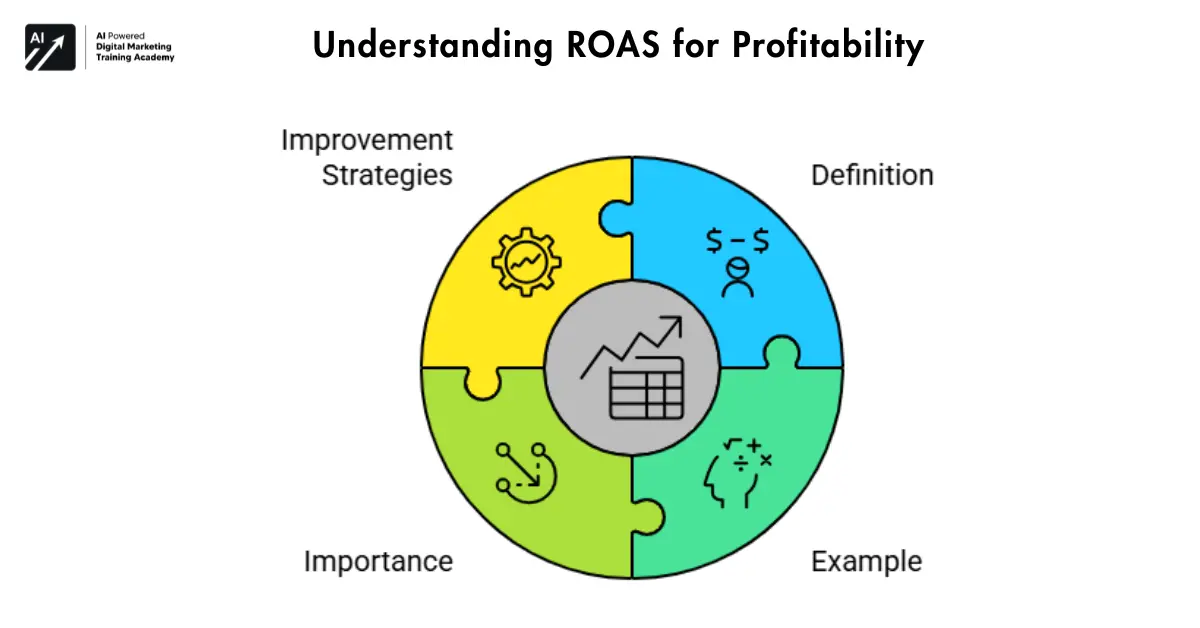 ROAS shows the revenue that is generated by every rupee or dollar that is being spent on ads.
For example:
If you spend ₹1,000 and earn ₹4,000, your ROAS is 4.
Why ROAS Matters
ROAS helps you understand if your campaigns are profitable.
- High ROAS means your ads are generating good returns
- Low ROAS means you are losing money
- It helps you decide where to invest more
- It shows the real value of your campaigns
This makes ROAS one of the most critical performance marketing metrics.
How to Improve ROAS
To increase your ROAS, focus on these steps:
- Identify and scale high-performing ads
- Stop or fix low-performing campaigns
- Use better creatives and messaging
- Improve your targeting strategy
- Optimize your landing pages
- Retarget people who showed interest
Remember to always use data in your decision-making and avoid assumptions.
CPL (Cost Per Lead) – Managing Your Budget
CPL is the amount of money you spend to get one lead.
A lead can be:
- A person filling a contact form
- A sign up for your service
- A potential customer inquiry
If you are paying ₹2000 for 20 leads, the Cost Per Lead (CPL) will be ₹100.
Why CPL Matters
CPL helps you understand how efficiently you are spending your money.
- High CPL means expensive leads
- Low CPL means cost-effective campaigns
- It helps you control your marketing budget
- It shows how scalable your campaigns are
That is why CPL is a key part of performance marketing metrics.
How to Improve CPL
You can reduce CPL by:
- Improving audience targeting
- Creating better ad creatives
- Using content marketing for organic leads
- Running retargeting campaigns
- Partnering with other brands or platforms
- Testing different ad formats
No. Don’t just shop for low prices. You need to consider lead quality as well.
Churn Rate – The Hidden Growth Killer
Churn rate is the percentage of customers who cancel their subscription or discontinue their use of your product or service over time.
So, for instance if you have 100 customers and 10 leave, your churn rate would be 10%.
Why Churn Rate Matters
They only focus on bringing in new customers. And forgetting about keeping them.
- High churn means customers are not satisfied
- It increases your overall marketing cost
- It reduces your long-term profit
- It shows problems in your product or service
That is why churn rate is one of the most ignored performance marketing metrics.
How to Reduce Churn Rate
Here are some ways to reduce churn:
- Improve customer onboarding experience
- Provide quick and helpful support
- Collect customer feedback regularly
- Fix issues and update your product
- Build strong relationships with customers
- Offer loyalty programs or incentives
Remember, keeping existing customers is easier and cheaper than finding new ones.
How These Metrics Work Together
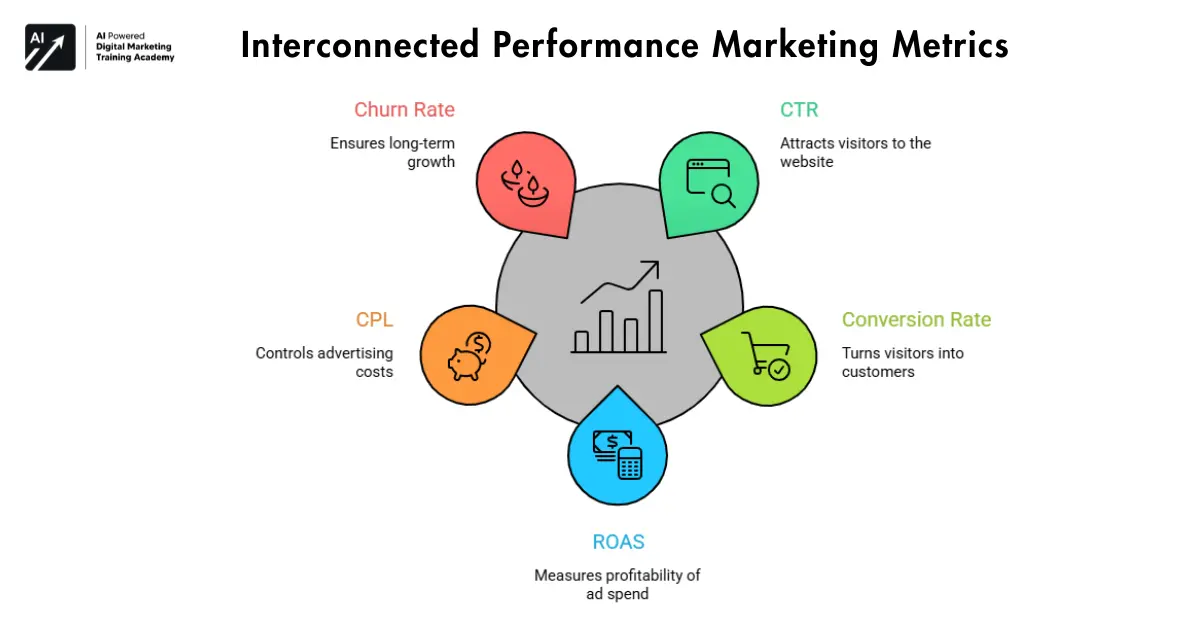 All these metrics are connected. They form a complete system.
- CTR brings people to your website
- Conversion rate turns visitors into customers
- ROAS shows your profit
- CPL controls your cost
- Churn rate ensures long-term growth
If one part is weak, your overall performance will suffer.
Common Mistakes Marketers Make While Tracking Metrics
Even experienced marketers make mistakes.
Some common ones:
- Focusing only on clicks and ignoring conversions
- Not testing ads regularly
- Targeting the wrong audience
- Ignoring data and making random decisions
- Not tracking metrics consistently
- Focusing only on short-term results
To avoid marketing snafus, look at performance marketing through a business results view.
Tools to Track Performance Marketing Metrics
Tracking becomes easier with the right tools.
Here are some useful tools:
- Google Analytics to track website traffic and behavior
- Google Ads to monitor ad performance
- Meta Ads Manager for Facebook and Instagram campaigns
- CRM tools to track leads and conversions
- Heatmap tools to understand user behavior on your website
Used by marketing teams, these tools enable a different perspective on performance marketing metrics and therefore, better decision making.
How to Build a Data-Driven Marketing Strategy
 Relevance of data to the decision is key. Irrelevant performance data will have no impact on the decision-making process.
Follow these simple steps:
- Set clear goals (leads, sales, traffic)
- Track the right metrics
- Analyze your performance regularly
- Identify what is working and what is not
- Make small improvements
- Test new ideas
- Scale what works best
This will take some time to do but it will help to start to form a structure to a marketing system that is dynamic and robust.
Final Thought
Marketing is not about luck. Marketing is about numbers and the ability to change them over time. Do not get distracted by vanity metrics. Focus on what truly matters.
Measure marketing performance metrics and you’ll make better business decisions, eliminate waste and increase profit.
You create a system that allows your business to grow and thrive on a daily basis.