

Startups are exciting The concept of creating something new from the ground-up, solving a legitimate problem, and then scaling it up to be successful, seems like an ideal.
But for all the successful startups out there, many more never made it out of the early stages.
Why? Because they were ensnared in traps no one warned them were there
You’ve heard all the advice “fail fast”, “raise capital” and “pivot until it works” to name a few.
But the fact is there are Startup Red Flags that’ll silently murder your startup long before it even has a chance to gestate fully.
Let’s dig in to 7 of these deadly Startup Red Flags, complete with real examples so you can identify and prevent them early
Obsessing Over Funding Not Profit
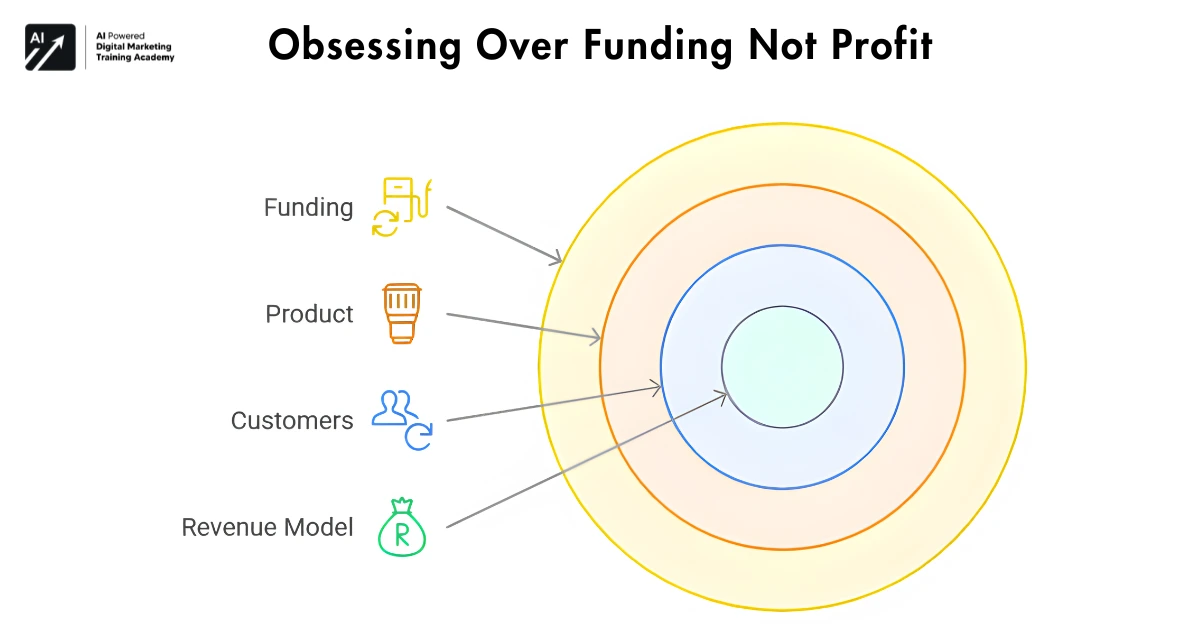




Funding ≠ Success
One of the greatest startup myths? Believing that raising capital is the end game. It’s not.
It’s just fuel. If your engine doesn’t run (you don’t have a real product with real users), all the fuel in the world will be of no use to you
Real Example
A founder built a mobile phone app, he raised ₹10 Cr within months of launch and only concentrated on growing numbers, and not on growing the money
They never learned how to make money. The company was burning through cash at breakneck speed, and with the money gone, the company had to shut down.
Lesson
You don’t need ₹25 Cr to start you just need customers. Prove out your revenue model before you start VC chasing.
Make money before spending money
The Part-Time Co-Founder Problem
A Startup Needs Full-Time Commitment
You’re doing 16 hours a day. Your co-founder watches football on weekends. That imbalance is more than annoying it’s a death sentence
Real Example
A 2 founder SaaS startup went flat in 6 months. One of the founders had quit his job and was all in.
The other was still working somewhere else and thought of it as a side hustle
Product decisions were postponed, marketing crumbled and investor meetings were missed. Eventually, they gave up.
Lesson
Startups require 100% from 100% of the team. If somebody can’t commit, they should not co-found
Changing Ideas Every Month
Too Much Pivot = No Direction
Pivoting is fine if it’s data-driven. But if you’re bouncing from idea to idea every month because nothing “feels right,” that’s not pivoting, that’s confused.
Real Example
A D2C startup which had begun with a line of skin care Two months after that, they switched to fitness supplements
Three months later pet care Each switch meant new stuff, new branding, new logistics. But zero focus
Customers were confused. The business never took off
Lesson
Have conviction. Hone your idea, don’t reinvent it every week.
The issue is not always the market it might be your impatience
Building Before Validating
Code Means Nothing Without Users
Founders tend to fall in love with building. Code, features, dashboards it feels productive.
But as construction without verification, it is simply speculation
Real Example
Developer 8 months in stealth building a job board platform. He didn’t speak to a single recruiter or job candidate
When he released it on Product Hunt crickets. Nobody just did the Trade Center, because nobody ordered
Lesson
Talk to 100 people before a line of code. Create what people want, not what you think they want
Chasing Trends, Not Solving Problems
Trends Fade. Pain Points Stay
In each wave of the startup boom in AI, Web3 founders eagerly join the fray.
But to build for the hype without tackling a real problem is a one-way ticket to irrelevance.
Real Example
In 2022, a startup introduced a platform for NFTs for digital artists. It got seed funding and hired someone to create a flashy website.
But by 2023, interest in NFTs had crashed. No users. No relevance. And the product didn’t address any underlying need
Lesson
Don’t chase trends. Chase problems. Inspired products that solve real pain points always outlast trends
Hiring Fast Without Revenue
Burn Kills Early-Stage Startups
Hiring feels like progress. But every employee is a cost And if you’re not making money already, hiring fast will burn you cash runway
Real Example
One founder hired 5 developers and 2 marketers before earning 1 rupee They were still in beta.
Their funds ran out in 6 months, and they had to close up shop before launch
Lesson
Stay lean. Make money before you hire. Bootstrap if possible. Hiring should be led by revenue rather than the reverse
Ignoring CAC and LTV
If You’re Not Tracking Your Numbers, You’re Guessing
CAC (Customer Acquisition Cost) and LTV (Lifetime Value) are not vanity numbers They’re survival metrics.
Without that you can’t make educated decisions about marketing, pricing, or scale
Real Example
For example a SaaS startup was paying ₹1000 to get a user while the user generated only around ₹600 for the company for his entire life.
They had been cheering rising user figures for months until they discovered
Lesson
Track CAC and LTV from D0. When CAC > LTV, your business is fundamentally broken. Growth without profitability = death of startup
Other Silent Killers You Need to Know About

In addition to the big 7, other warning signs may seem vague, but they’re not
- Lack of a target audience: Attempting to cater to “everyone” usually leads to serving no one
- Lack of user feedback loop: If you’re not listening, you’re not getting better
- Founders with diverging vision: If your team can’t agree on goals, progress will grind to a halt.
- Being too competitive: Concentrate on your user, not the competition
Stay away from Startup Red Flags, and your chances of long-term success become geometrically higher.
Conclusion
The reality of building a startup is that it’s about more than passion it’s also about discipline, focus, and clarity.
These Startup Red Flags don’t come flying in like sirens They creep in slowly, under the disguise of doing better or making harmless errors
But ignoring them is dangerous
To survive the early hurricane and make it to product-market fit, you must
- Talk to your users
- Solve real problems
- Spend wisely
- Commit fully
- Track your metrics
- Think long-term
Startups don’t die because the founders aren’t smart they die because they didn’t pick up on the signals that matter