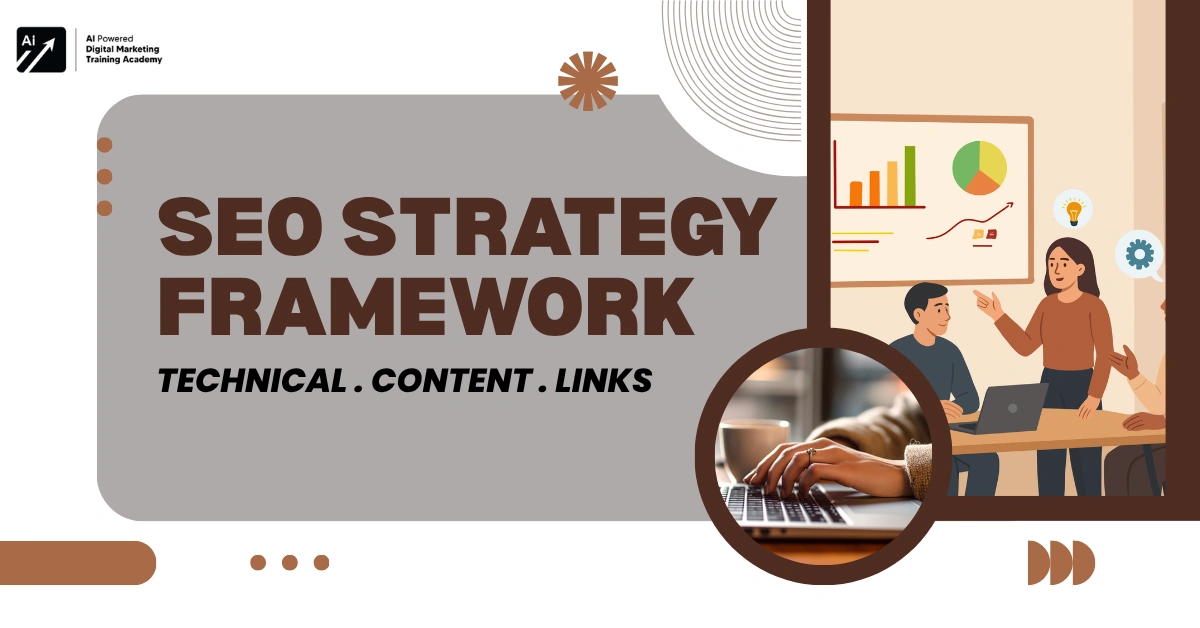

Most companies imagine SEO as tossing keywords into articles and getting a few backlinks. That is not what SEO really is. SEO is not a tactic. It is a system. A strong SEO strategy framework is about building a structured engine that combines the technical foundation, content creation and also authority building
When these three work together, visibility grows consistently. When one is weak, growth slows or stops. Most businesses fail here.
They focus only on one part:
- Some focus only on content
- Some focus only on backlinks
- Some rely only on tools
This creates an imbalance. Without balance, SEO does not scale. If there is no defined framework, every action becomes random. You may publish content without direction and build links without relevance and also fix technical issues without impact.
This leads to wasted time and slow results. A clear framework solves this problem. It gives direction followed by priority which includes measurable progress. Instead of doing “more SEO,” you start doing the right SEO.
What is SEO
SEO is about more than being ranked on keywords. It is about making the site page friendly to the search engines and relevant and meaningful for the users, so it gets traffic naturally.




Core Idea
Instead of guessing what works, SEO focuses on:
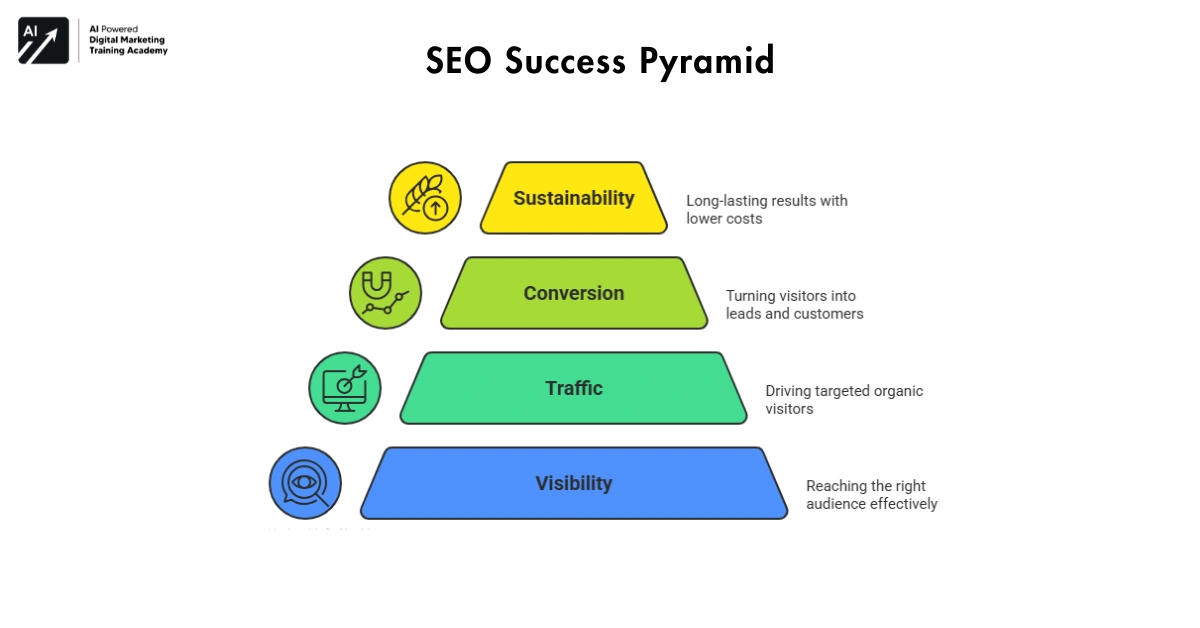
- Increasing visibility for the right audience
- Driving targeted organic traffic
- Turning visitors into leads and customers
Why This Works
SEO is measurable and long-lasting:
- Organic traffic compounds over time
- Lower cost per acquisition than paid ads
- Builds trust and authority in your niche
But SEO only works when it’s supported by a complete system.
The SEO System (3 Critical Layers)
Most Beginners only pay attention to Content, without paying attention to Keywords or Links. SEO campaigns with good results span all three levels.
Layer 1: Technical SEO
This is the foundation of your website’s search presence. Without it, content and backlinks cannot perform.
Includes:
- Site speed optimization
- Mobile responsiveness
- Proper indexation and sitemap
- Secure website (HTTPS)
- Structured data/schema markup
Critical Insight:
Even the best content can’t rank if search engines cannot crawl your site efficiently.
Layer 2: Content Planning
Content planning is like attracting people to your website, engaging them and also convincing them to act.
Components:
- Keyword research
- Intent mapping
- Topic clusters
- Pillar pages
- Blog articles
- Tutorials
- Everlasting content.
Internal linking to strengthen relevance
Failure Point:
Publishing random content without strategy often results in high effort but zero rankings.
Layer 3: Authority & Backlinks
Search engines rank sites they trust. Authority is built over time.
Key components:
- Getting the backlinks from trusted sites
- Social mentions and shares
- Online reputation management
- Guest posts and partnerships
Example:
Two sites could have similar quality in terms of content but the one with higher authority will rank faster and always.
SEO Funnel From Discovery to Conversion
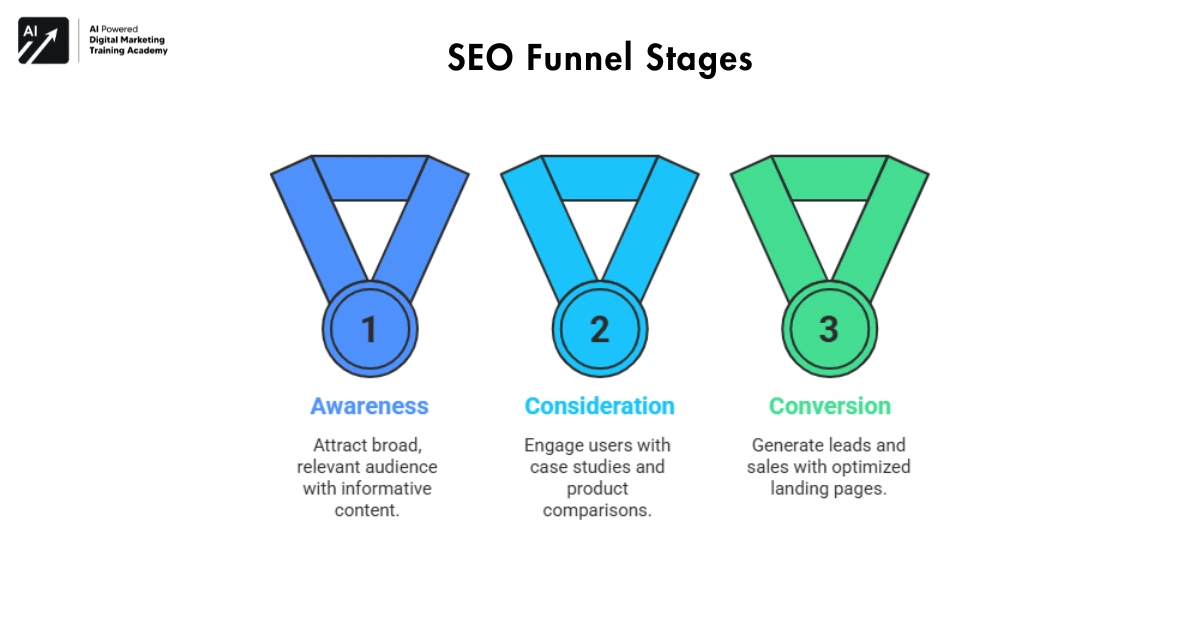
A structured SEO funnel means that traffic will convert into business.
Stage 1: Awareness
- Blog posts with information
- How-to guides and tutorials
- SEO goal: attract broad, relevant audience
Stage 2: Consideration
- Case studies
- Product comparisons
Examples of lead magnets are resources, tools, guides and also checklists, free tools
Stage 3: Conversion
- Optimized landing pages
- Clear calls-to-action
- Conversion tracking with analytics
SEO goal: generate leads or sales
Stage 4: Retention & Authority
- Email newsletters
- Community building
- Internal linking to keep users on-site
SEO goal: increase lifetime value and repeat traffic
Advanced Keyword & Content Strategy
Random keywords or overstuffed content won’t work.
Topic Clusters
- Group related articles around a central pillar page
- Improves site structure and topical authority
- Helps search engines understand relevance
Search Intent Mapping
Know what users really need like related to informational, transactional, navigational which align content type with intent for better rankings
Content Refresh Cycles
- Update old articles regularly
- Add new examples, statistics, and links
- Keeps content competitive and relevant
On-Page SEO That Actually Works
Many beginners focus on meta tags only. On-page SEO is deeper.
Key Elements
- Title tags with primary keyword
- Add Meta descriptions
- Please use heading like H1, H2, H3 for proper structure formation.
- Image optimization with alt text
- Internal linking to related pages
Critical Insights like While on-page SEO doesn’t promise the number one spot, it does make your site comprehensible for the search engines to consider placing you there.
Technical Search Engine Optimization
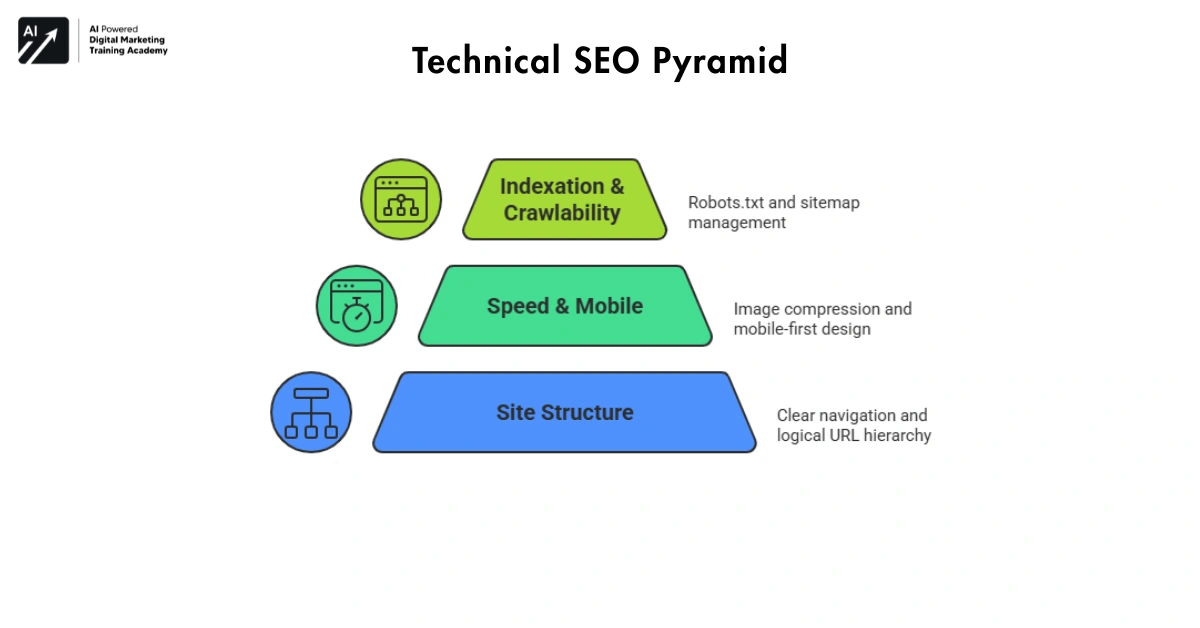
No matter how good the content is, it will all fall apart without a sound technical base.
Site Structure
- Clear navigation menus
- Logical URL hierarchy
- Proper breadcrumbs
Speed & Mobile Optimization
- Compress images
- Minify code
- Use caching and CDN
- Design must be mobile-first
Indexation and Crawlability
- Keep the robots txt and sitemap xml properly
- Fix the broken links and remove unnecessary redirects
- Check crawl issues in Google Search Console
Backlinks & Authority Building
Authority is earned, not bought.
White-Hat Link Building
- Guest blogging on niche sites
- Earning editorial links through research and statistics
- Partnerships and outreach
Avoiding Toxic Links
- Spammy directories and comment links
- Paid links that stops Google’s policies
- Regular audits of the backlinks to identify and disavow those bad links.
SEO Metrics That Drive Growth
Not all metrics matter. Focus on what actually impacts results.
Metrics That Matter
- Organic traffic by page
- Keyword rankings and visibility
- Click-through rate (CTR)
- Bounce rate and dwell time.
- Conversion rate from organic visitors
Critical Insight
High traffic doesn’t always mean profit. A page built using a strong SEO strategy framework, with targeted traffic and high conversion, may be more valuable than a top-ranking informational page.
Local SEO Strategy
For location-based businesses, local SEO is critical.
Key Components
- Google Business Profile optimization
- Local citations and directories
- Reviews and reputation management
- Location-specific content and landing pages
Why This Matters
Local SEO enables small companies to take on large brands for customers in their vicinity that are interested in buying.
SEO Content Distribution Strategy
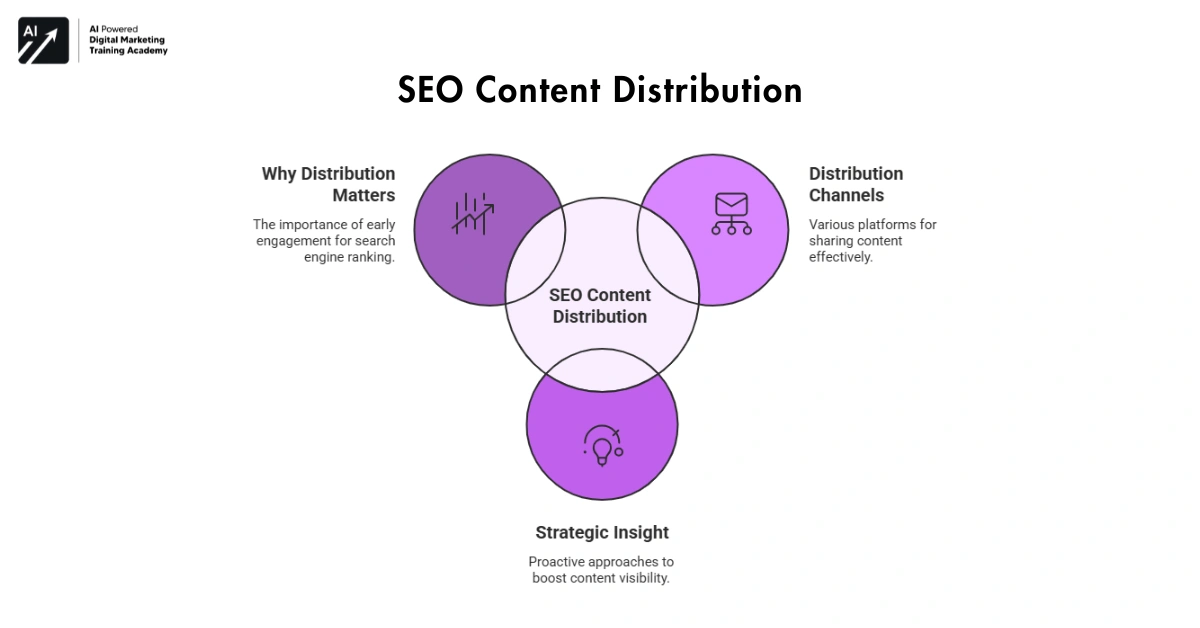
Publishing is not enough. Your content will be ranked way longer if it is not distributed properly.
Why Distribution Matters
Search engines consider early signals like:
- Initial traffic
- Engagement (time on page, clicks)
- External mentions
Content that gets attention early often ranks faster.
Distribution Channels
- Social media platforms
- Email with newsletters
- Online communities (forums, groups)
- Content repurposing (videos, short posts)
Strategic Insight
- Instead of waiting for Google to discover your content:
- Push traffic to new content immediately
- Build early engagement signals
- Increase chances of faster indexing and ranking
SEO Implementation Plan
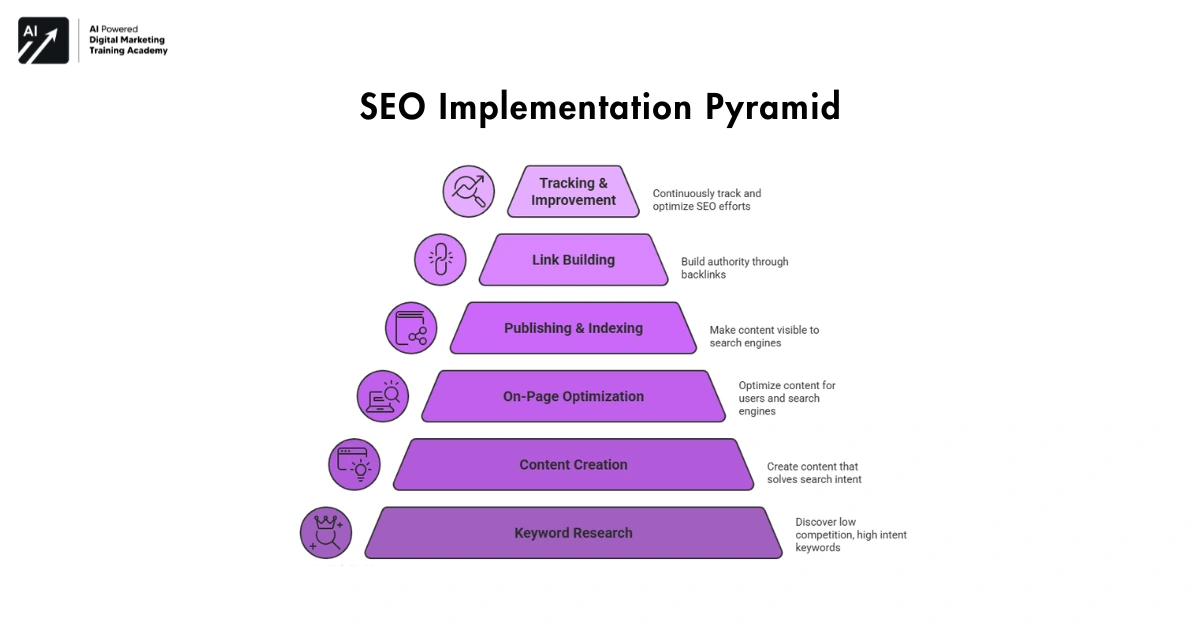
This is where most blogs fail. Strategy without execution does not rank.
Keyword Research
Discover what people are searching for. Use free keyword research tools like Google Keyword Planner, Ubersuggest. Focus on low competition high intent keywords. Focus on long tail keywords like “SEO guide for beginners 2026”. See the competitors in the SERPs and why they are ranking for it.
Content Creation
- Create content that directly solves the search intent.
- Match content type (blog, guide, comparison)
- Cover topic in depth, not surface level
- Use simple and clear language
- Add examples and practical insights
On Page Optimization
Optimization is like once you have written your content, optimize it for end users and search engines. Use your Target keyword in your Title and Subheadings. Don’t stuff your content with keywords but keep in mind the natural flow of words for SEO optimization.
- Use related keywords naturally
- Optimize images with alt text
- Add internal links to relevant pages
Publishing & Indexing
- Make your page visible to search engines.
- Submit URL in Google Search Console
- Check sitemap and indexing status
- Fix crawl errors if any
- Ensure page loads fast
Link Building
- Build authority to improve rankings.
- Reach out to blogs for guest posting
- Share content in communities
- Earn backlinks through valuable content
- Avoid spam related links
Tracking and Improvement
- SEO is not one-time work.
- Track rankings and traffic
- Identify pages losing traffic
- Update and improve content regularly
- Optimize based on data
Real Example: Ranking a Blog Step by Step
Understanding theory is not enough. In a strong SEO strategy framework, execution is what actually drives results.
Example Scenario
Keyword: “best SEO tools for beginners”
What Was Done
- Selected low-competition keyword
- Created a detailed comparison article
- Added internal links from existing blogs
- Shared content on social media and forums
Result
- Started ranking in 3 to 4 weeks
- Reached first page after consistent updates
- Traffic increased steadily over time
Consistency along with proper structure gives the rankings over time
SEO Tools That Improve Efficiency
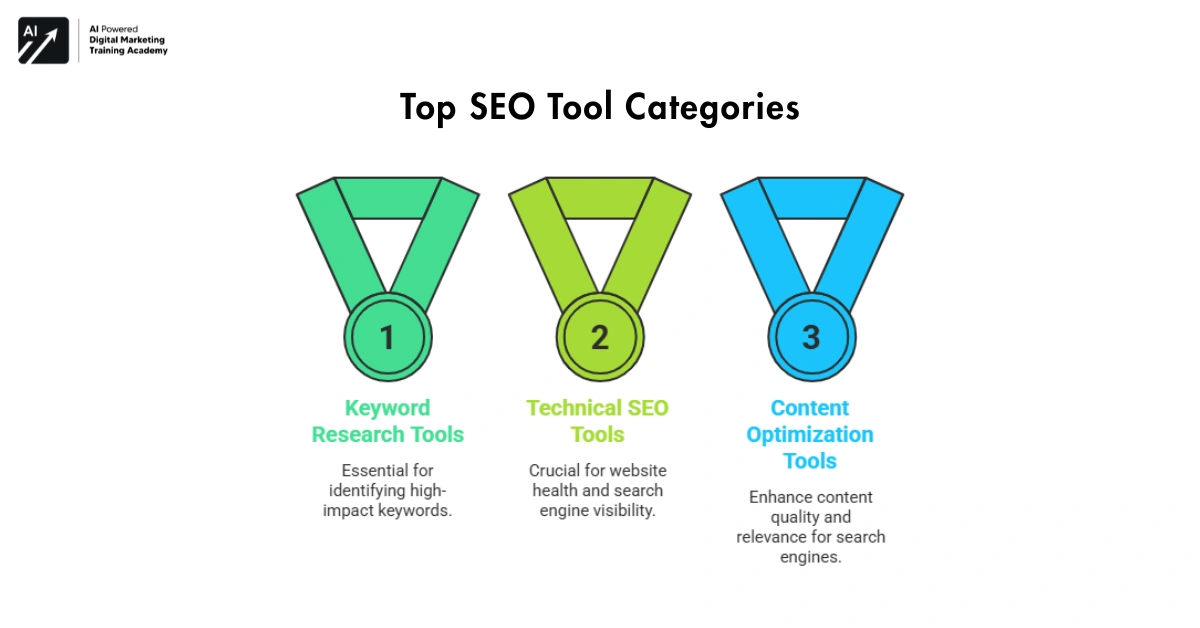
Manual work slows growth. Tools help scale faster.
Keyword Research Tools
- Google Keyword Planner
- Ubersuggest
- Ahrefs and SEMrush
Technical SEO Tools
- Google Search Console
- Screaming Frog
- Sitebulb
Content Optimization Tools
- Surfer SEO
- Clearscope
- Grammarly (for readability)
Analytics Tools
- Google Analytics
- Search Console performance reports
Strategic Insight
Tools do not replace strategy. They only improve speed and accuracy.
Programmatic SEO (Scaling Content Efficiently)
Manual content creation limits growth. Programmatic SEO helps scale faster using structured data.
What is Programmatic SEO
It is the process of creating multiple pages using templates and data.
Example:
“Best hotels in [city]”
“Top courses for [skill]”
Instead of writing each page manually, a strong SEO strategy framework helps you build a system that generates pages at scale.
Where It Works Best
- Directory websites
- Comparison platforms
- Location-based pages
- Product listings
Risks and Limitations
- Low-quality pages can hurt rankings
- Duplicate content issues
- Requires strong technical setup
Strategic Insight
Programmatic SEO works only when:
- Each page provides real value
- Content is not repetitive
- Data is accurate and useful
- Scaling without quality will fail.
SEO Mistakes That Kill Rankings
- Publishing thin content
- Ignoring mobile and speed optimization
- Overlooking internal linking
- Neglecting backlink quality
- Not monitoring analytics or trends
Scaling Your SEO Efforts
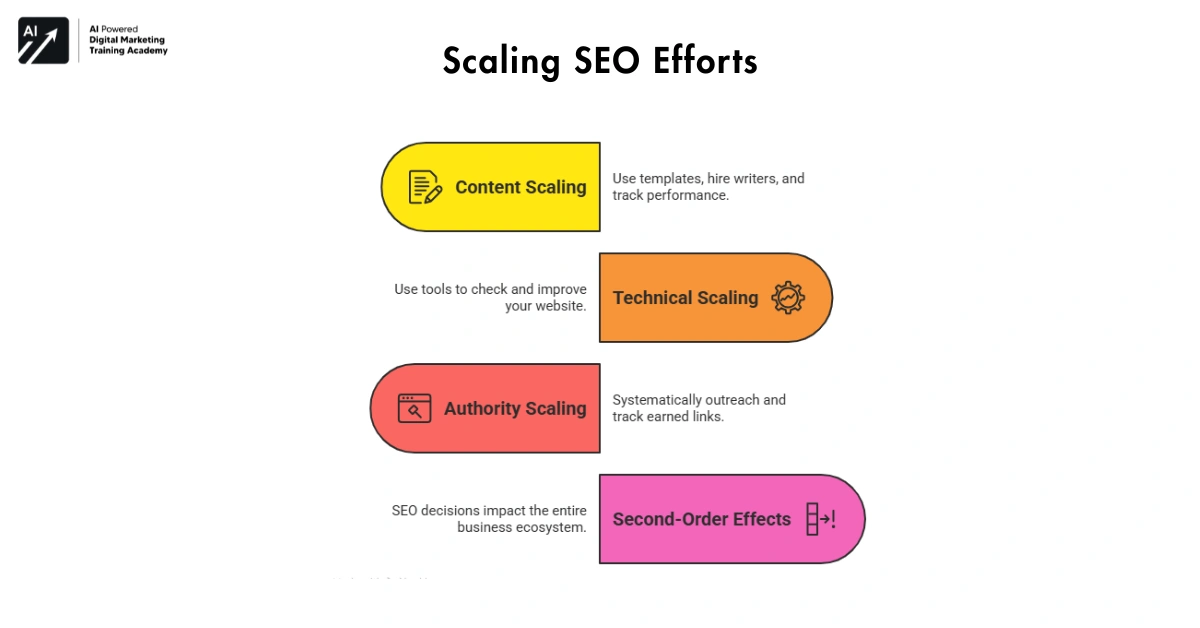
Scaling SEO requires structure and patience.
Content Scaling
- Use templates and processes for blog production
- Hire writers and editors to maintain quality
- Track performance for continuous improvement
Technical Scaling
Use tools like Screaming Frog and Sitebulb as part of your SEO strategy framework to check your website and improve new parts without affecting existing pages.
Authority Scaling
Systematic outreach and relationship-building and also track earned links and their impact on rankings
Second-Order Effects in SEO
SEO decisions impact the entire business ecosystem.
- Aggressive keyword targeting → misaligned brand perception
- Thin content for rankings → high bounce rates and low engagement
- Slow site changes → lost revenue from decreased rankings
Understanding these effects prevents long-term mistakes.
Conclusion
Learning SEO is not about tactics. It is about building a strong SEO strategy framework. Technical, content, and authority are equally important. Keyword targeting should align with the searcher’s intent.
Continuous optimization, analysis, and improvement are required for long-term success.
What SEO is not: fast hacks, desperate tricks to manipulate the search engines. SEO is a long term system, it’s a strategic combination of technical setup, content strategy and authority. Companies obsessing about rankings, Rankings, Ranks without understanding how their users experience websites, how relevant the content is to the consumer, what makes a site authoritative will be sucked dry.
The real truth about SEO is that it all boils down to a system that works the foundation of crawlable websites and the content that provides value to the site and links from reputable sources and an ongoing process of optimization for people and search engines. Done correctly, SEO turns into a predictable growth engine rather than a gamble.