
Most first time founders believe one thing: Need investors to start a startup. That assumption is often wrong and costly. If searching for how to raise funds for startup without investors, likely facing limited capital, no network or concerns about losing equity. The good news is that many successful startups begin with alternative funding methods that offer more control and flexibility.
Let’s break down practical and real-world strategies useful to raise ₹10 lakhs or more without relying on venture capital.
What does Raising Funds for a Startup without Investors Mean?
It means securing capital without giving up equity ownership. Instead of venture capital, founders rely on personal savings, customers, grants or alternative financing methods to fund their startup.
This approach is commonly used in initial stage of startups to maintain control, validate ideas and reduce financial risk.
How much Money do you need to Start a Startup?
Before choosing a funding method, define the actual requirement. Many founders overestimate this.
Typical funding needs in India:
- ₹2L–₹5L → Idea validation (research, prototypes)
- ₹5L–₹15L → MVP development + early traction
- ₹15L+ → scaling operations
Example-1:



A freelance-based SaaS tool may start with ₹3L using no-code tools.
Example-2:
An e-commerce brand may need ₹10L for inventory, website, and marketing.
The key is to align funding method with stage, not raise unnecessary capital.
How to Raise ₹10 Lakhs+ for Your Startup Without Investors: 9 Zero-Equity Ways for 2026
1. Bootstrapping – Savings + Side Hustle
Bootstrapping means funding your startup using your own income sources.
You combine:
- job savings
- freelancing or consulting income
Example-1:
₹30K savings every month and ₹20K from freelancing per month → ₹6L in 12 months
Example-2:
A developer builds a product while freelancing nights to fund development costs.
Why it works:
- complete ownership
- no repayment pressure
Challenges:
- slower growth
- personal financial strain
Best practice to follow:
Fix a monthly “startup fund” target and treat it like a non-negotiable expense.
An Indian SaaS founder started by freelancing on platforms like Upwork, earning ₹80K/month. He reinvested ₹50K monthly into product development and reached MVP stage in 6 months without external funding.
2. Startup Competitions
They provide funding, exposure and validation.
Typically:
- submit a pitch deck
- present your idea
- compete with other founders
Example-1:
Winning an IIT fest competition can bring ₹2L–₹5L.
Example-2:
Multiple smaller wins can collectively cross ₹10L.
Why it matters:
- builds credibility
- opens networking opportunities
Challenges:
- low success rates
- time-intensive preparation
Best practice to follow:
Focus on 10–20 relevant competitions instead of applying randomly.
3. Government Grants in India
Government funding is one of the most powerful non-dilutive funding options.
You apply through recognized programs after registering your startup.
Example-1:
Startup India Seed Fund offers capital in early-stages.
Example-2:
State innovation schemes support regional startups.
Why it works:
- no equity loss
- structured support
Challenges:
- documentation complexity
- approval delays (3–6 months)
Best practice to follow:
Prepare compliance documents like financials, pitch, business plan early.
4. Strategy before Sales
It means selling your product before building it.
You validate demand and raise funds simultaneously.
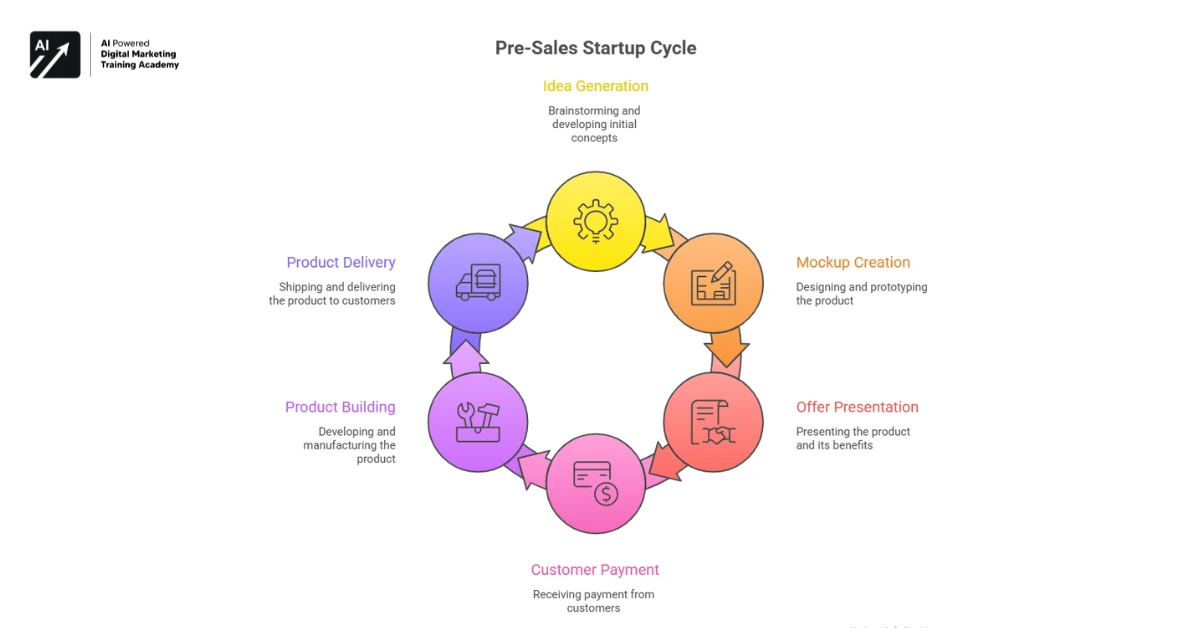
Example-1:
20 customers × ₹50K upfront = ₹10L
Example-2:
A course creator sells early access before recording content.
Why it works:
- instant market validation
- zero dilution
Challenges:
- delivery risk
- reputation impact if delayed
Best practice to follow:
Make sure to define delivery timelines and the scope before accepting payments.
A D2C skincare startup in India validated demand by selling the product before launch through Instagram ads. They collected ₹12L in advance orders before manufacturing their first batch, reduced inventory risk completely.
5. Revenue-Based Financing
This model funds startups based on existing revenue.
Instead of equity, you repay from future earnings.
Example-1:
A D2C brand earning ₹3L/month raises ₹8L and repays via revenue share.
Example-2:
A SaaS startup uses financing to scale paid ads.
Why it works:
-
flexible repayment
-
no ownership loss
Challenges:
- only works if revenue exists
- reduces short-term cash flow
Best practice to follow:
Use it only for growth activities, not operational survival.
6. Angel Investors (Strategic Use)
Although this involves equity, angel investors can be used selectively.
Example-1:
₹10L for 7% equity from a local entrepreneur.
Example-2:
Industry expert invests and opens key partnerships.
Why it works:
- mentorship + capital
- network access
Challenges:
- dilution
- alignment issues
Best practice to follow:
Treat this as a secondary option after validating your idea.
7. Startup Incubators & Accelerators
These programs helps in funding and structured support.
They typically offer:
- seed funding
- mentorship
- networking
Example-1:
An incubator provides ₹5L + office space.
Example-2:
An accelerator helps refine product-market fit in 3 months.
Why it works:
- guidance + capital
- faster learning curve
Challenges:
- competitive selection (<10%)
- equity exchange (5–8%)
Best practice to follow:
Apply only when you have an MVP or strong concept.
8. First Client Funding
Instead of raising money, secure a paying client upfront.
Example-1:
A B2B startup offers a 25% discount for annual upfront payment → ₹12L
Example-2:
A service startup signs a contract that funds initial operations.
Why it works:
- real revenue
- strong validation
Challenges:
- delivery pressure
- dependency risk
Best practice to follow:
Start with one manageable client before scaling.
9. Crowdfunding
Raising money from the public through online platforms.
Example-1:
A hardware startup raises ₹20L via Kickstarter.
Example-2:
A social cause startup raises funds via Indian platforms.
Why it works:
- no equity required
- builds community
Challenges:
-
high failure rate (~60%)
-
requires strong marketing
Best practice to follow:
Invest heavily in storytelling and daily promotion during campaigns.
Which Funding Option Is Right for You? (Decision Framework)
Choosing the wrong method wastes time and effort. Use this simple framework:
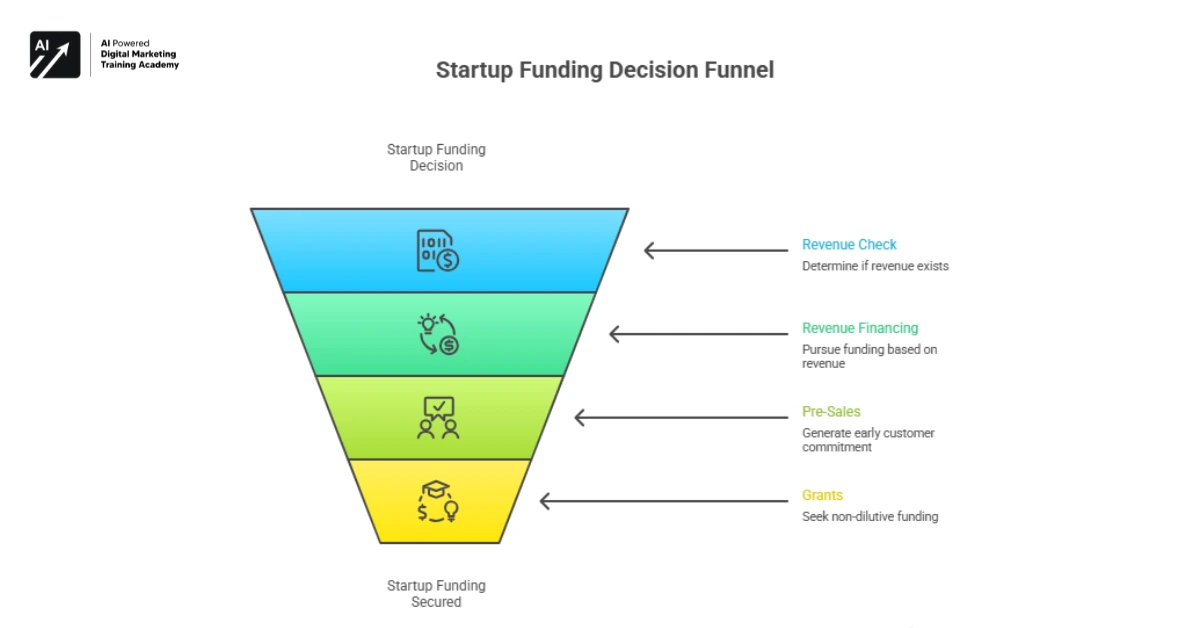
Key insight:
Most successful founders combine 2-3 methods, not just one.
How to combine Multiple Funding Sources – Advanced Strategy
A hybrid approach increases success probability.
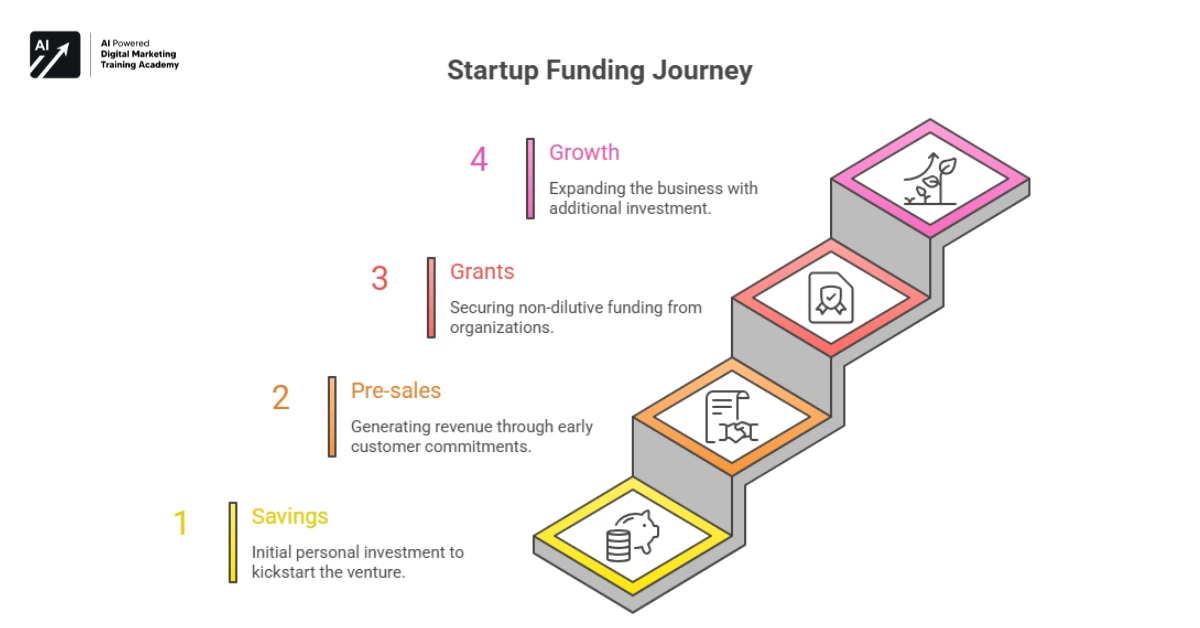
Example workflow:
- Start with savings (₹2L–₹3L)
- Validate with pre-sales (₹5L)
- Apply for grants (₹10L)
Another scenario:
- Freelancing → initial capital
- First client → operational funding
- Accelerator → scaling support
This layered approach reduces risk and dependency.
Common Mistakes to avoid when Raising Startup Funds
Many funding failures are execution issues.
Avoid these:
- waiting for “perfect” funding
- raising more money than needed
- ignoring customer-funded models
- applying blindly to all options
- underestimating delivery risk
Key insight:
Funding does not fix a weak business model.
Should You Avoid Investors Completely?
Not always.
Avoid investors when:
- you want full control
- your startup can grow organically
Consider investors when:
- speed is critical
- competition is intense
- capital needs are high
The smarter approach is to delay dilution, not avoid it blindly.
Visual Suggestion
Include a funding strategy flow diagram:
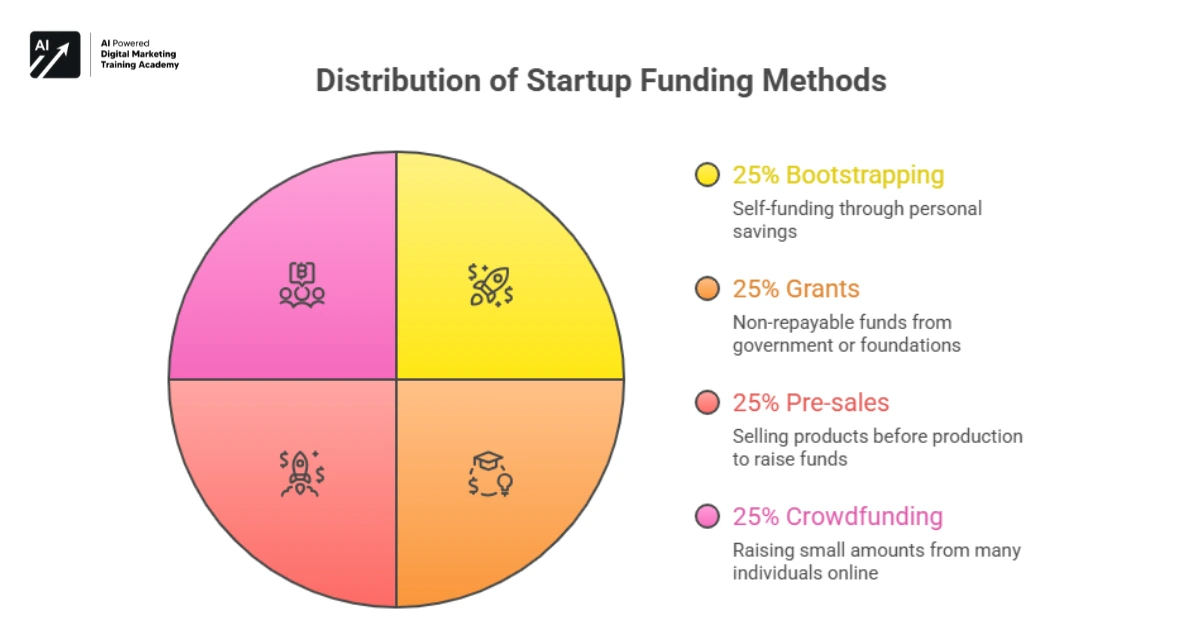
Idea Stage → Bootstrapping → Validation (Pre-sales) → Growth (Grants/Clients) → Scale (Optional Investors)
This helps users quickly understand progression.
FAQs
Can i start a startup with no money?
The answer is Yes. Only in specific cases like service-based businesses or freelancing business. Most startups still require minimal capital ₹1L–₹3L for tools, marketing or operations. Start a startup with no money is to start small and use the money you make to grow the startup is the most practical approach.
What is the easiest way to raise funds?
Pre-sales and first-client funding are usually the fastest because they rely on customer demand not approvals. However, must be good in execution and make sure to gain trust. Must deliver what you promise.
Is crowdfunding legal in India?
Yes. Equity crowdfunding has some limits. Most platforms only allow funding through donations or rewards. Founders must be careful with platform rules and avoid promising equity unless legally structured.
How long does it take to raise startup funding?
It depends on the method. Bootstrapping can take time like 6-12 months, grants are little faster take around 3-6 months, while pre-sales or client funding can happen within weeks, if demand exists.
What is the best funding option for beginners?
Begin with Bootstrapping and combine it with small revenue sources like freelancing or early customers is the best starting point. It minimizes risk and helps to validate the idea is really good before you try to get a money from investors.
Conclusion
Raising ₹10 lakhs without investors is achievable but not through a single shortcut.
The most effective approach is:
- start small with your own resources
- validate with real customers
- layer additional funding strategically
The advantage of this path is control, flexibility, and stronger fundamentals. Instead of chasing funding, focus on building something people are willing to pay for-funding will follow execution.