
A few years ago, affordable high-speed internet felt just like a luxury one in India, until initiatives like the PM WANI ₹6 WiFi Plan India started changing the story. Good internet meant expensive monthly bills. Villages struggled. Small shops depended on mobile data. Students shared hotspots. But something quiet has been building in the background. India launched a system that most people still do not fully understand. It is called PM-WANI.
And yes you may have seen the headline like: 150 Mbps Wi-Fi just for ₹6. That number grabs attention. But the real story is much bigger than the price. This is not just like a cheap internet. It is about access and this is about digital inclusion. Let us break this down clearly.
What Is PM-WANI?
The word PM-WANI is derived as Prime Minister Wi-Fi Access Network Interface and which is initiated by the Government of India in the year 2020. It is a program where it provides affordable public Wi-Fi to people all over the country.
Its mission is simply to make public Wi-Fi affordable and accessible to everyone.
- Not through telecom giants alone
- But through small local providers
- This is where it becomes interesting.
Instead of depending only on big companies like Jio or Airtel, PM-WANI allows small shop owners and vendors to become Wi-Fi providers. This changes everything.
Why Was PM-WANI Needed?
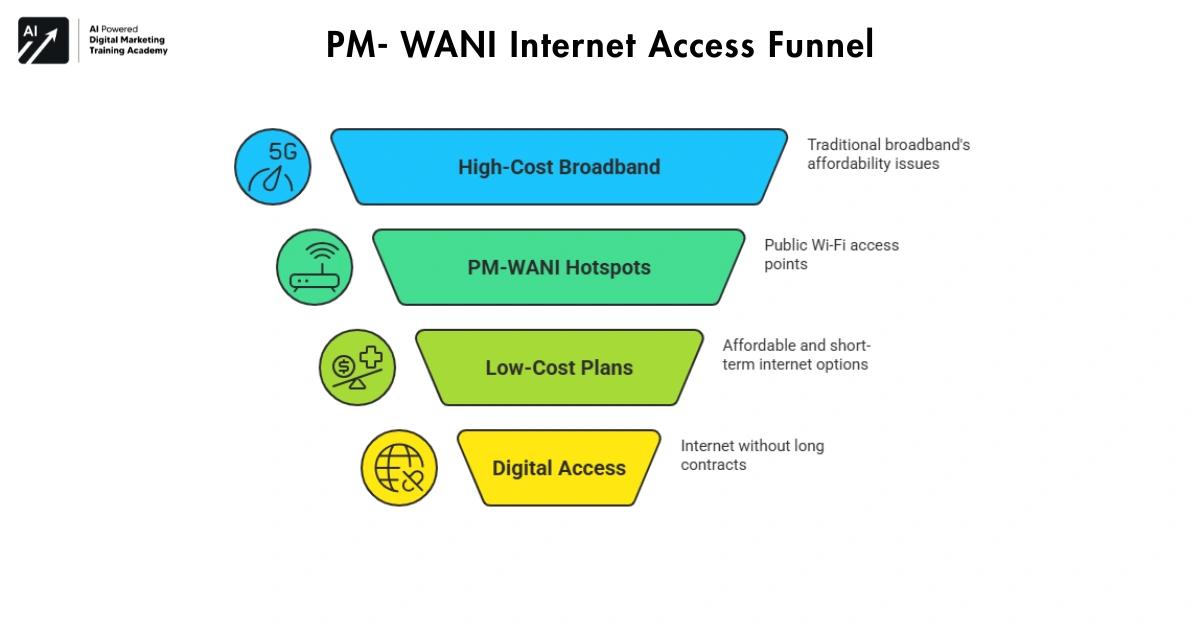
In India it has over a billion people. But internet access is still unequal. Urban cities have fiber broadband and Villages depend on mobile data and also Small towns face speed issues.
High-speed broadband usually requires:




- Installation
- Wiring
- Monthly commitments
- Not everyone can afford that.
PM-WANI solves this by creating:
- Public Wi-Fi hotspots also available
- Low-cost and short-term plans
- Digital access without any long contracts
- It removes barriers.
The ₹6 Plan What Does It Really Mean?
Let us be clear and ₹6 is not unlimited lifetime internet. It is a short-duration plan.
Usually it includes:
- 2-day access
- 1GB per day
- Speed can reach levels between 150 Mbps
The exact plan available will depend on the provider, but a few will have limited-time 1Gb short-term options.
This is powerful for:
- Students downloading assignments
- Travelers needing quick access
- Small businesses needing urgent uploads
Instead of paying ₹500 – ₹800 for monthly broadband, users can pay small amounts when needed. That flexibility is the real value for it.
How This PM-WANI Works
The system is just simple. Download a PM-WANI enabled app and find the nearest Wi-Fi hotspot.
- Choose a plan
- Pay digitally
- Start browsing
No SIM required. No long-term commitment. Just access. This makes the internet behave like prepaid electricity and use when needed and pay only for what you use.
Who Benefits the Most?
These are benefits for following:
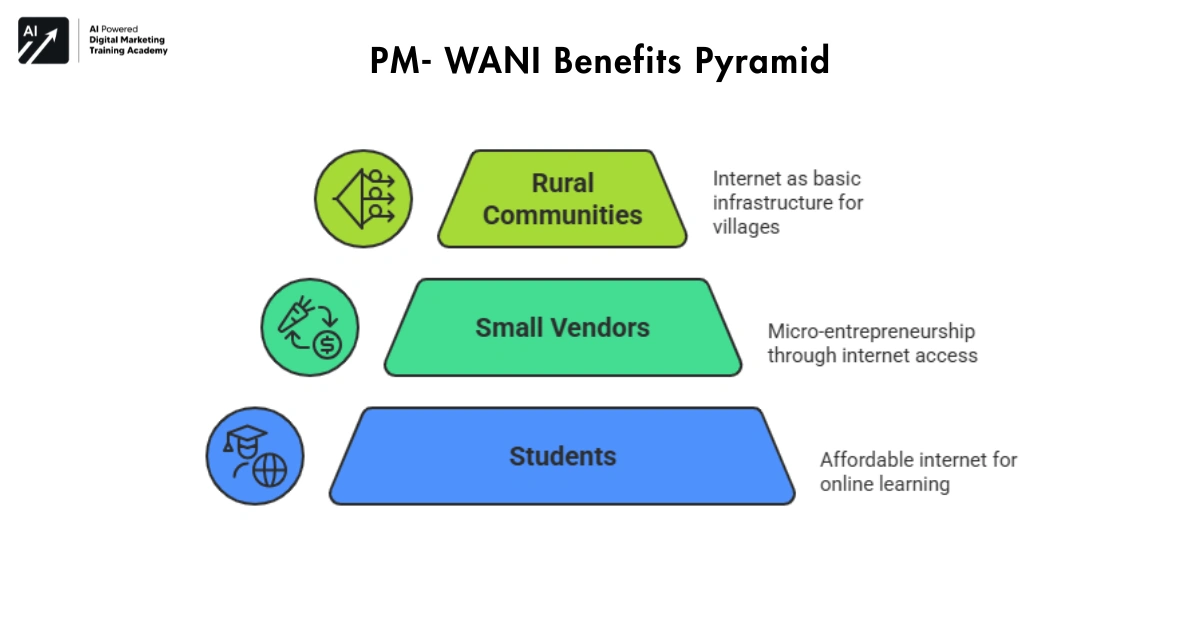
Students
Affordable high-speed internet helps in:
- Online classes
- Research
- Video lectures
Small Vendors
Even ₹6 can make a difference and a tea stall owner can:
- Install a hotspot
- Sell internet access
Earn extra income and this creates micro entrepreneurship.
Rural Communities
Villages that lack fiber connections can now:
- Access online services
- Apply for government schemes
- Use digital payments
The Internet becomes basic infrastructure.
Economic Impact of PM-WANI
This is not only a tech project. It is an economic model. When small vendors become Wi-Fi providers:
- They earn
- Users save money
- Digital adoption increases
The Marketing Angle Why ₹6 Became Viral
The Instagram post used a strong hook 150 Mbps for ₹6. It created curiosity and compared telecom giants. It used authority figures. This is smart marketing because numbers attract attention. Behind the headline lies a structured ecosystem.
- The post simplified it
- The system is deeper
PM-WANI vs Traditional Broadband
Traditional broadband usually offers:
- Monthly plans
- Installation fees
- Fixed location
- PM-WANI offers:
- Pay-per-use
- Flexible access
- Public hotspot based usage
Both have roles and but PM-WANI is for accessibility, not luxury. It democratizes internet access.
Challenges PM-WANI May Face
Every system has limits and some challenges include:
- Hotspot availability
- Awareness
- Speed consistency
- Security concerns
- For this system to succeed:
- People must know about it
- Vendors must adopt it
- Quality must remain stable
Why This Matters for 2026 and Beyond
Digital India is growing fast. But growth must be inclusive. If only cities move forward, inequality increases.
Affordable Wi-Fi supports:
- Remote work
- Online freelancing
- Digital businesses
- EdTech growth
The internet is no longer entertainment. It is infrastructure.
The Bigger Picture – Digital Empowerment
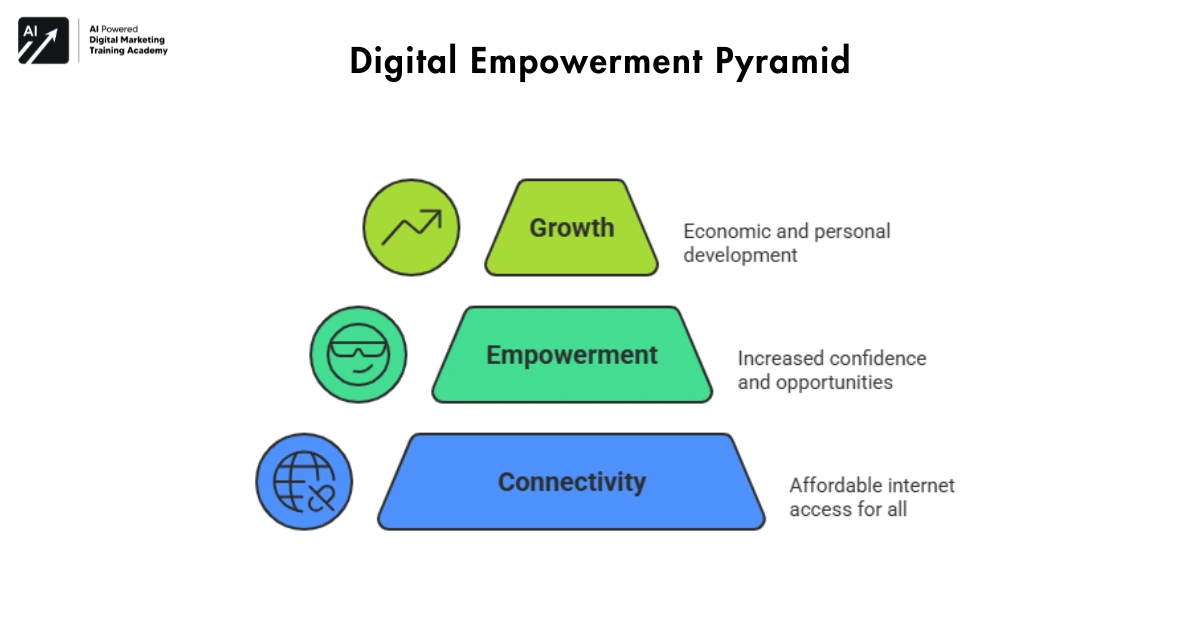
Cheap internet does more than save money. It creates confidence.
A student with access can:
- Learn coding
- Apply for jobs
- Build skills
A vendor with access can:
- Accept digital payments
- Manage inventory
- Connect to suppliers
Connectivity multiplies potential.
Is It Really the Cheapest in the World?
This claim says it is the cheapest high-speed Wi-Fi plan so far. Which depends on structure. But even if not globally cheapest, it is among the most affordable public access systems. And in a country like India, affordability matters more than comparison.
The Future of Public Wi-Fi in India
If PM-WANI scales properly:
Every market street could have hotspots. Railway stations could expand access and villages could become digitally active
This could:
- Reduce data inequality
- Boost rural entrepreneurship
- Improve digital literacy
The foundation is already laid. Adoption is the next step.
The Role of Local Shop Owners in This System
One of the most powerful parts of PM-WANI is not speed. It is participation. Earlier, only large telecom companies controlled internet distribution. Now, a small shop owner can become part of the network.
For example:
- A tea stall
- A stationery shop
- A small grocery store
They can just install a hotspot and start selling the data packs and this creates a new income stream.
- Not a huge business
- But steady extra income
- For many small vendors, that matters.
It also builds digital confidence. They move from being only sellers of products to providers of connectivity and that shift is important.
How This Can Help Students in Smaller Towns
In big cities, students usually have broadband at home. In smaller towns, that is not always true. Many depend only on mobile data and mobile data can be slow. It can be expensive for heavy downloads
With public Wi-Fi access:
- Students can download study material faster
- They can watch full lectures without buffering
- They can apply for online exams smoothly
Sometimes, opportunity is not about talent. It is about access. PM-WANI reduces that gap.
Digital Payments and Wi-Fi Go Together
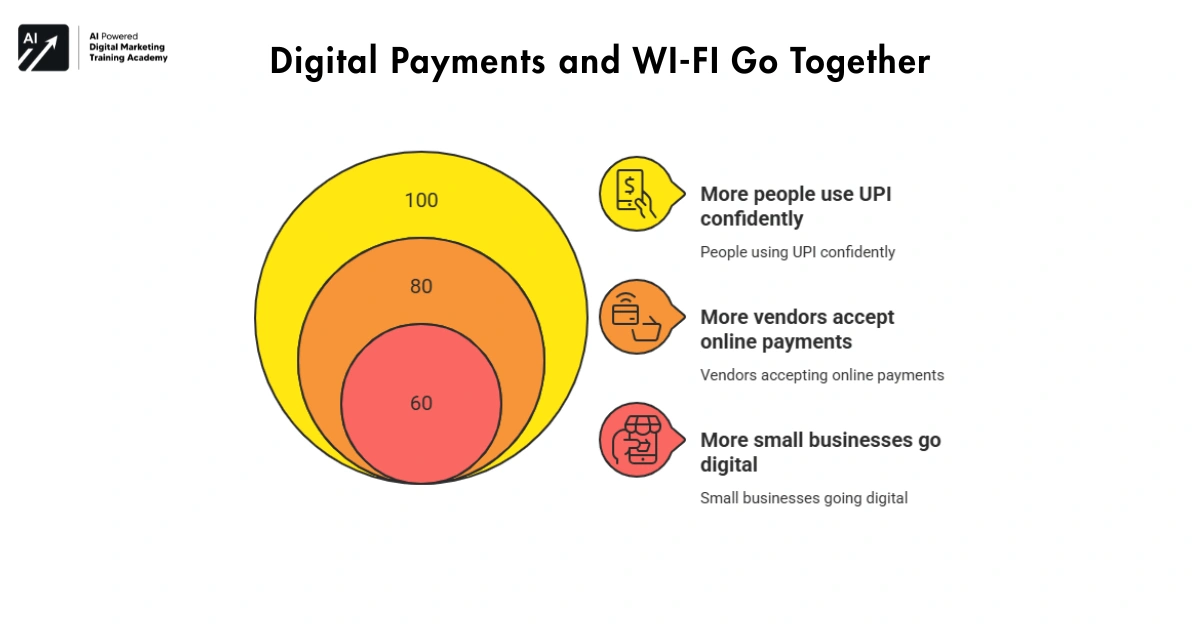
India has already moved strongly toward digital payments. UPI changed the way people pay. But digital payments require a stable internet.
If connectivity improves:
- More people use UPI confidently
- More vendors accept online payments
- More small businesses go digital
Internet access supports financial inclusion. It is not separate. It is connected.
Short-Term Plans Give More Control
Monthly broadband plans are useful. But not everyone needs 30 days of high-speed data.
Some people need:
- 2 days
- 5 days
- Occasional access
- Short-term plans give flexibility.
- You pay when needed
- You stop when not required
This reduces pressure on low-income users. And flexibility builds trust.
Awareness Is Still the Biggest Challenge
Many people still do not know what PM-WANI is. They see the ₹6 headline but do not understand how to use it in a proper way and awareness is most important. Without any awareness, even the best systems are not used properly.
Information must reach:
- Students
- Small vendors
- Rural communities
The system exists. Now the knowledge must spread.
Is This a Replacement for Home Broadband?
No. It is not meant to replace full home broadband. It is meant to complement it. If you work from home daily, You still need stable fiber. But if you need quick access while traveling or during power cuts, public Wi-Fi helps.
- It fills gaps
- It does not eliminate everything else
Understanding this difference is important.
Security and Safe Usage
Public Wi-Fi always raises one concern – security. Users must be careful.
Avoid:
- Entering sensitive passwords on unknown networks
- Downloading risky files
- Sharing confidential information
- Like any public network, safe browsing habits matter.
- Technology gives access. Users must use it responsibly.
What This Means for Digital India Vision
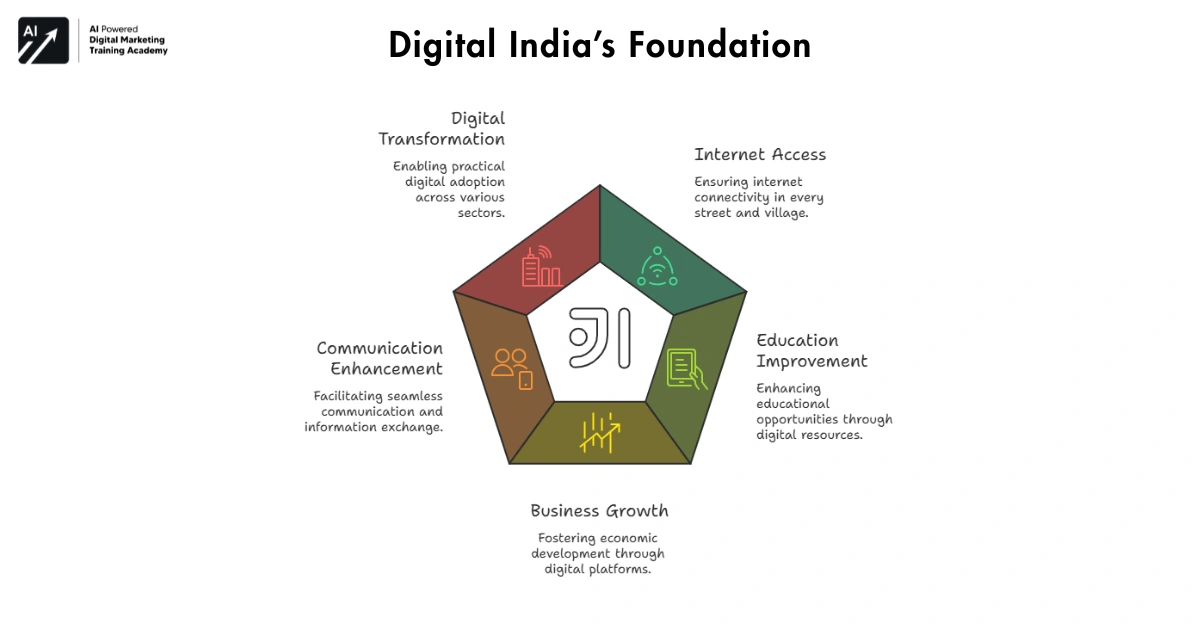
Digital India is not just about apps. It is about access.
If internet reaches every street and village:
- Education improves
- Business improves
- Communication improves
- Digital transformation becomes practical.
PM-WANI is one small piece of a larger puzzle. But it is an important piece. Because without connectivity, digital growth stops.
The Long-Term Impact
The true impact will not be visible in one year. It will show over time.
We may see:
- local hotspots
- Digital adoption
- Online small businesses
- Students accessing online education
These small changes compound, just like compound interest. Small access. Big long-term effect.
How PM-WANI Can Support Small Digital Businesses
Today many small businesses are trying to go online. But without a stable internet, digital growth becomes slow. A small boutique, a tuition center, or a local repair shop needs connectivity to:
- Upload product photos
- Reply to customer messages
- Manage online orders
- Run digital ads
When the internet becomes affordable and flexible, small businesses can experiment without fear of high monthly bills. PM-WANI gives them a starting point and It reduces entry barriers into the digital economy.
For many micro businesses, that first step matters more than speed.
How Public Wi-Fi Encourages Digital Literacy
Access alone is not enough. People must learn how to use the internet effectively. When public Wi-Fi becomes common in markets and towns, more people start exploring digital platforms.
They begin to:
- Search for information
- Use government portals
- Learn new skills online
- Explore job opportunities
- Over time, familiarity reduces fear.
- Technology feels less intimidating.
- Young students help elders.
- Shop owners learn digital payments.
Gradually, digital literacy improves. This builds confidence at the community level. Connectivity becomes education.
What Long-Term Success Will Depend On
Launching a system is one step and sustaining it is another.
The long-term success of PM-WANI will depend on:
- Strong network quality
- Easy user experience
- Vendor participation
- Public awareness
If hotspots are reliable, users will return and If payments are simple, adoption increases. While trust develops over time, consistency is far more critical than any one day’s headlines or news item. If implemented correctly, PM-WANI has the potential to become invisible support for India’s public Internet access infrastructure and not flashy. But this foundational and sometimes, foundational systems create the biggest change over time.
Final Thoughts: More Than ₹6
The ₹6 headline is attractive. Here the real story is empowerment. PM-WANI is not competing with telecom companies. It is complimenting them.
- It fills the access gap.
- It gives power to small vendors
- It gives flexibility to users
- It supports the Digital India mission
Technology itself is neutral. But access to technology changes lives. And sometimes, even ₹6 can open a door.