
Many businesses think that performance marketing is all about ad management and short-term wins, which is wrong. A strong performance marketing strategy is not just about running ads it’s about building a complete system that drives consistent and profitable results.
If you run ads without a plan and a system, you are setting yourself up to fail. A performance marketing model is based on data, funnel design, and unit economics. This guide breaks down how performance marketing actually works in practice, not just in theory.
What is Performance Marketing (Beyond the Definition)
Performance marketing is a type of marketing where nothing is done unless a result can be measured.
Core Idea
Instead of paying for visibility, businesses invest in:
- Clicks
- Leads
- Conversions
- Revenue
Why This Model Works
It reduces guesswork and allows:
- Precise budget allocation
- Measurable ROI
- Scalable growth
However, performance marketing only works when supported by a complete system.
The Performance Marketing System
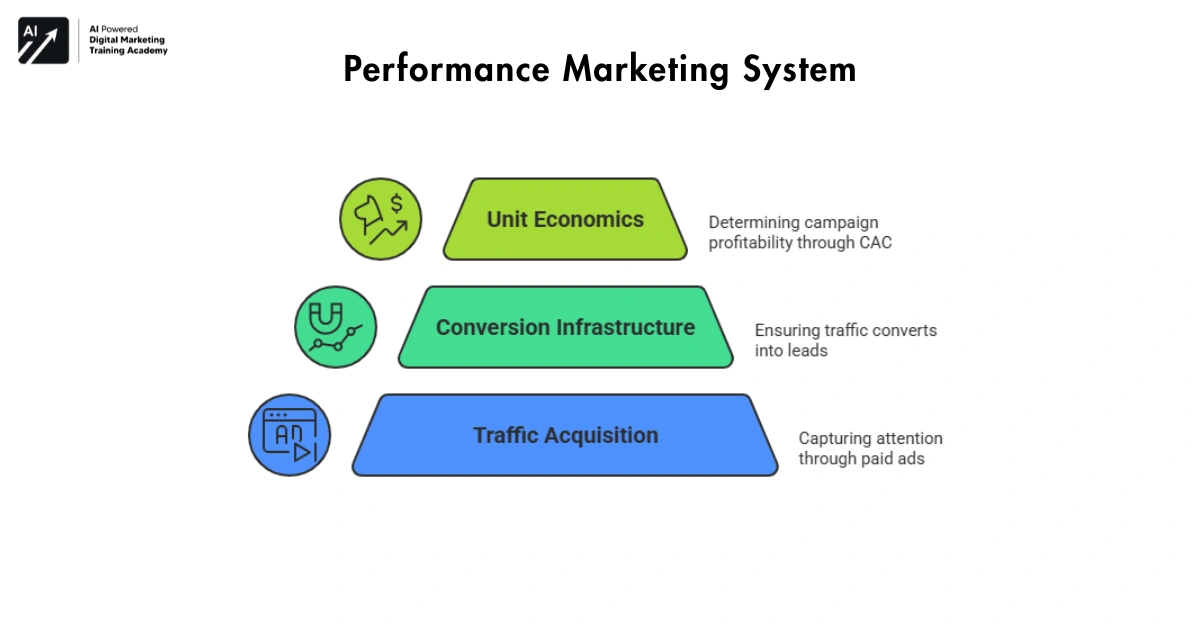



Most marketers operate at only one level and high-performing campaigns operate across all three.
Layer 1 : Traffic Acquisition
This is where attention is captured.
Includes:
- Paid ads (search, social, display)
- Audience targeting
- Creative testing
- Critical Insight
High traffic which does not guarantee high revenue. Traffic quality matters more than the volume.
Layer 2 : Conversion Infrastructure
Traffic without conversion is wasted.
This layer includes:
- Landing pages
- Offer positioning
- User experience
- Trust signals
Failure Point:
Many campaigns fail not because of poor ads, but because of weak conversion systems.
Layer 3 : Unit Economics
This determines whether the campaign is profitable.
Key components:
- Customer Acquisition Cost (CAC)
- Total Customer Value
- Profit margins
Example:
- If: CAC = ₹800
- Then profit per customer = ₹500
- The campaign loses money regardless of traffic or clicks.
Performance Marketing Funnel
A full funnel helps new people become customers.
Stage 1: Awareness
- Reach campaigns
- Video ads
- Educational content
Goal: attract attention
Stage 2 : Consideration
- Retargeting ads
- Lead magnets
- Email capture
Goal: build interest and intent
Stage 3 : Conversion
- Optimized landing pages
- Strong offers
- Urgency elements
Goal: generate sales or leads
Stage 4 : Retention & Monetization
- Email follow-ups
- Upsells
- Repeat purchases
Goal: Increase lifetime value
Advanced Budget Allocation Strategy
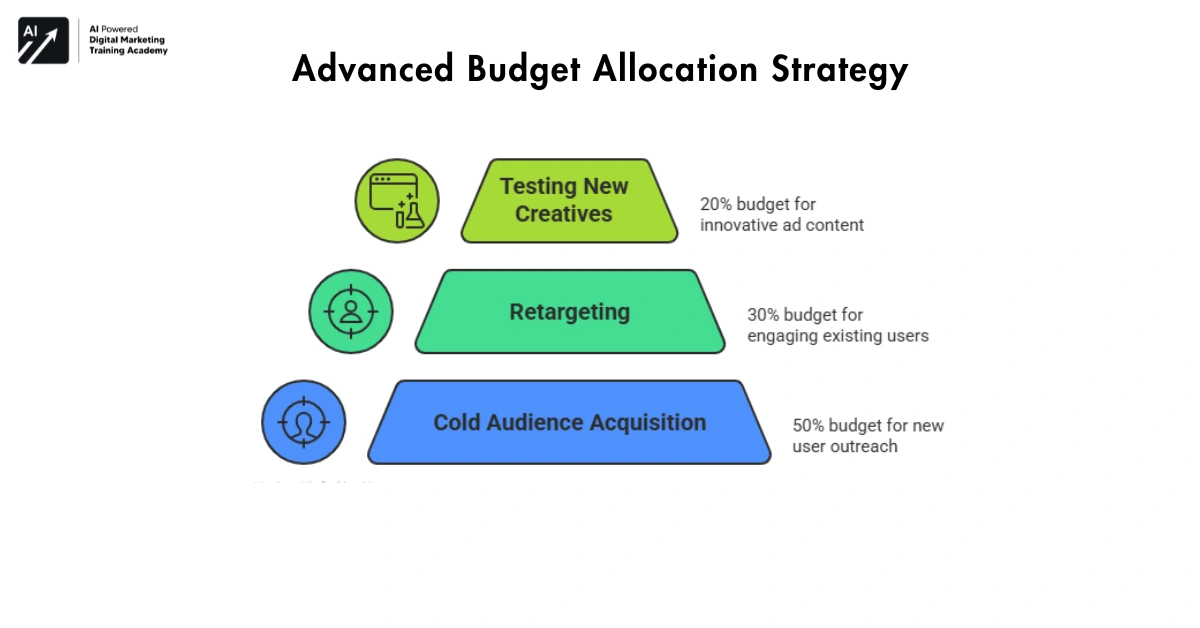
Most beginners allocate a budget randomly and that approach fails.
Strategic Allocation Model
A structured budget split looks like:
- 50% → cold audience acquisition
- 30% → retargeting
- 20% → testing new creatives
Why This Works
- Ensures consistent inflow of new users
- Improves conversion rates through retargeting
- Prevents ad fatigue through testing
Key Metrics That Actually Drive Profit
Vanity metrics create false confidence.
Metrics That Matter
- Cost Per Click
- Conversion Rate
- Cost Per Acquisition
- Return on Ad Spend
- Total Customer Value
Critical Insight
High ROAS does not always mean profit and without considering margins and LTV, campaigns can still fail.
Why 90% of Performance Marketing Campaigns Fail
No Funnel Strategy
Ads are run without a structured journey.
Over-Reliance on Creatives
Marketers assume better creatives alone will fix performance.
Ignoring Data
Decisions are made based on assumptions instead of metrics.
Poor Offer Design
Even well-targeted campaigns fail with weak offers.
Attribution Models in Performance Marketing
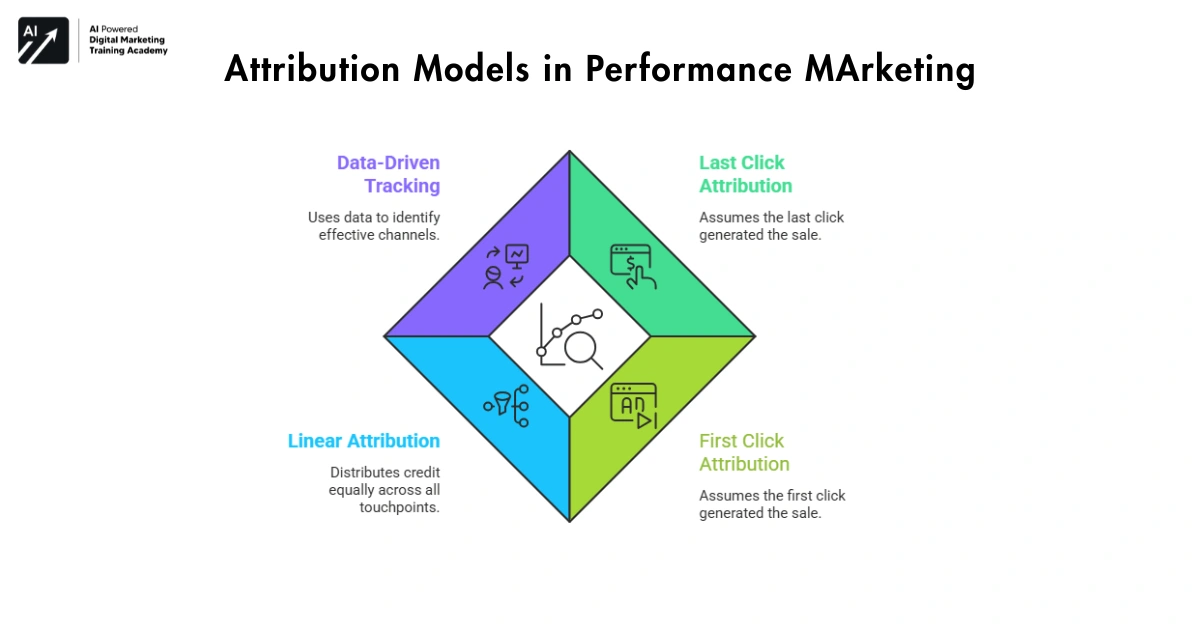
Most marketers assume the last click generated the sale, that’s wrong.
Common Attribution Models
- Last Click Attribution
- First Click Attribution
- Linear Attribution
- Tracking what works using data
Why This Matters
- If you look only at the last click data:
- Top-of-funnel campaigns look useless
- Retargeting looks overpowered
Strategic Insight
A proper attribution model helps:
- Allocate budget correctly
- Understand customer journey
- Avoid killing profitable channels
Creative Strategy: The Real Driver of Ad Performance
Most people over-focus on targeting, in reality, creative quality drives performance.
Elements of High-Performing Creatives
- Strong hook in first 3 seconds
- Clear problem-solution narrative
- Emotional or curiosity trigger
- Direct call-to-action
Creative Testing Framework
Instead of random ads, test:
- 3 hooks
- 2 formats (video/image)
- 2 messaging angles
This creates structured learning, not guessing.
Retargeting Strategy That Gets Better Results
Many people use retargeting incorrectly. So showing the same ad again and again does not work properly.
Smart Retargeting Approach
Segment audience based on behavior:
- Page visitors
- Video viewers
- Cart abandoners
H3: Message Sequencing
- First ad → awareness
- Second ad → value
- Third ad → offer
Sequence increases conversion probability.
Offer Engineering (The Hidden Lever of Performance Marketing Strategy)
)
Most campaigns fail because of weak offers, not bad ads.
Components of a Strong Offer
- Clear outcome
- Perceived high value
- Low risk (guarantee, trial)
- Urgency or scarcity
Example
- Instead of: “Buy our course”
- Use: “Get job-ready in 60 days or your money back”
- Same product, different conversion rate.
Landing Page Psychology (Why Users Don’t Convert)
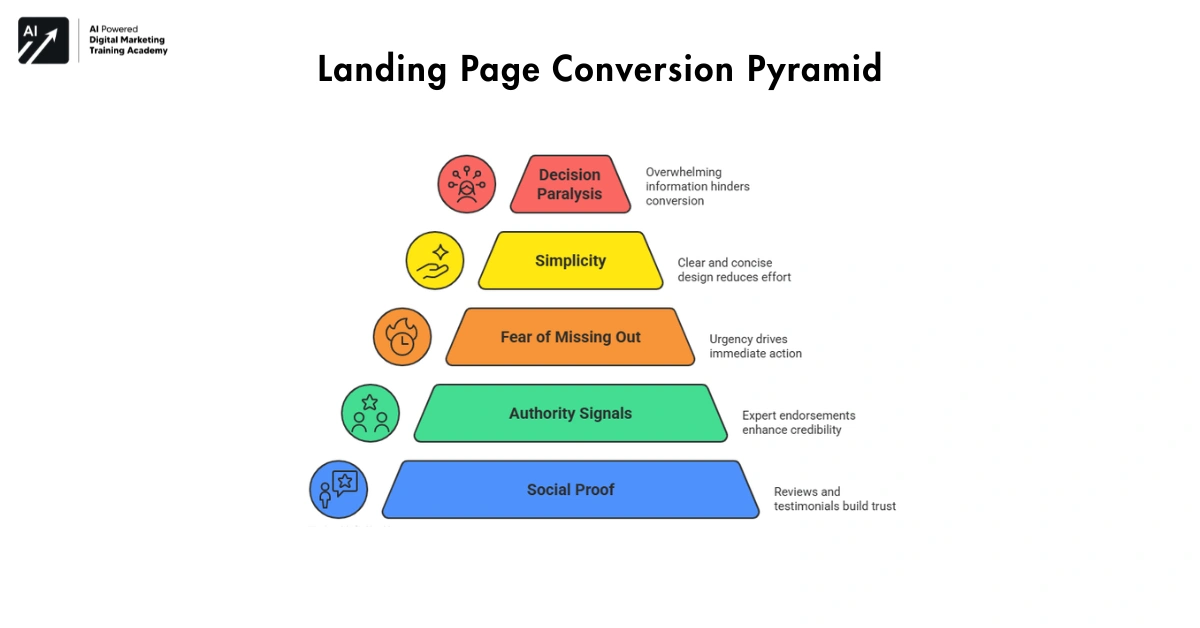
Traffic is useless if users don’t take action.
Key Psychological Triggers
Social proofs like reviews, testimonials
- Authority signals
- Fear of missing out
- Simplicity
Common Mistake
- Too much information → decision paralysis
- Best pages reduce thinking effort.
Ad Fatigue and Creative Refresh Cycles
Even high-performing google ads stop working over time.
Signs of Ad Fatigue
- Declining CTR
- Increasing CPC
- Reduced conversions
Solution
- Refresh creatives every 2-4 weeks
- Rotate messaging angles
- Introduce new hooks
Consistency requires renewal.
Data-Driven Decision Making Framework
Most marketers look at data but don’t know how to act on it.
Decision Framework
- High CTR + low conversions → landing page issue
- Low CTR → creative problem
- High CPA → targeting or offer issue
This isolates the real problem quickly.
Scaling Without Breaking Campaign Performance
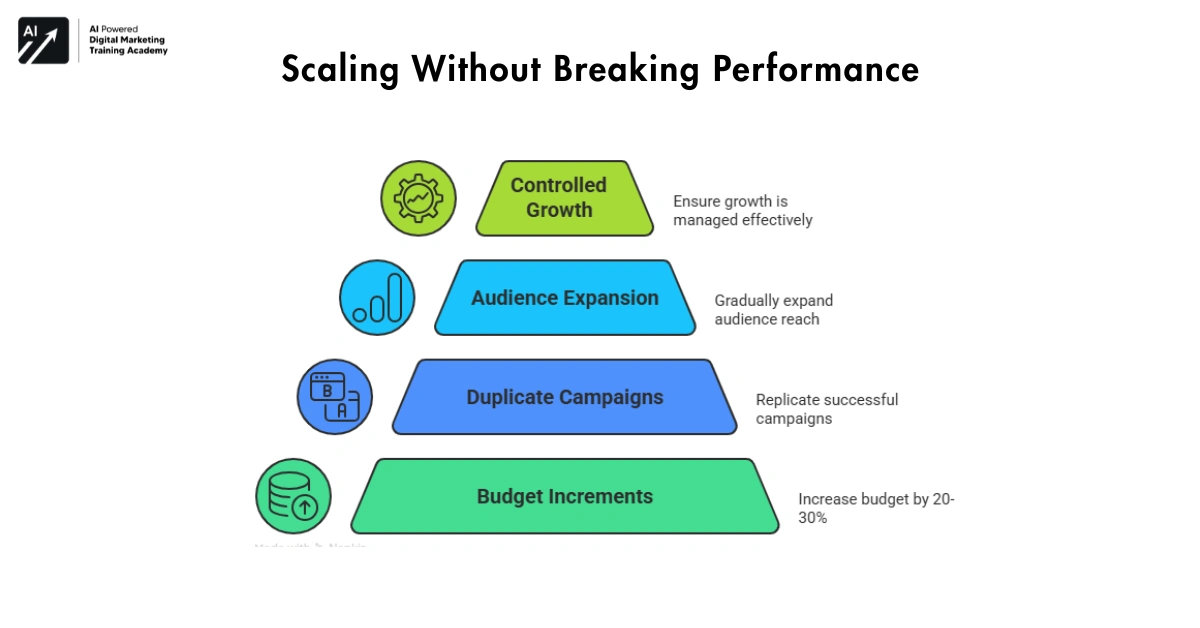
Scaling is where most profits are lost.
Safe Scaling Performance Marketing Strategy
Strategy
- Increase budget by 20 – 30% increments
- Duplicate winning campaigns
- Expand audience gradually
What Goes Wrong
Aggressive scaling leads to:
- Higher costs
- Reduced efficiency
Growth must be controlled.
Channel Diversification Strategy
Relying on one platform is risky.
Multi-Channel Approach
- Search ads for intent
- Social ads for discovery
- Retargeting for conversion
Risk of Single Channel
- Algorithm changes
- Rising costs
- Account bans
Diversification protects growth.
Building a Performance Marketing Strategy System
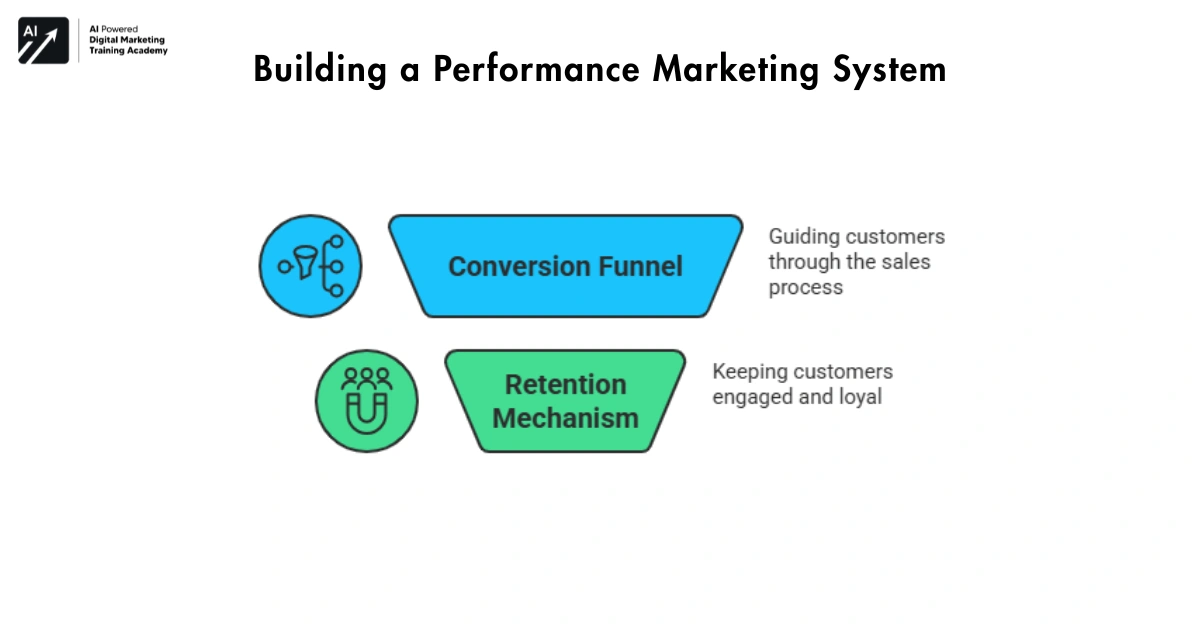
Short-term campaigns create spikes and systems create predictable revenue.
System Components
- Acquisition channels
- Conversion funnel
- Retention mechanism
Outcome
- Instead of: Random results
- You get: Consistent, scalable growth
How to Build a Profitable Performance Marketing Strategy
Step 1: Define Clear Objective
Choose one:
- Lead generation
- Sales
- App installs
Step 2 : Build a Strong Offer
A compelling offer improves conversion more than ad optimization.
Step 3: Create Conversion-Focused Landing Pages
Focus on:
- Clarity
- Simplicity
- Trust
Step 4: Test Before Scaling
Run small-budget tests to identify:
- Winning creatives
- Best audiences
Step 5: Optimize Using Data
Track performance and refine continuously.
Step 6: Scale Gradually
Increase your budget slowly to keep things stable.
Scaling Performance Marketing Strategy Campaigns
Scaling is where most campaigns break.
Horizontal Scaling
- Test new audiences
- Expand targeting
Vertical Scaling
Increase budget on winning campaigns
Risk
Sudden scaling can:
- Increase costs
- Reduce conversion rates
- Controlled scaling is essential.
Second-Order Effects (What Most Marketers Ignore)
Performance marketing strategy decisions create downstream effects.
Examples:
- Aggressive ads → short-term sales but brand damage
- Heavy discounts → lower long-term profitability
- Over-targeting → audience fatigue
Understanding these effects prevents long-term failure.
Key Takeaways
- Performance marketing strategy is a system, not a tactic
- Profitability depends on unit economics
- Funnels drive conversions, not ads alone
- Data-driven decisions outperform assumptions
Conclusion
Performance marketing isn’t simply about campaigns. It’s about creating systems that tie together traffic, conversions, and profit. Many people get lost in this process because they think ads are enough, and don’t know what to do after the first click. Authentic success comes from understanding the whole process, from first click to second sale or gift, and finding a way to optimize all stages.
Performance Marketing Strategy needs an intelligent approach with databases, testing, and clear figures, which enables the business to find what works, eliminate what doesn’t, and scale up with certainty. But long-term profit is boosted or hurt by more factors than campaigns, such as customer service, pricing, and offers, which all need balancing.