
Startups usually do not fail because founders lack effort. They fail because the economics underneath their growth are broken. At the center of this problem sits one metric that founders often ignore, misunderstand, or calculate incorrectly: customer acquisition cost for startups.
On the surface, growth looks exciting. New users sign up. Downloads increase. Website traffic rises. Pitch decks show upward graphs. However, behind these numbers, money quietly leaks out. Marketing spends increase. Sales teams expand. Ad budgets grow month after month. Eventually, founders wake up to a harsh reality, growth did not create strength, it created fragility.
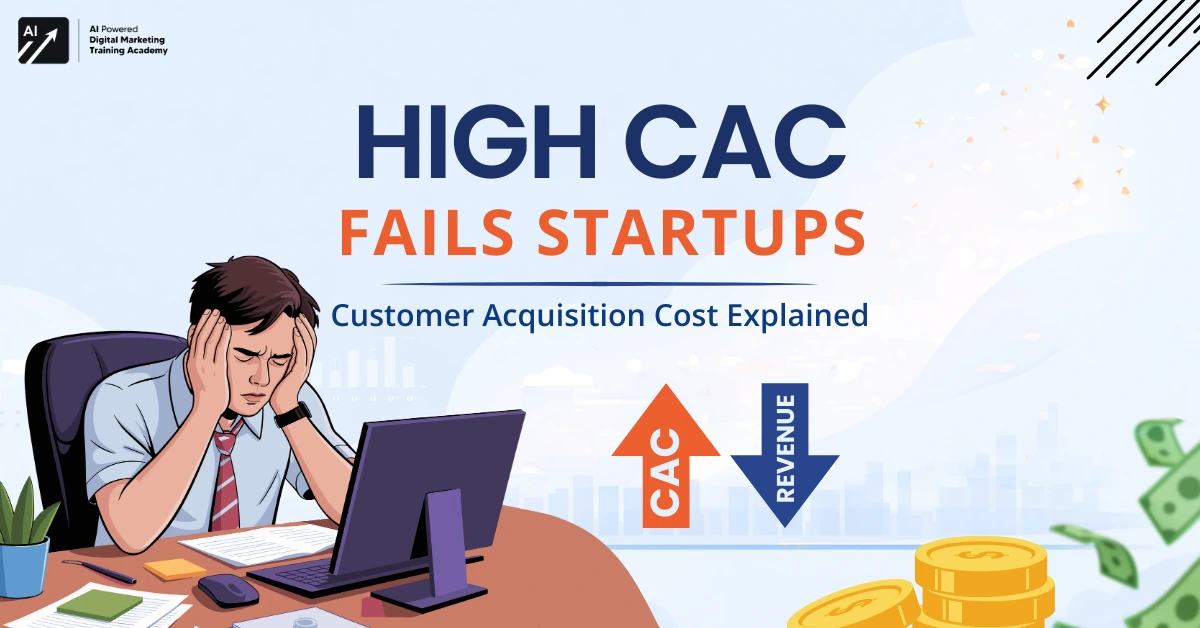
Customer Acquisition Cost (CAC) explains this pattern better than almost any other metric. CAC shows how much money you spend to get one new customer. When CAC rises faster than revenue, the startup starts losing cash. No funding round can fix that forever. Many startups confuse activity with progress. They chase visibility instead of sustainability. They optimize impressions instead of economics. As a result, they scale loss instead of value.
This blog breaks down customer acquisition costs for startups in simple language. This explains CAC, why it matters, how high CAC causes problems, and how founders can lower it and keep growing. If you learn this deeply, you get ahead of many startups.
What Is Customer Acquisition Cost (CAC)?
Customer acquisition cost shows how much money a startup spends to get one new customer. This includes everything involved in convincing someone to become a paying user, not just ads.
Many founders underestimate CAC because they only count visible expenses. They look at Facebook ads or Google ads and assume that is their entire acquisition cost. In reality, CAC captures much more.
Customer Acquisition Cost (CAC) = Total Marketing Spend + Total Sales Spend ÷ Number of New Customers Acquired




This seems easy, but it has many hidden parts. Marketing spend is the cost of ads, content, emails, and brand work. Sales spend includes pay for sales staff, tools, calls, demos, and customer support.
CAC matters because it connects growth with cost. Growth without cost awareness leads to unsustainable expansion. Growth with controlled CAC builds durable companies. Startups often feel happy about growth but do not ask how much it costs. CAC shows the real story.
CAC also forces discipline. It reveals whether your marketing channels actually work. It exposes whether your sales process converts efficiently. It shows whether your product naturally attracts users or requires expensive persuasion.
Ignoring CAC is like driving fast without checking fuel consumption. You may enjoy speed initially, but you eventually stall.
CAC Formula Explained in Simple Terms
To truly understand customer acquisition cost for startups, founders must calculate it correctly. Incorrect CAC calculations give false confidence and lead to dangerous decisions.
Let’s look at the formula one more time
CAC = (Marketing Costs + Sales Costs) ÷ New Customers Acquired
Let’s divide this down clearly:
Marketing Costs include:
- Paid advertisements like Google, Meta, LinkedIn, etc.
- Content creation and SEO tools
- Influencer marketing
- Email marketing software
- Branding campaigns
- Agency or freelancer fees
Sales Costs include:
- Sales team salaries
- Commissions and incentives
- CRM software
- Demo tools and onboarding calls
- Trial support and pre-sale assistance
New Customers Acquired include:
- Only paying customers (not free signups)
- Customers acquired within the same period as the spend
Founders often inflate customer counts by including free users or trials. This mistake artificially lowers CAC and hides the real cost of conversion. Always calculate CAC using customers who generate revenue.
Accurate CAC calculation creates clarity. It allows startups to test channels honestly, compare strategies objectively, and decide where to invest next. Without accuracy, CAC becomes meaningless.
Customer Acquisition Cost Explained with a Simple Example
Numbers make CAC easier to understand. Let’s see how this works in a real startup. If a startup spends ₹5,00,000 in one month. This includes:
- ₹3,50,000 on ads and marketing tools
- ₹1,50,000 on sales salaries and commissions
- 1,000 customers start paying the startup.
CAC = ₹5,00,000 ÷ 1,000 = ₹500 per customer
One customer cost the startup ₹500.
At first, this may look okay. But CAC matters only when you compare it with how much money the customer brings. If each customer pays ₹300 once and never returns, the startup loses money on every acquisition.
Many startups fall into this trap. They celebrate low per click costs or cheap leads, but leads do not equal customers. Clicks do not equal profits. CAC forces founders to focus on what matters paid customers and sustainable returns.
This example also shows why scaling blindly can be dangerous. If the startup doubles it spend to acquire more customers without improving conversion or retention, CAC may rise further. Growth then accelerates losses.
Why Customer Acquisition Cost Matters More Than Revenue
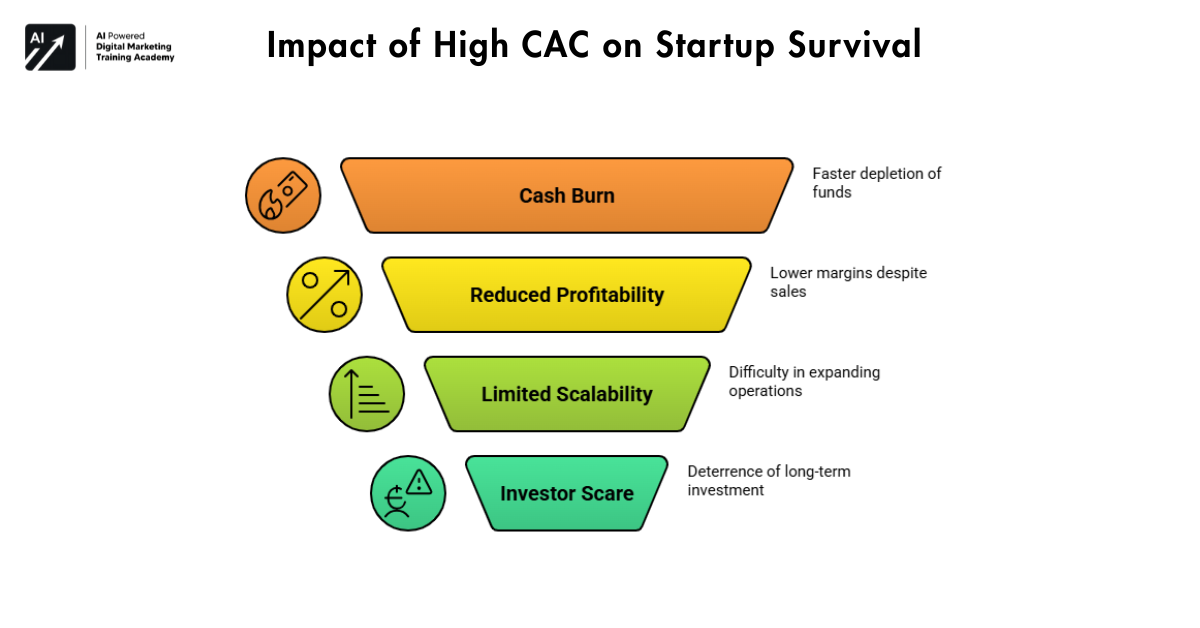 Revenue attracts attention. CAC determines survival. A startup can show impressive revenue growth while still failing underneath. High CAC eats into margins, increases dependency on funding, and reduces flexibility during downturns.
Why CAC matters so deeply:
- High CAC burns cash faster than expected
- High CAC reduces profitability even with strong sales
- High CAC limits scalability
- High CAC scares long-term investors
Startups operate under uncertainty. Markets shift. Ad costs rise. Consumer behavior changes. When CAC remains low, startups adapt easily. When CAC stays high, even small shocks can trigger collapse.
Revenue without CAC awareness creates illusions. Founders believe they are growing strong, while in reality they are building a fragile structure. Good startups see CAC as a key part of running the business.
CAC vs Customer Lifetime Value (CLV)
The relationship between CAC and customer lifetime value decides the fate of startups. Customer Lifetime Value means the total money a customer gives you.
If:
CAC > CLV, the startup loses money on every customer
CAC < CLV, the startup creates value and can grow sustainably
Many startups ignore this comparison. They focus on bringing users now and earning later. This strategy rarely works unless retention and upselling are strong.
Healthy startups maintain a clear gap between CLV and CAC. This gap helps pay for daily work and new improvements. Without it, growth becomes expensive and dangerous.
CAC and Startup Scalability
Scalability depends directly on CAC. When CAC rises with growth, scaling breaks within the startup ecosystem. Paid channels often become more expensive over time. Competition increases. Algorithms change. Attention costs rise. If a startup relies only on paid acquisition, CAC naturally inflates.
Good startups grow while customer costs stay low. They use free channels, referrals, and users who come back. These mechanisms compound over time and protect margins. CAC reveals whether growth is repeatable or fragile. Founders who master CAC design businesses that scale without bleeding.
Common Reasons Startups End Up with High CAC
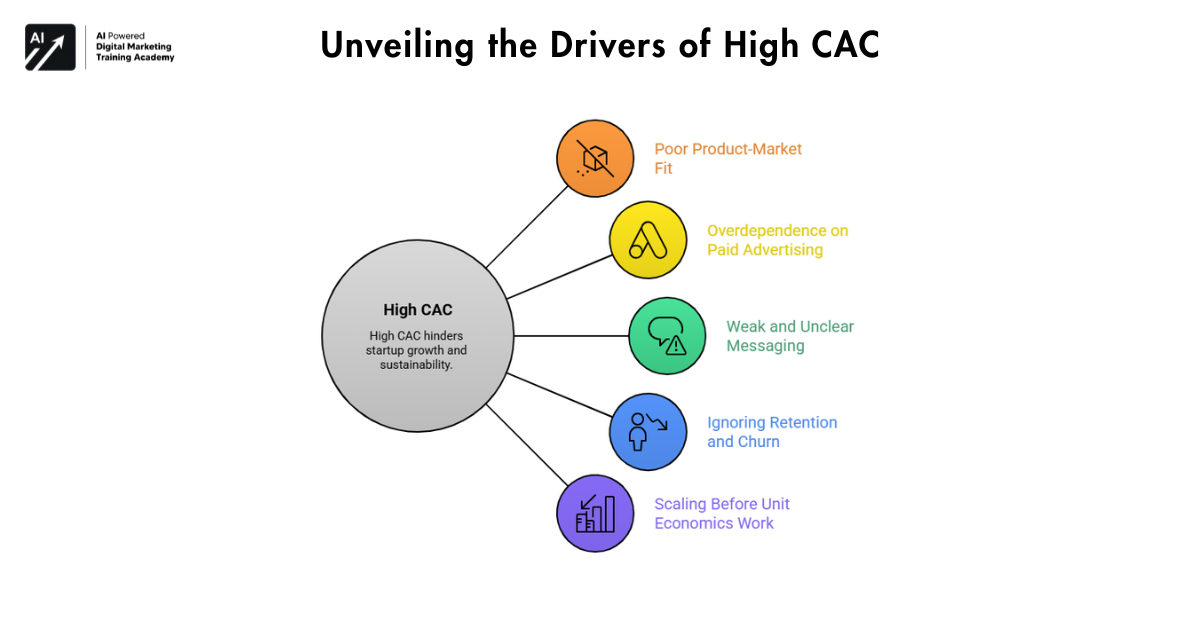 High customer acquisition cost for startups rarely happens by accident. It emerges from predictable mistakes that many founders repeat.
Key reasons include:
- Poor product market fit
- Overdependence on paid advertising
- Messages are weak and not clear.
- Ignoring retention and churn
- Scaling before unit economics work
When a product fails to solve a real problem, marketing must work harder. Ads become louder. Discounts increase. CAC rises. When retention is low, startups must continuously replace lost customers, pushing CAC higher.
Startups often chase growth signs instead of strong basics. They optimize short-term numbers while ignoring long-term economics. High CAC becomes the tax they pay for misalignment. Seeing these problems early helps founders fix them in time.
How to Reduce Customer Acquisition Cost for Startups
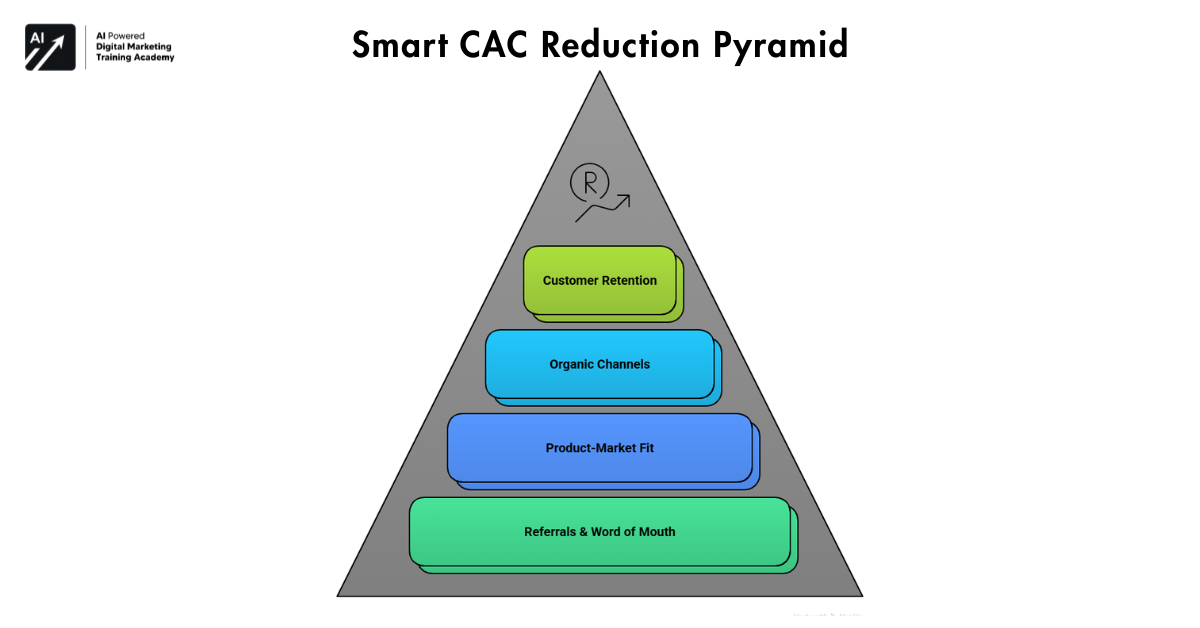 Reducing CAC does not mean slowing growth. It means growing smarter. Smart startups stop buying attention blindly. They earn trust, build loyalty, and let the product carry part of the acquisition burden. Here are proven ways to lower CAC over time.
Focus on Referrals and Word of Mouth
Getting customers through referrals is easier and cheaper. Trust transfers naturally from one customer to another.
Why referrals lower CAC:
- No ad spends required
- Higher conversion rates
- Stronger customer quality
- Better retention
Startups should design referral loops intentionally. Simple incentives, recognition, or exclusive benefits encourage sharing. When customers promote your product, CAC drops dramatically. You cannot force word of mouth, but good experiences make it happen.
Improve Product Market Fit
Product market fit reduces CAC automatically. When people genuinely want the product, marketing becomes easier.
Signs of strong product market fit include:
- High organic signups
- Strong retention
- Customers recommending without incentives
- Reduced sales resistance
Founders should listen to users, improve their value, and remove problems. When the product is clearer, getting customers becomes easier. Marketing should help real demand grow, not fake it.
Use Organic Channels for Long-Term Growth
Organic channels compound over time and reduce dependency on paid acquisition.
Effective organic channels include:
- SEO-driven content
- Community building
- Email newsletters
- Social proof and authority building
While organic growth takes patience, it creates durable traffic and trust. Over time, organic leads reduce overall CAC and stabilize growth. Paid ads rent attention. Organic channels own it.
Retain Customers to Lower Overall CAC
Retention indirectly lowers CAC. When customers stay longer, revenue increases without additional acquisition spend.
Retention improves CAC by:
- Increasing CLV
- Reducing churn-driven replacement costs
- Improving referrals
Startups that focus only on acquisition leak value. Those that focus on retention build compounding growth. Simple actions like better onboarding, faster support, and clear communication dramatically improve retention and CAC efficiency.
Final Takeaway – CAC Is a Survival Metric, not a Marketing Metric
Customer acquisition cost for startups decides whether growth creates value or destroys it. Founders who ignore CAC build businesses that depend on constant funding. Founders who respect CAC build businesses that last.
CAC teaches discipline. It forces clarity. It aligns growth with economics. When startups control CAC, they gain freedom to innovate, adapt, and survive uncertainty.
Startups do not fail because ideas are weak. They fail because growth costs too much. If you master CAC early, you avoid that fate. In the long run, the best startups are not the loudest. They grow quietly and steadily.