

The idea of opening an EV charging station business in India is gaining rapid attention. This is due to rising fuel costs, government push for electric vehicles and growing EV adoption are creating new business opportunities.
But there’s a gap between reality and hype.
You may have seen claims like “start with ₹2-3 lakhs” or “earn ₹5 lakhs per month.” In practice, success in the EV charging station business in India depends on location, utilization, and investment strategy-not just trends.
This guide breaks down real costs, actual profit scenarios, subsidy truth, and a step-by-step approach so you can make an informed decision.
Starting an EV charging station business in India is a good idea. By selling electricity per unit and can earn money back. To setup it costs around ₹1.5 lakh to ₹20 lakh and profitability depends up on place where your EV charging station is and kind of charger you use and how many people use it. Mostly ROI takes around 1.5 to 3 years.
What is an EV Charging Station Business?
It works same as a fuel station, but instead of petrol or diesel, sell electricity to electric vehicles.
Install charging equipment at a location and charge users based on electricity consumption or session usage.




How the EV Charging Business Model Works
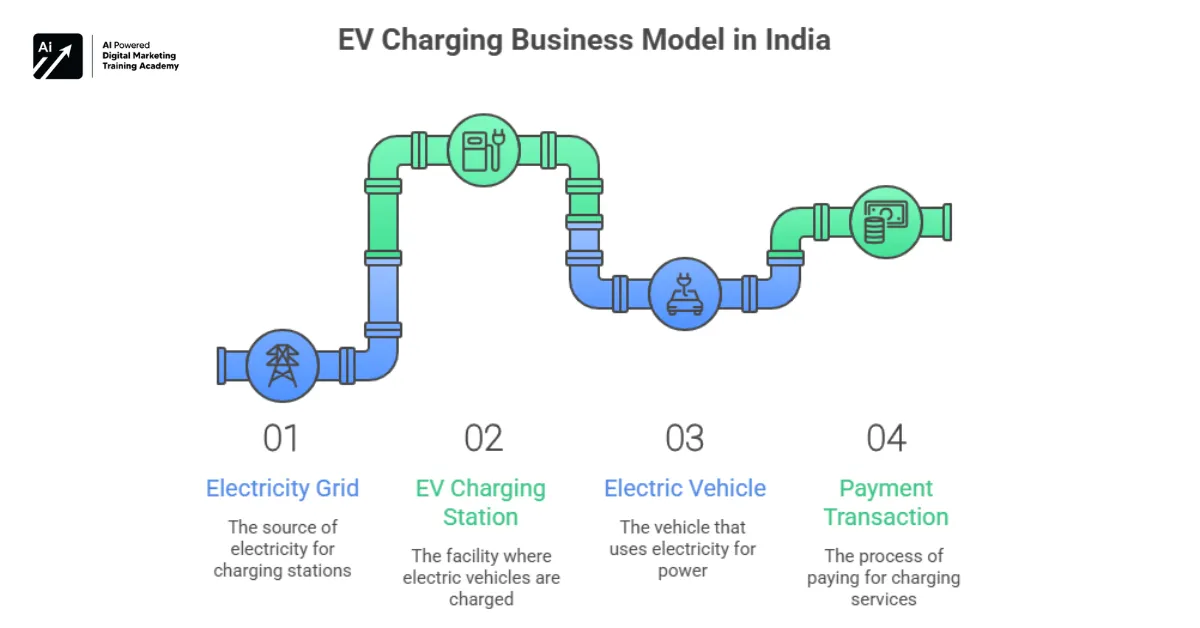
The model is straightforward:
- Buy electricity at a base rate
- Sell it at a higher price
- Earn the margin per unit
Example 1:
Electricity cost = ₹7/unit
Selling price = ₹15/unit
Profit = ₹8/unit
Example 2:
Fast charger with higher pricing (₹18/unit) in a premium location increases margins significantly.
Types of Revenue Streams in Charging Stations
Revenue is not limited to unit charging.
You can also earn from:
- subscription plans for fleets
- fixed charging packages
- partnerships with delivery companies
Example:
A food delivery fleet charging daily provides predictable recurring income, unlike random walk-in users.
Why EV Charging is a growing business opportunity in India
India’s EV market is growing. However, charging infrastructure is still developing.
This creates a supply demand gap.
The growth of Electric Vehicles in India is really taking off
Electric two wheelers and three wheelers are becoming very popular, while electric cars are steadily increasing in urban areas.
This leads to rising demand for:
- public charging stations
- workplace charging
- highway fast charging
Infrastructure Gap and Market Demand
Many regions still lack reliable charging access.
Example 1:
Highways with long gaps between charging stations
Example 2:
Urban residential areas without dedicated charging infrastructure
This gap creates opportunity-but only where actual EV usage exists.
EV Charging Station Business in India: Cost, Profit & Reality Check
Before evaluating profits, understanding real investment requirements is critical.
EV Charging Station Cost in India (Real Breakdown)
Cost varies significantly depending on charger type, scale, and location.
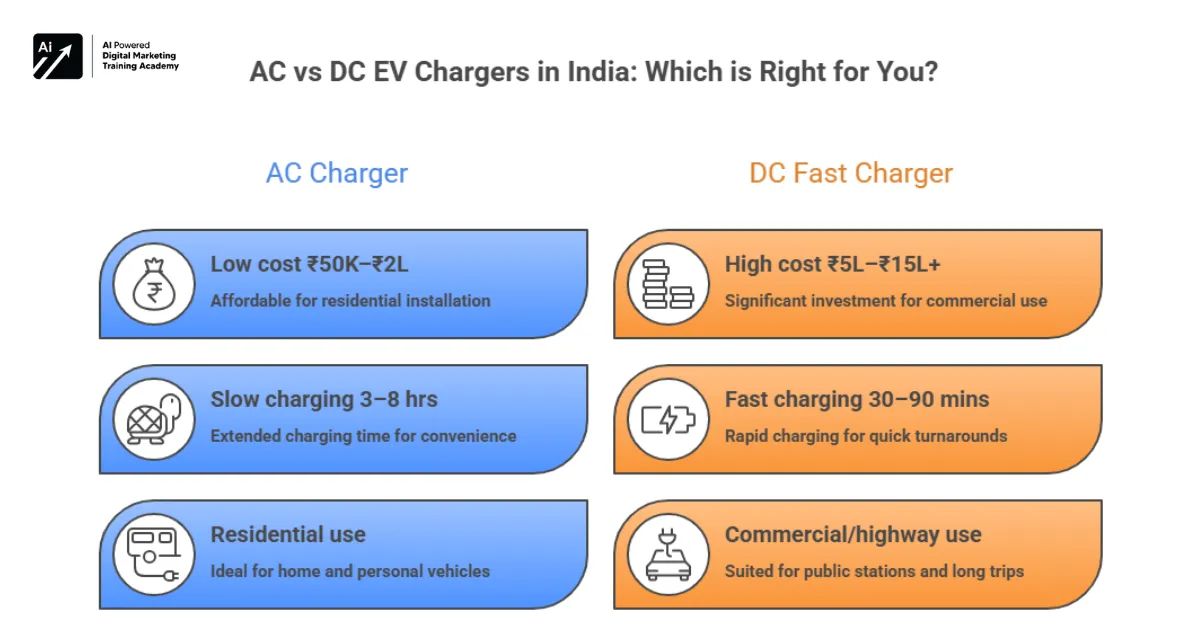
Cost of AC Chargers vs DC Fast Chargers
AC Chargers
₹50,000 – ₹2 lakh
Charging time: 3-8 hours
Best for: homes, offices, in low-demand areas
DC Fast Chargers
₹5 lakh – ₹15 lakh+
Charging time: 30-90 minutes
Best for: highways, commercial hubs
Setup and Infrastructure Cost
Includes:
- wiring and cabling
- installation
- transformer upgrades (if required)
Typical cost:
- ₹1-5 lakh
Land and Operational Costs
- Owned land → no upfront cost
- Rental → recurring expense
Operational costs include:
- electricity bills
- maintenance
- software/platform fees
Total Investment Scenarios
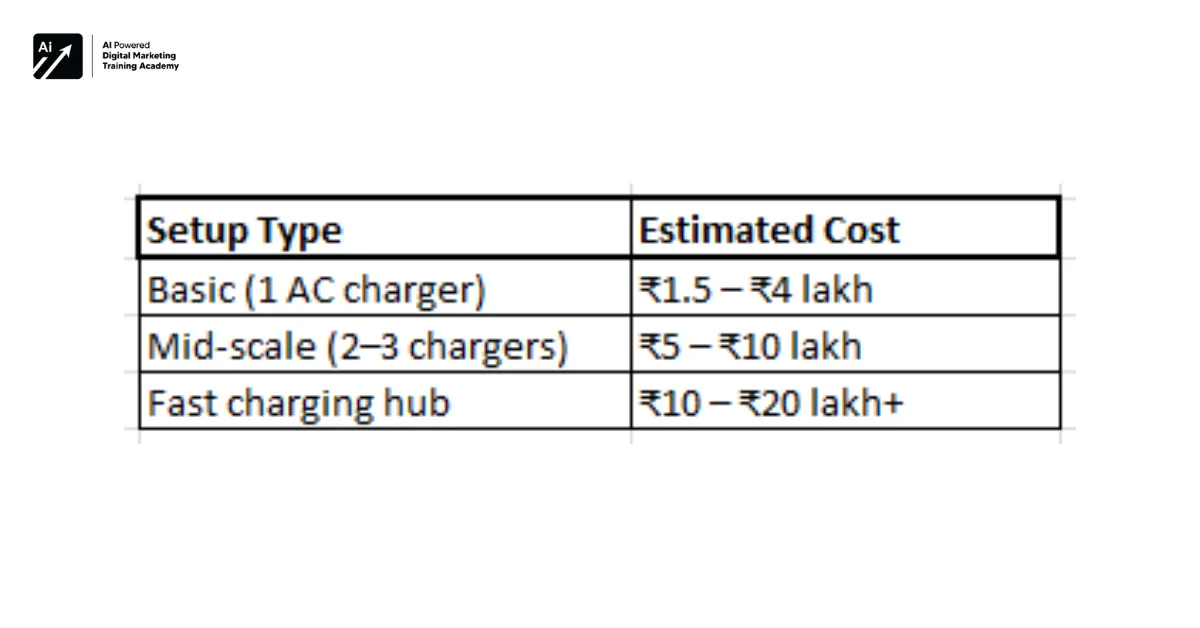
Insight: The ₹2-3 lakh setup is only possible for very small-scale AC charging.
EV Charging Station Subsidy in India
Subsidies can lower the cost, but lot of people do not really understand what subsidies are.
Before calculating returns, it’s important to understand how subsidies actually work.
Central Government Schemes Explained
These policies are really about getting more people towards EV adoption and building the infrastructure to support them. However, they do not promise direct huge subsidies for all charging stations.
State-Level Subsidies and Variations
Some states offer:
- capital subsidies
- reduced electricity tariffs
- incentives for public charging infrastructure
Why “80% Subsidy” Claims Are Misleading
There is no universal subsidy across India.
Subsidy depends on:
- state policy
- charger type
- public vs private installation
Always verify through official state EV policy or DISCOM guidelines.
EV Charging Business Profit in India (Realistic Scenarios)
Profitability depends primarily on usage-not just setup.
Revenue Model Explained (Per Unit Pricing)
Profit = (Selling price – electricity cost) × units consumed
Low vs Medium vs High Utilization Income
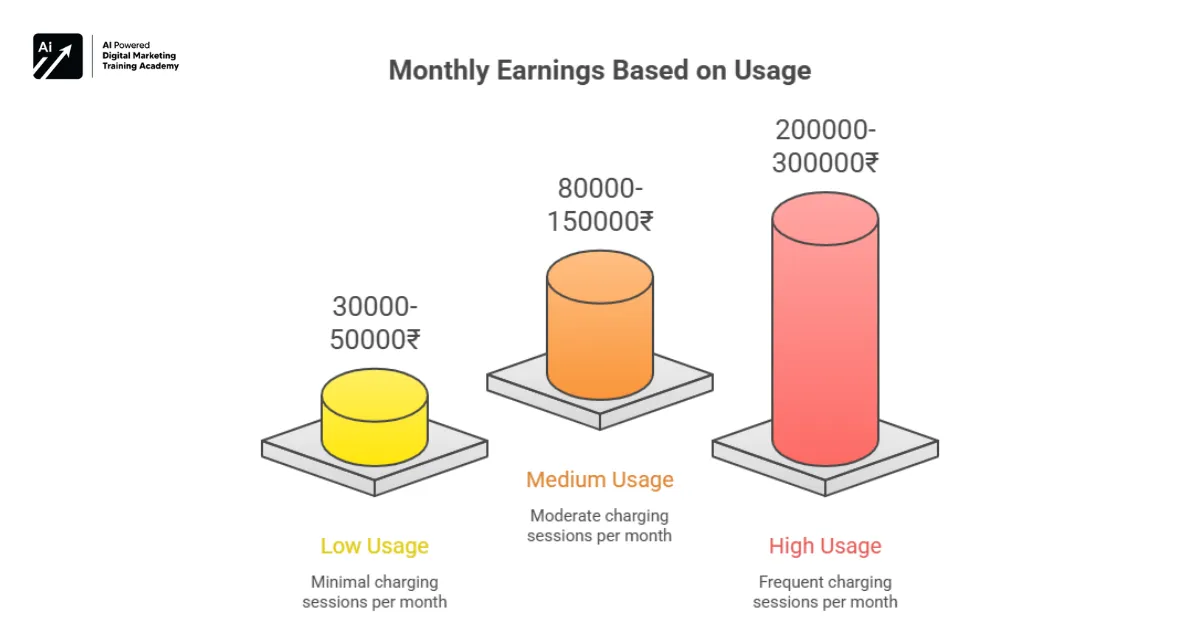
Low Usage
- 5 vehicles/day
- ₹30K-₹50K/month
Medium Usage
- 10-20 vehicles/day
- ₹80K-₹1.5 lakh/month
High Usage
- 25-40 vehicles/day
- ₹2-3 lakh/month
Can you really earn ₹5 Lakhs per month?
Yes, only under specific conditions:
- prime location
- high EV traffic
- fast chargers installed
- fleet partnerships
For most beginners, this level is not immediate.
EV Charging Station ROI (How Long to Recover Investment)
ROI depends on investment size and utilization rate.
ROI Formula (Simple Framework)
ROI = (Monthly Profit × 12) ÷ Total Investment
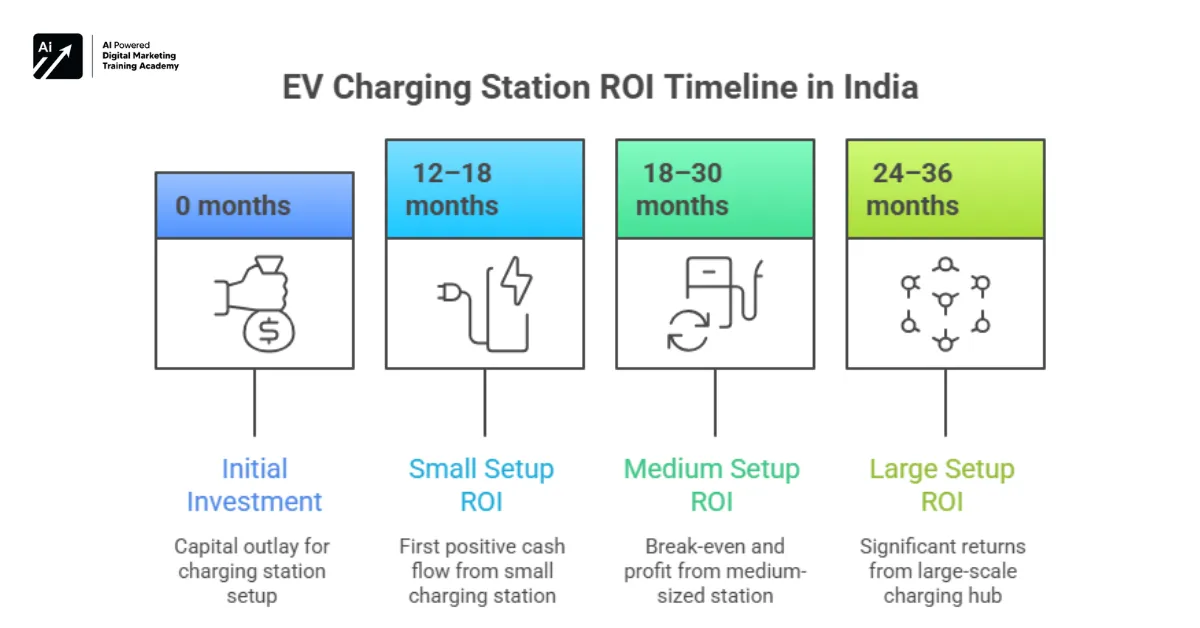
Break-Even Example
- Investment: ₹8 lakh
- Monthly profit: ₹80,000
Break-even:
- Ideal scenario: 10 months
- Realistic scenario: 15-18 months
Factors That Affect Profitability
- location quality
- EV density
- electricity cost
- pricing strategy
Best Locations for EV Charging Stations, in India
Location really matters for its success.
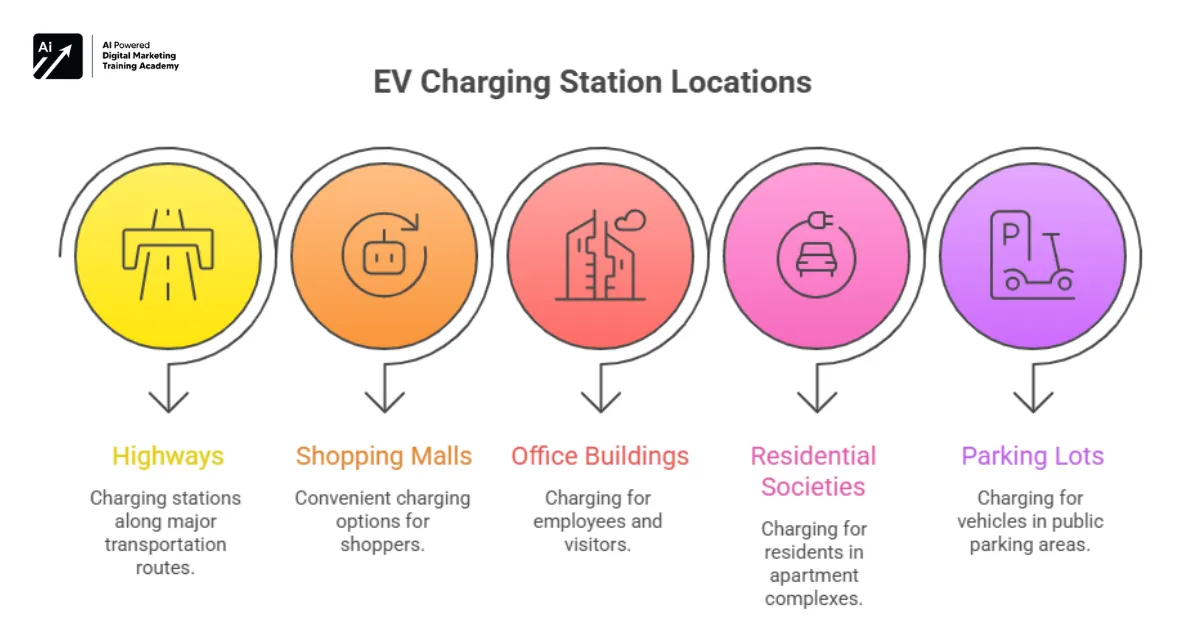
High-Traffic Commercial Locations
- malls
- office complexes
- petrol pumps
- parking lots
Highway vs City Setup
- highways → fast charging demand
- cities → consistent daily usage
Tier 2 and Tier 3 City Opportunities
There is not much competition in these cities and rising EV adoption create early mover advantage.
Location Decision Framework
Before finalizing a location, evaluate:
- EV density (high / medium / low)
- daily traffic volume
- nearby charging stations
- parking accessibility
Poor location is the #1 reason for failure.
Compare AC with DC Chargers: Which one should you choose?
Your charger choice directly affects cost and earnings.
Cost vs Charging Speed Comparison
- AC → low cost, slower charging
- DC → high cost, faster charging
Profitability Comparison
- AC → lower daily revenue
- DC → higher throughput and earning potential
Strategy:
Start with AC → validate demand → scale to DC.
How to Start an EV Charging Station Business in India follow this step-by-step guide.
A structured approach can reduce risk and improves ROI.
Location Selection
Choose areas with:
- visible EV presence
- consistent traffic
- easy access
Power and Electrical Requirements
Ensure:
- sufficient load capacity
- transformer availability (for fast chargers)
Approvals and Permissions
May include:
- electricity board approval
- local authority permissions
Vendor Selection
Options:
- independent setup
- network/franchise partnerships
Installation and Launch
- install chargers
- integrate payment system
- list on EV apps
EV Charging Franchise vs Independent Setup
Choosing the right model affects control and profitability.
Pros and Cons of Franchise Model
Pros:
- brand support
- faster setup
- existing network
Cons:
- revenue sharing
- limited flexibility
Pros and Cons of Independent Setup
Pros:
- full control
- higher margins
Cons:
- higher effort
- customer acquisition required
Challenges and Risks in EV Charging Business
Understanding risks is important because it helps us avoid making mistakes.
Low Initial Demand Risk
Some areas still have limited EV usage.
High Capital Requirement
Fast chargers require significant upfront investment.
Electricity Cost Impact
Higher electricity tariffs reduce profit margins.
Policy and Technology Risks
- policy changes
- evolving charging standards
Common Mistakes to Avoid
- choosing low-demand locations
- over-investing in fast chargers too early
- relying on subsidy assumptions
- ignoring electricity cost margins
Is EV Charging Station Business Worth It in 2026?
This is a long-term plan for growth of EV infrastructure.
Who Should Start This Business
- landowners
- long-term investors
- infrastructure-focused entrepreneurs
Who Should Avoid It
- those expecting quick profits
- those relying only on subsidies
- those without a viable location
FAQs
How much does it cost to start an EV charging station in India?
Cost starts at ₹1.5 lakh for an AC charger. It can go up to twenty lakh rupees or more for a charging station. Investment depends on charger type, infrastructure and location requirements.
Is EV charging business profitable in India?
Yes, but it depends upon utilization. Stations that do not have a lot of traffic might earn around ₹30,000 per month. While busy ones can earn upto ₹2-3 lakh every month with steady usage.
What government subsidies are available for EV charging stations?
That are differs from state to state. Some states provide capital subsidies or special electricity rates. But not the same across India that is 80% subsidy.
How long does it take to recover investment?
Most of the EV stations break even in 1.5 to 3 years. This really depends on location, money invested and usage levels.
What is the best location for an EV charging station?
Areas like highways, shopping malls, office buildings and residential areas with EV owners. These areas can bring in steady income for the charging station.
Conclusion
The EV charging station business in India offers strong long-term potential-but it is not a shortcut to quick profits.
Success depends on:
- choosing the right location
- starting with the right investment level
- scaling based on real demand
The biggest mistake is directly entering the market based on hype instead of data.
Start with small and see how it goes, check the demand and then plan to scale strategically. This reduces risk and positions you to benefit as EV adoption continues to grow.