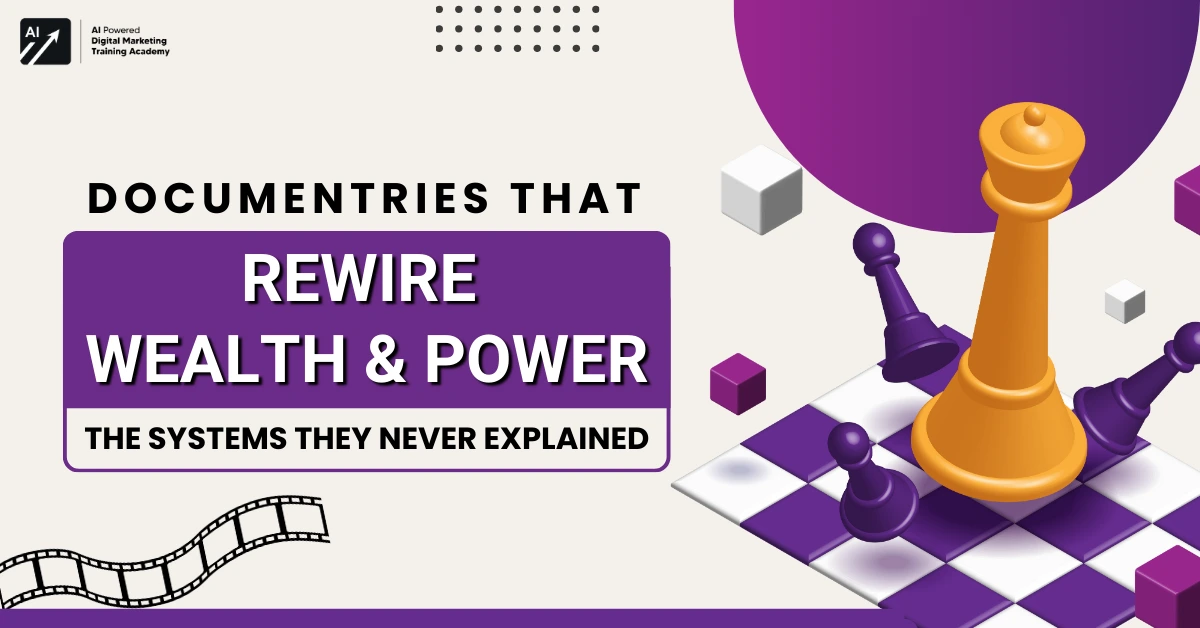

Long work hours never promise wealth. Once real power’s pattern clicks, that idea starts crumbling. Net worth often skips hard work altogether. What really matters often hides beneath the obvious, how access, authority, and structure influence results.
That is why these documentaries that rewire wealth and power. Far from trying to spark joy or drive effort, these visuals show cash shifting behind the scenes. Institutions act carefully, hiding their real actions. Even when markets shift, familiar figures still rise to the top.
Focusing on them while they’re happening changes how you see things. Instead of wondering how to make more, another idea comes up, like tracking who decides where funds go. Curiosity turns toward fairness: under what conditions do policies stretch or snap?
Most billionaires stay quiet about such movies, not due to secrecy, yet since grasping them erodes their edge. When schemes unfold, casual rivalry vanishes. Instead of clashing within flawed frameworks, vision shifts beyond them. This isn’t fun. It’s seeing what’s real.
Why These Are Not Normal Documentaries
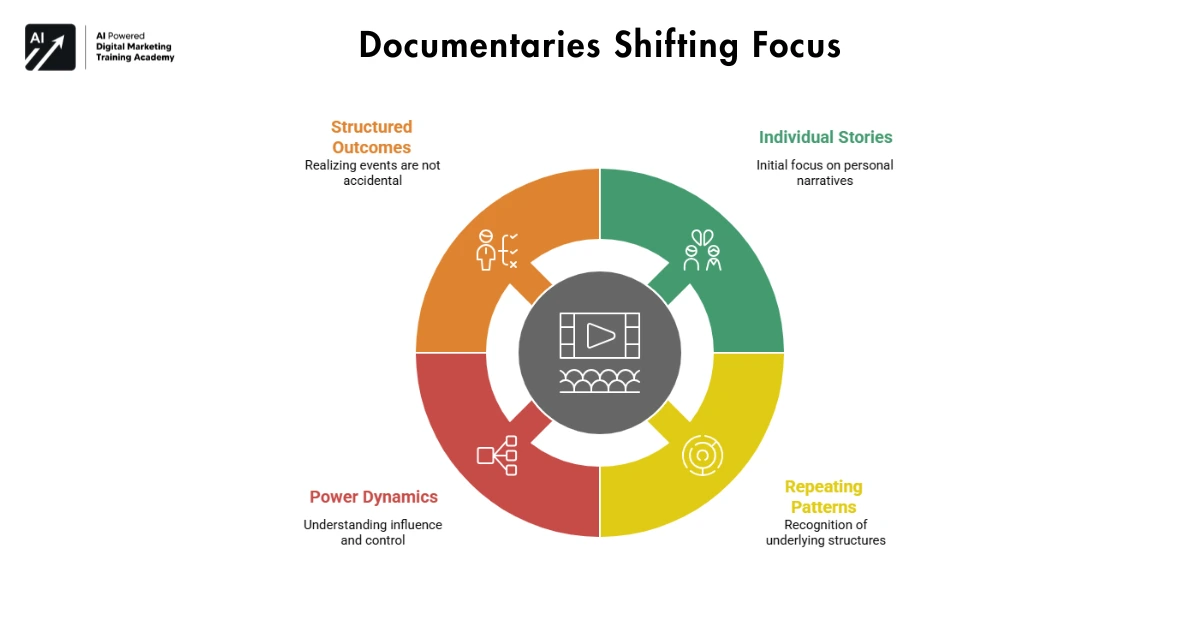 At first, these documentaries seem ordinary, finance, corporations, technology, or history. However, as you keep watching, your focus shifts. You stop following individual stories and begin noticing repeating patterns behind the scenes. That is where their power lies.
These films go beyond facts. They change how you see reality. Incentives drive decisions, influence concentrates over time, and rules bend to serve those in power. Outcomes are rarely accidental, they are structured.
Education vs Mental Programming
Traditional education teaches rules and predictable outcomes. Mental programming teaches interpretation and judgment. The difference is simple:



- Education delivers facts
- Mental frameworks shape conclusions
Classrooms explain rules. These documentaries reveal how systems behave. Instead of asking if something is fair, you start asking:
- Who built it?
- Who benefits?
- Who carries the risk?
This shift reduces emotional reactions and sharpens long-term thinking about money, work, and decisions.
Why Schools Avoid This Knowledge
Schools prioritize stability, so they avoid exposing imbalance. They rarely explain:
- Why capital grows faster than wages
- Why corporations survive scandals
- Why power bends how laws apply
As a result, failure feels personal. These documentaries show it is often systemic. Once that clicks, blame fades and clarity takes its place.
The Quiet Way the Super Rich Gain Knowledge
Wealth often follows understanding, not long hours. What separates the rich is early insight into how systems work. They study connections and leverage before making moves.
Private Knowledge vs Public Education
Public education spreads information evenly. Private knowledge creates advantages. The wealthy focus on:
- Tax structures
- Legal gray areas
- Financial leverage
- Human behavior
Ownership matters more than income. Position matters more than promotion. Over time, this gap compounds.
Rules First, Then Gameplay
Without knowing the rules, you serve the system. These documentaries reveal:
- Who writes the rules
- Who enforces them
- Who avoids consequences
Once you see this, emotion gives way to strategy. Reaction fades. Foresight takes control.
The 10 Documentaries That Begin the Rewiring Process
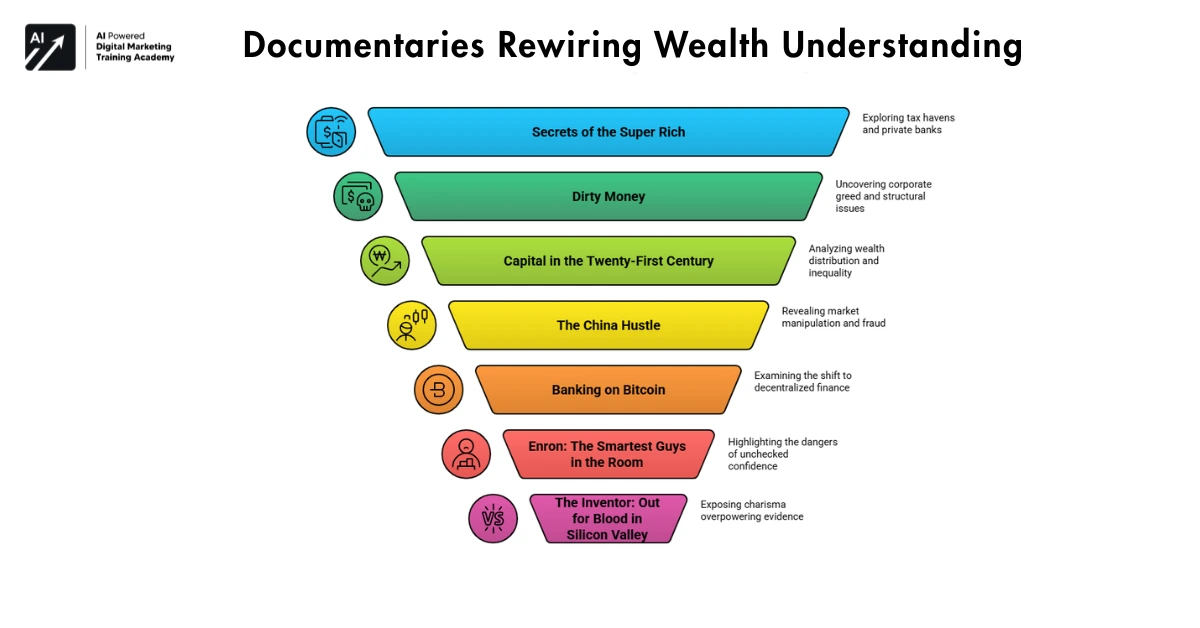 Starting with these films opens up ways to see who holds wealth, influence, and authority. One after another, they peel back layers on how things really run behind the scenes.
Secrets of the Super Rich
A window opens here into the world where rich families hide and grow their wealth beyond limits. What stands out is the way tax rules behave differently near the edge where norms bend or vanish.
What it teaches:
- Tax hideaways far from shore. More like smart moves than shady tricks
- Out of sight, private banks work one by one, choosing who gets access
- Some rich people arrange their money, so they face less tax risk
Still, the point lands, taxes aren’t only duties. They’re solutions shaped by how much we know and where we look.
Dirty Money
What stands out is how each part peels back the glaze hiding what big companies really do. The push to act badly isn’t about people it’s built into how things work. Suddenly, it’s less about bad actors, more about structures cheering wrongdoing.
What it teaches:
- What usually hides behind polished surfaces is an insatiable hunger for more
- When profits guide them, companies follow rewards, not beliefs
- What hides abuse is often how tangled it becomes
So, you discover something tough yet real ignorance, not dishonesty, tends to pose the greatest danger to money’s safety.
Capital in the Twenty-First Century
A look at how money is spread across people, shown through numbers rather than feelings.
What it teaches:
- Every year, money earns more than workers do. That gap keeps widening.
- Ownership compounds automatically
- Built into structures, inequality isn’t happenstance, it operates through policy, practice, and norms shaping access, opportunity, and outcome.
So, trying hard isn’t enough when you lack control over assets or a clear plan for the future.
The China Hustle
What hides inside those big market systems? They twist trust and confusion to their favor.
What it teaches:
- When processes stay hidden, fraud finds its way in
- Survival often hides in diligence, nothing about hesitation
- Money trails lead straight to Wall Street, where right or wrong doesn’t stop the clock.
So, blind trust often works against you.
Banking on Bitcoin
Outside regular banking, cash begins moving in different ways this film shows that shift clearly. What stands out is how deeply established bodies worry about losing control, not just losses from dishonest acts.
What it teaches:
- A way of organizing things, money feels less like folded sheets than moving air across banks and screens.
- Making money through oversight beats quick service. Profit often flows from managing risk, not just serving customers fast.
- Transparency threatens centralized power
That shift happens slowly, yet clearly. It isn’t that new tech fails it just moves power elsewhere. Control slips from organizations built on old models. Eventually, cash stops feeling like a statement from leaders above. It becomes strings of code, shared belief, proof among peers.
Enron: The Smartest Guys in the Room
What stands out isn’t only dishonesty in big companies. It’s how unbridled confidence can grow when nobody watches what people do. Smarts here mean little without moral direction. Authority becomes toxic once answers are never required.
What it teaches:
- Confidence doesn’t equal skill. That matters just as much in class as it does outside it.
- Hidden in layers of confusion, dishonest acts often find shelter
- Faster minds can speed up collapse unless guided by principle
Upstairs she went, though morals lagged behind goals. That climb later turned into a fall nobody saw coming. Talent alone won’t keep you standing when truth gets left behind.
The Inventor: Out for Blood in Silicon Valley
This documentary exposes how charisma can overpower evidence at least for a while. It shows how storytelling, confidence, and media hype can create the illusion of breakthrough innovation even when the science doesn’t exist.
What it teaches:
- Charisma can override facts and scrutiny
- Innovation can be performative, not real
- You can’t fake what you can’t scale
The deeper lesson is simple: markets may reward belief in the short term, but reality eventually demands proof.
The Inventor: Out for Blood in Silicon Valley
A tale unfolds here, where charm outshines facts for now. When people crave a tale, truth often takes a back seat, especially if money or attention hangs in the balance.
What it teaches:
- What looks right might still be wrong
- Performance shapes much of what we call innovation
- What grows fast often reveals itself fast too. Realness shows up where replication ends.
Reality insists on evidence, no matter how long it takes. Because of this, the movie points to uneasy reality markets celebrate faith strongly at first yet punish lies without warning.
Inside Bill’s Brain
What stands out is the way high-level thinkers approach challenges how they organize hours and handle overwhelming details. It’s less about money, more about building power slowly across years.
What it teaches:
- Deep focus beats constant motion
- Time runs out once and for all, never refilled
- Lasting effects stick around far beyond cash does
So, it hits you real wealth isn’t about fast gains, instead it grows quietly through careful planning, waiting years for results, while tackling issues anyone can use.
The Men Who Built America
One moment shows steel plants growing across America. Others reveal how money builds empires through rules, not just force. Carnegie made rails, then bridges, then trains. Rockefeller controlled oil refineries by buying small stations. J.P. Morgan stepped in when banks needed funds. The film does not praise them without question. It shows control forming inside accepted systems.
What it teaches:
- A squeeze on competition might happen without touching the law books.
- Monopoly outperforms popularity
- What someone leaves behind weighs heavier than how many agreed with them
Admiration wasn’t something they pushed for. Their work created structures durable enough to survive doubt. This shifts the view of capitalism less competition where anyone can win, more a calculated terrain shaped by choices.
What These Documentaries Really Teach (That Schools Don’t)
When looked at as a whole, these films show things schools rarely teach. It’s not that they lie, yet what they show feels uneasy. Power isn’t random it fits within a larger structure.
Structures shape who gets what, and why
Something doesn’t pop up out of nowhere. It grows from something already built in place.
- It moves toward ownership
- It piles on debt to amplify gains
- It guards itself by becoming hard to follow
Seeing this shifts success from something you earn alone into one shaped by where you stand.
Ethics Are Optional, Consequences Are Not
Nowhere is success more misleading than when actions go unchecked though balance can shift without warning.
- Gains today might vanish tomorrow if consequences are overlooked
- Institutions survive longer than individuals
- It often shows up after damage is done
So, thinking about ethics matters. It is both wise and necessary.
Money Moves to Those Who Understand Leverage
Effort has limits. Leverage doesn’t.
- Capital scales
- Systems compound
- Narratives persuade
That idea sticks, suddenly, effort feels less like grinding, more like tuning. Thinking changes when understanding takes over.
How to Watch These Documentaries the Right Way
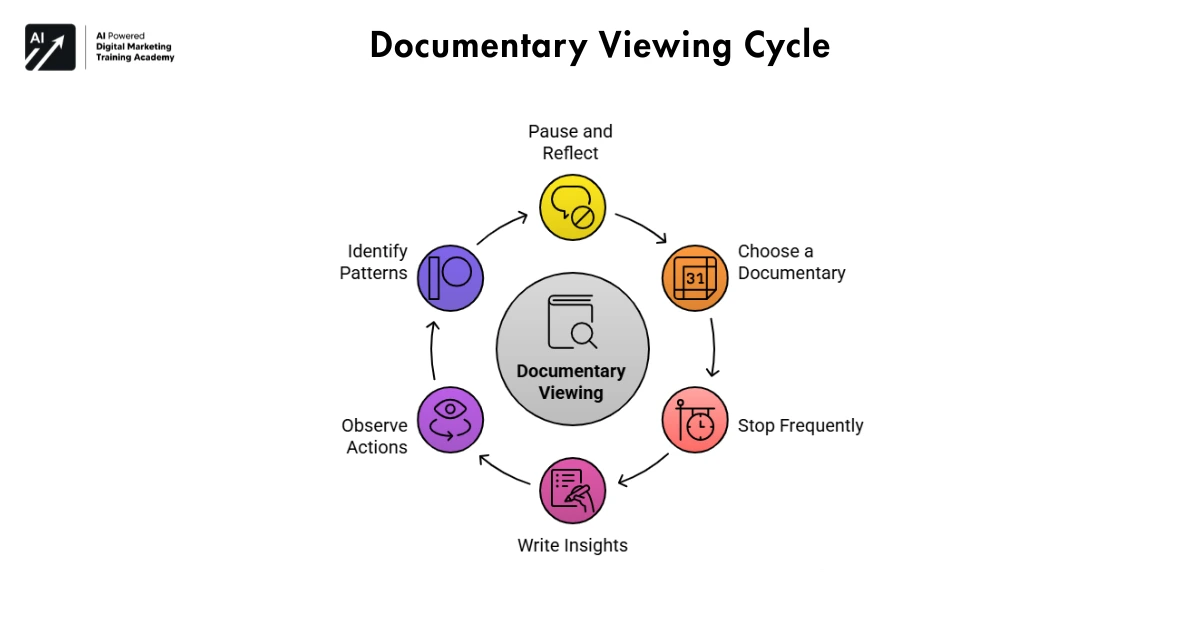 A quiet screen can make documentaries feel like stories meant to amuse. When attention is applied, they shift, they become exercises for the mind.
The One-Per-Week Rule
- Pause when you start to rush through screens.
- Each week, pick up a different documentary to watch
- Stop often
- Write insights, not quotes
This creates space for reflection. What matters most is how it lets patterns show up without forcing them.
Watch actions, skip faces
Avoid emotional attachment to heroes or villains. Instead, observe:
- Incentives
- Power flow
- Rule enforcement
Facts show up when things happen again and again. That pattern tells us something real.
How these documentaries quietly reshape your thinking
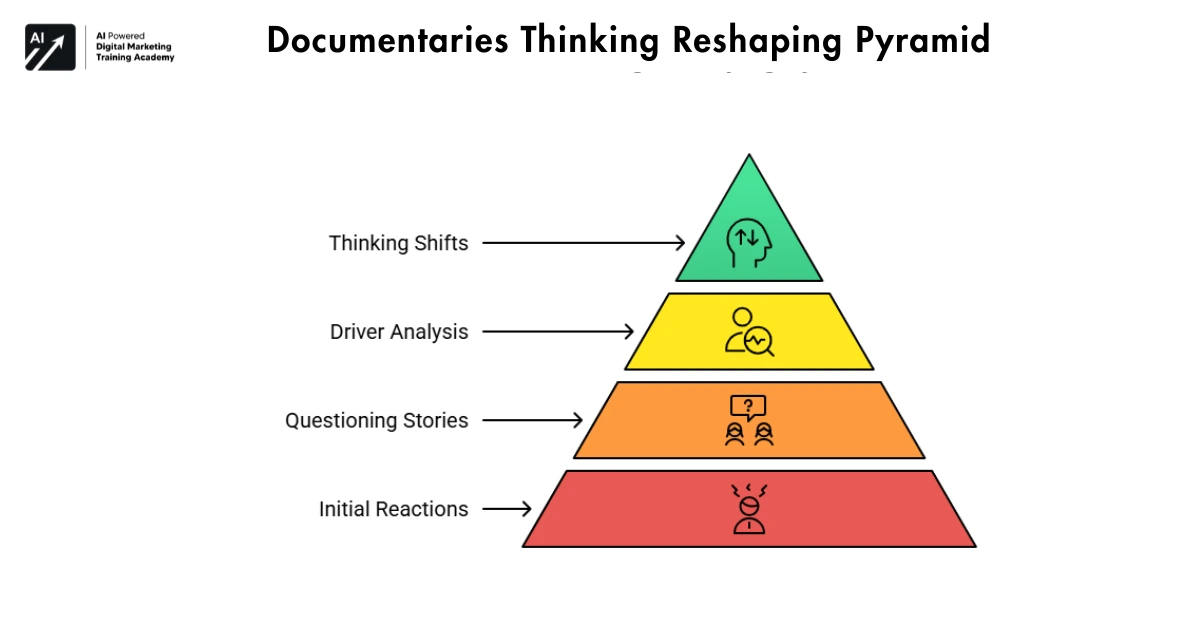 When you finish viewing those films, a quiet shift takes place. Outcomes once shocked or cheered without thought now feel different. Headlines that once sparked immediate reactions slowly lose their power. Stories of achievement, once accepted blindly, begin to question. What stands out is that you start wondering about what drives results not only who reaches them. Here’s where actual shifts in thinking take place.
Patterns stick around, not because they’re flashy but because they keep showing up, quietly persistent. After enough views, your mind begins to tag them without effort. Slowly shaped by repetition, understanding shifts how you judge situations, handle uncertainty, or plan ahead takes quiet form.
From Emotional Thinking to Strategic Thinking
Feelings often drive choices, yet reasons come after. Seeing how systems connect changes it though.
- Starting off slowly, you take your first steps
- People apart from systems
- Analyze incentives before intentions
- Question what happens first, then see where it goes instead of assuming the result right away
So now, staying clear of pressure money wise, power moves, even family drama becomes easier. Growth changes how control works.
Why Awareness Always Precedes Control
Awareness comes before control, not authority. That’s where it begins.
- After grasping it
- How money is protected
- How laws are selectively enforced
- How narratives influence public behavior
Nowhere does urgency grab control like before. A shift happens quietly choice steps in where reaction once lived. Seeing things clearly turns into something stronger: an early move with weight behind it.
Every week, check in with a basic plan that fits what you pick up. This setup helps keep things clear and moving forward. Just observing, even if fun or mental stretch, rarely leads to real change. That is why something basic yet clear can turn understanding into movement.
The One-Documentary Per Week System
This way keeps things manageable while still inviting thought. Weekly rhythm:
- Watch one documentary
- Stop time at critical points then look back on what happened
- Whatever shows up gets recorded, no judgments allowed
So, things come into view, not just flash then vanish.
Questions You Should Ask While Watching
Ask this when thinking about conflict:
- Who gains when this works out?
- Who takes the hit if it doesn’t work?
- That rule opened the door here. Its role stands clear.
What seems simple hides patterns waiting to be found.
Why This Knowledge Feels Uncomfortable at First
Halfway into these films, most walk away not due to dullness, yet discomfort creeps in.
- Challenging strong beliefs like this show courage.
- Effort never fails to leave its mark
- Fairness in systems isn’t always clear
- Everyone reaches success in the same way
Should ideas fall apart, unease appears. Yet discomfort does not mean threat. It marks deeper thinking.
Letting Go of Simplistic Narratives
Not by good guys or bad ones. What drives things is what people gain. Once you accept that:
- Money and right living hardly ever fit together
- What sticks around longer than people does
- Protection hides inside power
- Expecting justice fades when strategy takes over.
The Long-Term Impact of Watching These Documentaries Intentionally
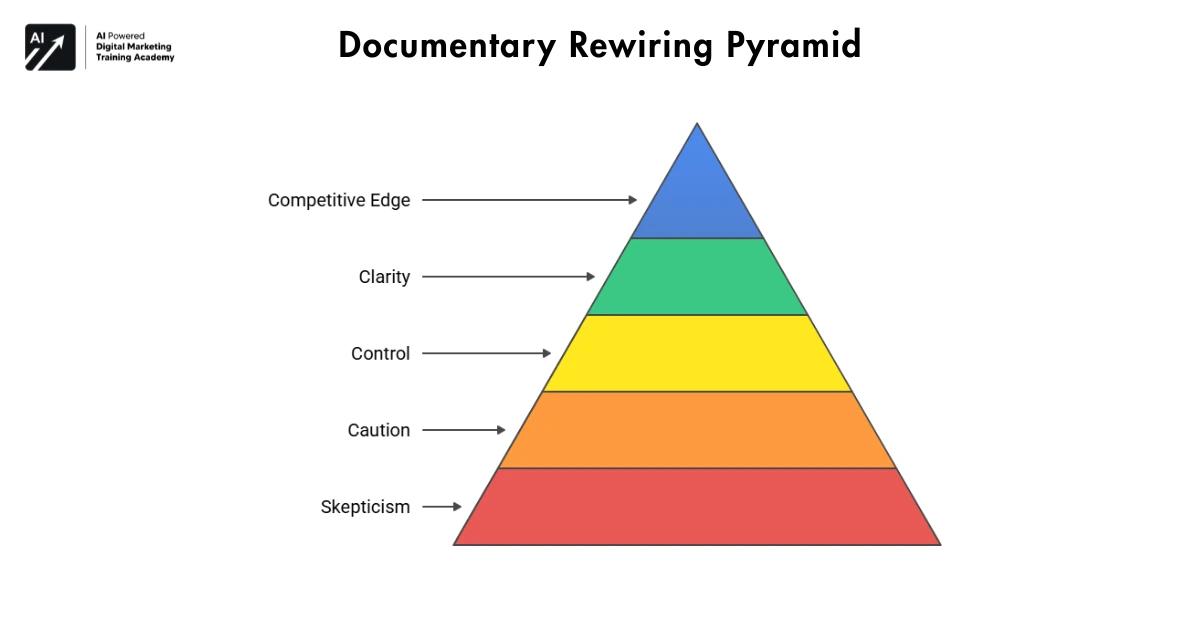 Little by little, what happens adds up without making a sound. Maybe you see that:
- What stands out is how you now challenge money advice with greater skepticism
- You become cautious with blind trust
- What matters most is control
- What starts as a rush ends in clarity. Slow choices grow certain.
The reason behind this competitive edge
Entertainment drives how most folks take in material. Only a small number do it on purpose to grow their understanding. That shift, on its own, brings a clear advantage.
- Knowing what’s happening helps choices get better
- Small improvements add up over time
- Outcomes shift slowly because compound effects stack over time
Here’s where ideas move faster than events ever can.
Final Thought – These Are Not Documentaries, They Are Filters
Watching these films isn’t about relaxation. Their role? To shift what you take in from other shows. How you see things might bend because of them. After watching them:
- This time, the way people get their updates seems off
- Success stories feel incomplete
- From every misstep I learn something
Cynicism isn’t something you gain. It’s already there. Clarity finds you.
Truth gains strength not by shouting, yet through quiet clarity. When matched with time, it turns into real influence.
- Each week, pick just one to view.
- See how things work beyond the tale told.
- And slowly but permanently your worldview will change.