
A cold email strategy is not about sending more emails. It’s about the right email, to the right person, at the right time. One great cold email can start conversations, build trust, and unlock real opportunities. Yet a lot of founders, marketers, and sales teams feel that cold email just isn’t effective today. The reality is much simpler. Bad cold emails are ignored, but good ones still work.
People do not hate emails. Rather, they hate emails that waste their time. Make it relevant, respectful, and helpful and people will read it. That’s why a strong cold email strategy values clarity more than clever tricks. It respects attention. More importantly, it shows that you understand the reader’s world before talking about yourself. This is exactly why one great cold email can outperform hundreds of generic messages.
In 2026, cold emails are no longer about pitching fast. Instead, they are about starting slow, meaningful conversations. When written well, cold emails don’t feel like selling at all. Instead, they feel like friendly help. This shift is what makes cold emailing powerful today. In this blog, we break down how cold emails evolved, why they still work, and how a modern cold email strategy turns simple emails into reliable business growth tools.
From Spam to Strategy – Where Cold Emails Began
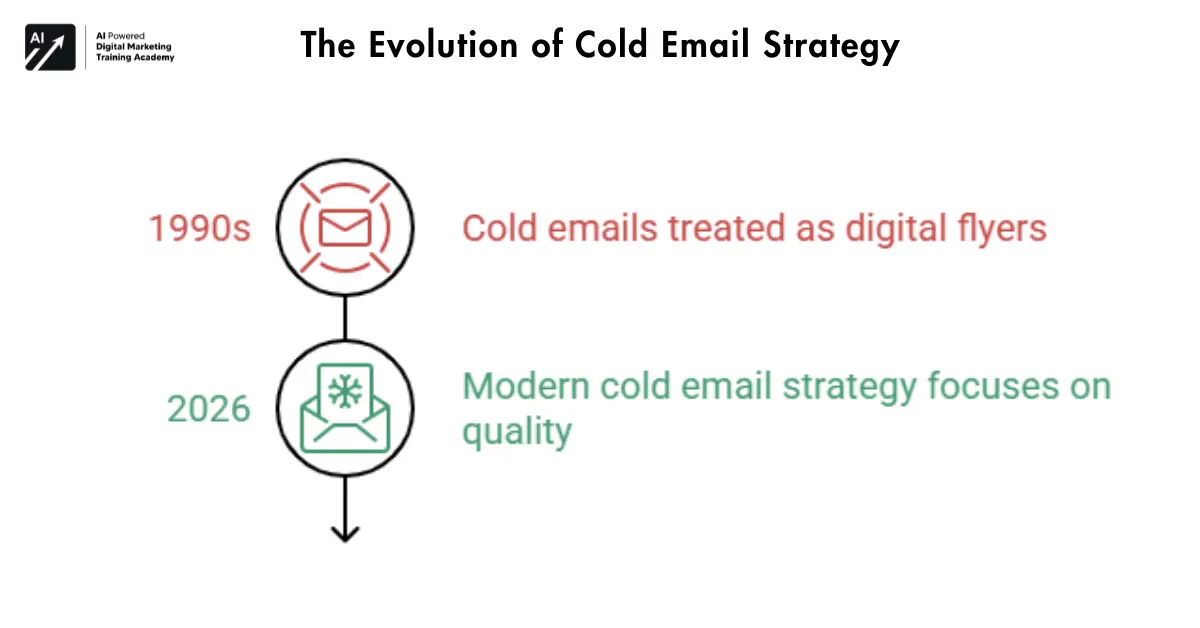 To truly understand today’s cold email strategy, you must first understand where cold emails started. In the early days, cold emailing gained a bad reputation and for good reason. Most emails were sent without thought, relevance, or care for the reader.
Cold Emails in the 1990s
In the 1990s, cold email was basically a digital flyer. Companies sent the same message to everyone. No personalization, context and value. As a result, most cold emails shared three common problems:
- Digital flyers: Most emails felt like ads. They talked to people, not with them.
- One-size-fits-all: Everyone received the same generic message, regardless of their role or need.
- Low trust, low replies: People stopped reading. Instead, they ignored, archived, or deleted emails immediately.
Over time, this approach trained users to distrust cold emails. Inbox fatigue began here. Because there was no real strategy, cold emails became noise instead of value.
How Cold Emailing Has Evolved by 2026
By 2026, cold email won’t look anything like it does today. Modern cold email strategy now focuses on quality, not volume. Today’s cold emails are built on:


- Precision over volume: Less sending, better targeting
- Personalization at scale: Bulk outreach with a personal feel
- Empathy-driven outreach: Understand first, talk about sales later
As a result, teams no longer ask, how many emails can we send? Instead, they ask, why would this person care? This mindset shift is exactly what transformed cold emails from spam into strategy.
Why Cold Emails Still Work in 2026
Cold emails still work because people haven’t changed. People still read emails that feel relevant, respectful, and useful. Therefore, a strong cold email strategy aligns naturally with how people make decisions today.
People Still Open the Right Kind of Email
Data clearly proves that cold emails are far from dead. When done correctly, the results are strong:
- Average cold email open rate: around 46%
- Personalized reply rate: between 9 -14%
These numbers show one thing very clearly personalization works. When your email speaks directly to the reader’s problem, people respond. Good cold emails do not try to impress. Instead, they try to connect. They focus on the reader’s situation, not the sender’s product. Over time, this approach builds trust before asking for any action.
Cold Email vs LinkedIn InMail
Many teams compare cold email strategy with LinkedIn InMail. While both channels have value, cold email has several clear advantages:
- Higher reply to rates: Emails feel more personal and less crowded
- More control and ownership: You fully own your list and data
- Less noise, more focus: Inboxes feel calmer than social feeds
On LinkedIn, messages often get lost between ads, notifications, and posts. In contrast, cold emails arrive in a quieter space. When written well, they get attention. Ultimately, cold email works when you respect time, share value, and sound human.
The 4 Cold Email Frameworks That Get Replies
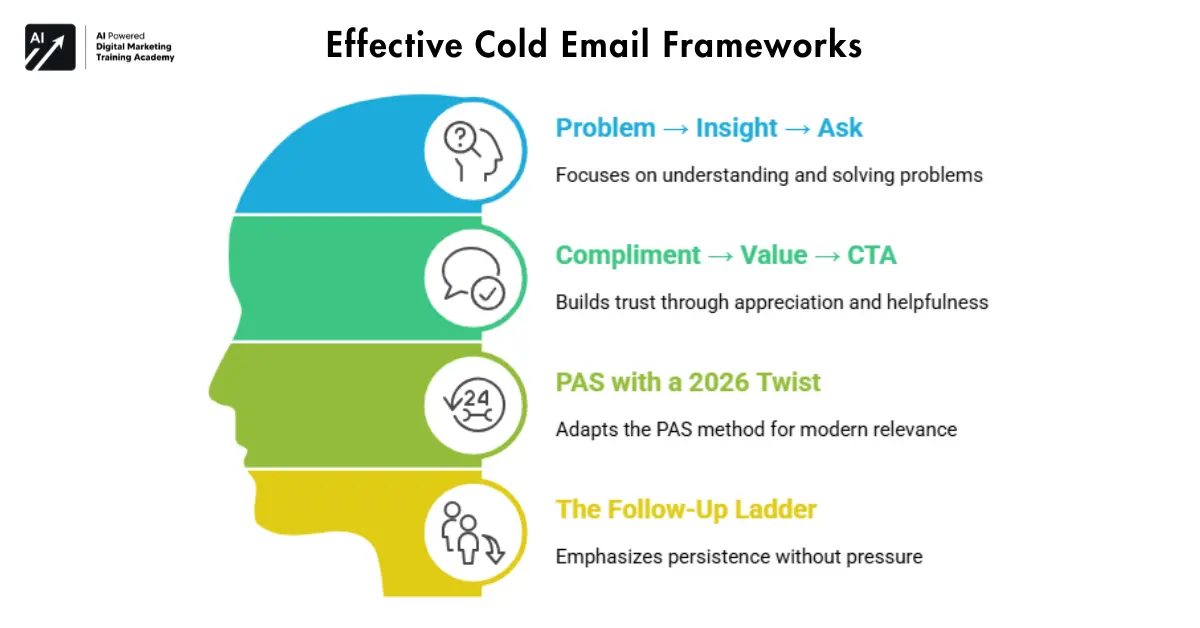 A strong cold email strategy is not about guessing what to write. Instead, it is about utilizing proven frameworks that align with how people read, think, and respond. Frameworks remove confusion. They provide structure without making your email sound robotic. When used correctly, your message feels clear and friendly. Below are four cold email frameworks that consistently get replies in 2026 because they align with attention, trust, and timing.
Framework 1 – Problem → Insight → Ask
This framework works especially well for B2B founders and sales teams because it follows logic. First, you name a real problem the reader already feels. Next, you share a short insight that reframes that problem. Finally, you make a clear, low-pressure ask. This framework works because it feels helpful, not pushy. It respects both the reader’s intelligence and their time. Instead of pitching features, you highlight understanding.
- Clear and easy to follow
- Focuses on value, not hype
- Feels like a real business conversation
Framework 2 – Compliment → Value → CTA
Creators and consultants benefit most from this approach. Start with something you truly appreciate, not forced compliments. The compliment shows attention. Then, the value builds trust. Finally, the CTA stays soft. You first acknowledge something specific about their work. Then, you share an idea, resource, or observation that helps them. Only after that do you ask for the next step. This approach works because people respond when they feel seen, not sold.
Framework 3 – PAS with a 2026 Twist
PAS still works in 2026, but only when done with relevance.
- Problem: Mention a real, timely issue
- Agitate: Explain why it matters now
- Solve: Add credibility, proof, or experience
The twist here is restraint. You avoid exaggeration. Instead, you stay grounded, specific, and respectful.
Framework 4 – The Follow-Up Ladder
Most replies don’t come from the first email. This framework accepts that reality. It focuses on persistence without pressure. Each follow-up adds clarity instead of guilt. As a result, this becomes a core part of any modern cold email strategy.
Cold Email Follow-Up Sequence That Works
One of the biggest mistakes in cold email strategy is expecting instant replies. In reality, people are busy. Emails get buried. Timing is rarely perfect. However, that does not mean they are not interested.
Why 80% of Replies Come After Email 2-4
Data shows that nearly 80% of replies arrive after the second to fourth email. This happens because trust builds through repetition. Familiarity reduces hesitation. Your first email introduces you. Your follow-ups remind them why you matter. Importantly, silence is not rejection. Most of the time, it is delayed. Thoughtful follow-ups show:
- You are serious
- You respect timing
- You are confident, not desperate
When done correctly, follow-ups increase replies without hurting trust.
4-Step Follow-Up Sequence Idea
A simple, human follow-up ladder works best:
- Value-based nudge: Share a case study, article, or insight
- Soft reminder: Just checking if this is relevant right now?
- Light humor follow-up: Reduce tension with a human tone
- Break-up email: Clearly state you’ll stop unless they want to continue
This sequence works because it removes pressure and gives control back to the reader. A smart cold email strategy treats follow-ups as reminders, not chases.
Subject Line Styles That Win in 2026
Subject lines decide everything. If the subject line fails, the email never gets opened. Therefore, in 2026, strong subject lines stay simple and spark curiosity.
First Name + Quick Question
Example: Rohan, quick idea?
This works because it feels personal and low effort. It sounds like a real person, not a campaign.
Numbers-Based Subject Lines
Example: 3 ways to cut hiring time by 50%
Numbers signal clarity and structure. As a result, people are open to knowing what to expect.
Curiosity-Driven Subject Lines
Example: Noticed this about your company
Curiosity works when the email delivers value. The goal is intrigue, not clickbait.
Direct Ask Subject Lines
Example: Worth a quick chat?
This approach is honest and respectful. It works especially well with senior decision-makers. A strong cold email strategy constantly tests subject lines while keeping them human.
Tools to Level Up Your Cold Email Game in 2026
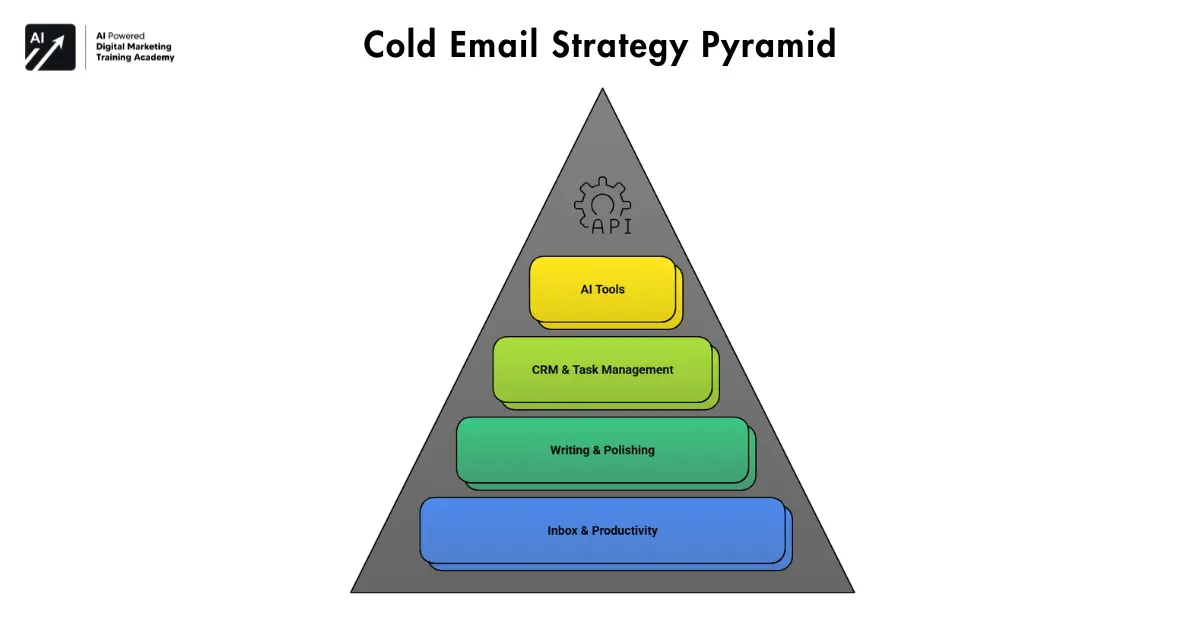 Tools don’t replace thinking, but they remove friction. They just help you work smarter and stay clear.
Inbox And Productivity Tools
These tools make replies quicker and keep your inbox tidy. With a cleaner inbox, you think clearly and your emails improve.
Writing & Polishing Tools
Clear writing builds confidence. These tools improve tone, fix mistakes, and keep messages natural.
CRM & Task Management Tools
Tracking conversations matters. These tools help you remember follow-ups and manage outreach without confusion.
AI Tools for Smarter Drafting
AI helps with speed, not strategy. When used correctly, it supports personalization while keeping your voice intact. Tools support strategy – they never replace it.
Cold Emails Are Not About Blasting Inboxes
A modern cold email strategy rejects volume in favor of intention.
What Cold Emails Are Really About
Cold emails work when they align:
- Relevance: Right message
- Timing: Right moment
- Empathy: Right tone
When these come together, replies follow naturally.
The Smart Cold Email Approach
Start small:
- Begin with 20 leads
- Personalize deeply
- Test before scaling
This approach builds results without burning trust.
Final Thought – Your Next Big Client Starts with One Email
Cold emails don’t fail because the channel is broken. They fail because people forget the human on the other side.
Why Simple, Human Emails Win
People respond to:
- Real names
- Real value
- Real conversations
Simple and clear always beats fancy.
The Email That Opens Doors
Sometimes, all it takes is:
Hey (First Name), quick idea for you…
A thoughtful cold email strategy turns that one line into opportunity, conversation, and growth.