
There is a misunderstanding about email marketing. Most companies assume that they will be successful even by collecting emails and occasional promotions. The reality is that an Email Marketing System 2026 is an organized approach that aims to bring value and knowledge to recipients while converting them into loyal customers.
A strong email marketing strategy combines three critical layers:
- List Building and Segmentation knowing who your audience
- Content Creation and Sequencing delivers the right message at the right time
- Engagement and Conversion Optimization converting interest into action
When these three foundation layers function well together, your email marketing efforts can be a predictable growth machine. If any one fails, your campaign is unsuccessful and results in your engagement and revenue being compromised.
Most companies only succeed at one:
- Some focus only on collecting large email lists
- Some send random emails without a plan
- Some rely solely on fancy automation tools
Without balance, Email Marketing System doesn’t scale. A defined framework provides purpose, prioritization and measurement.
Understanding What Email Marketing Really Is
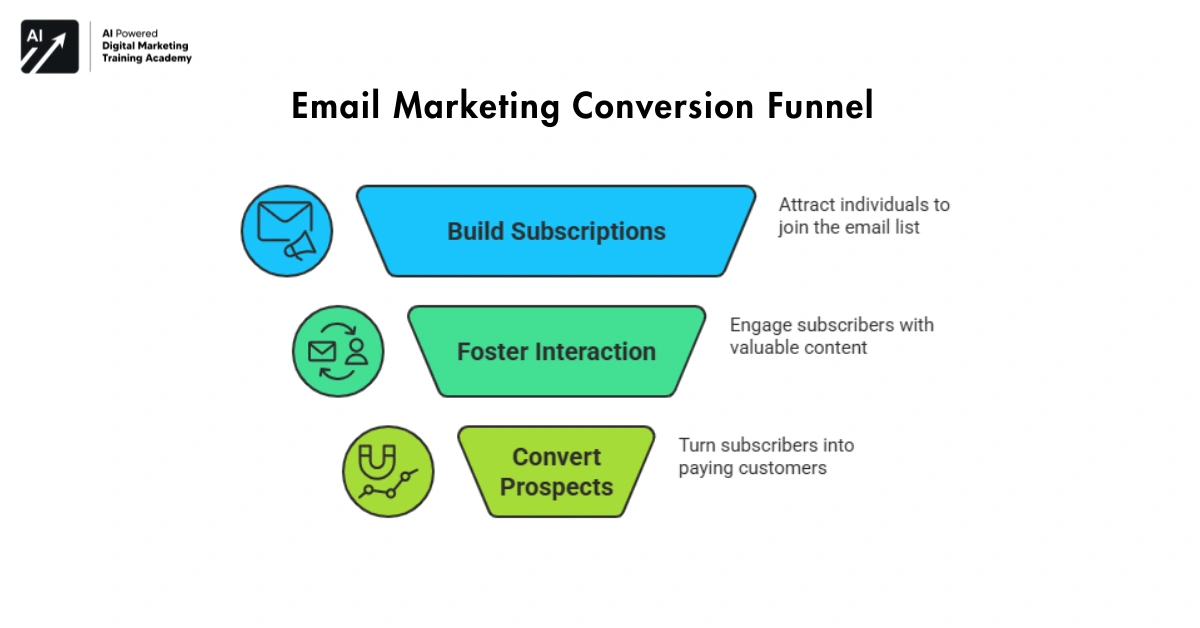
Email marketing is therefore more than simply sharing newsletters or offers. It is, in fact, communicating with your target market, providing value and transforming your prospects into loyal customers.


Core Objectives of Email Marketing:
- Create a loyal subscriptions base: individuals interested in hearing from your brand
- Foster real interaction: educate and add value, not just make sales
- Convert prospects into customers: turn attention into profit
Why email marketing has an advantage:
- A direct line: there isn’t a social media site that offers direct access to your audience. you own your subscriber list.
- Return On Interest: Each campaign can be optimized and measured for effectiveness
- In the game for the long haul: audiences will trust your needs if ongoing emails have real value.
Key fact: without strategy, effective insight, and targeted content, email marketing is a colossal waste of time. You can’t email a bunch of people and expect results.
The Email Marketing Framework (3 Critical Layers)
Email marketing is most effective when viewed as a complete system. Focusing on only one part like sending emails without supporting layers often leads to low engagement and poor conversion.
Layer 1 : List Building & Segmentation
Your email list is your most valuable asset. But not all subscribers are equal here quality matters more than quantity.
Key Components
- Lead Magnets:These are useful things you give to people for free so they share their email address with you. You can also call them free offers or signup gifts.
Examples include:
- Ebooks or digital books
- Guides or step-by-step help documents
- Free tools or trials
These are forms used to collect email addresses from visitors. You can also call them signup forms or subscription forms.
Examples include:
- Homepage pop-ups or screen alerts
- Banners or top/bottom bars on the website
- Blog article inline forms
- Landing pages for specific offers
- Interests or preferences
- Behavior (clicked links, opened emails)
- Demographics or location
Failure Points:
- Collecting emails without relevance or consent
- Treating all subscribers equally, depressing response.
key point: A small, super responsive list beats the same size list when much larger but unsegmented. Do not think “more is more”; think “more is better” within specific segments.
Layer 2 : Content Creation & Sequencing
After you get subscribers, then the next step is to send them content. This content should teach them, give useful information, and slowly convince them. Random email blasts rarely generate results.
Components of Effective Content:
- Welcome Sequences
- Introduce your brand
- Set expectations for email frequency and type of content
- Build trust immediately
- Educational Emails
These are emails that help people learn something useful. You can also call them like learning emails or any informational emails.
Examples:
- Share tips and also simple tricks, or step-by-step tutorials
- Give helpful advice or “how-to” guides
- Share latest updates, trends, or news in your field
- Help subscribers solve problems
Promotional Related Emails:
- Announce offers and discounts, or any offers related to new products
- Include them like clear and actionable CTAs
Drip Campaigns:
Automated email series based on triggers related to actions of your subscriber such as abandoned shopping cart, post signup nurture sequence, etc.
Evergreen Content:
- Timeless emails that can be reused for new subscribers
- Reduces content creation workload while maintaining engagement
Failure Points:
- Over-promoting without offering value
- Sending inconsistent emails without planning
- Ignoring the subscriber journey
key point: Email sequencing means sending the right message to each person at the right time and also you can also call it email flow or email series planning.
Layer 3: Engagement and Conversion Optimization
This can be assessed by understanding the behavior of people receiving your mails by checking the open/click-through rates. You can also say it is about tracking user activity and watching how engaged they are.
In simple words, you are seeing:
- Who is opening your emails
- Who is clicking on links
- Who’s acting (buying, joining, subscribing)
You can see what’s working and what not.
Key tips:
Personalization:
- Include subscriber’s name
- Reference past behavior or preferences
- Segment messages for more relevance
Clear Calls-to-Action (CTA):
- Focus on one goal per email
- Make buttons and links visually prominent
A/B Testing:
- Test different subject lines, copy, time of sending etc.
- To find the most effective messages and times.
- Use results to refine future campaigns.
Behavioral triggers:
Send trigger messages according to behavior such as abandoning a shopping cart, downloading a product, etc. Makes email more specific and relevant.
Example:
Two brands send identical discount messages. The one that personalizes timing and the offer based on behavior will have a higher conversion rate and more repeat sales.
Critical Point :
Subscribers who engage trust your brand, click your links, and buy more. Engagement results in higher long term ROI.
Email Marketing Funnel
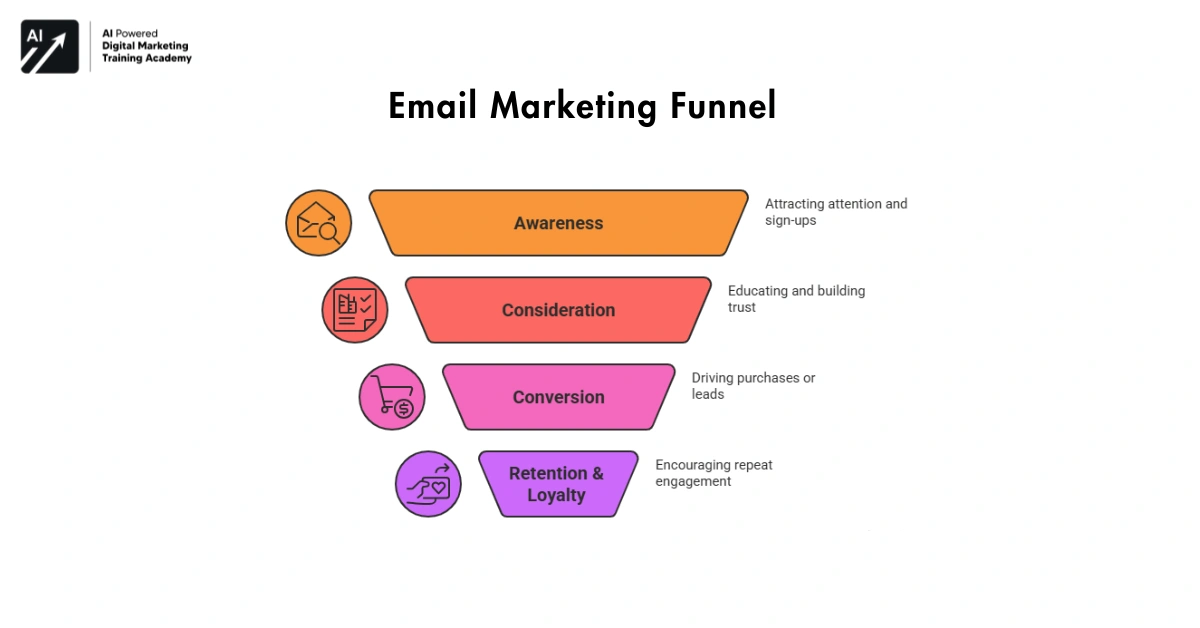
From Awareness to Loyalty a well-designed email funnel takes subscribers on a path from their first curiosity to a loyal customer.
Stage 1: Awareness:
- Lead magnets
- Blog list sign-ups
- Newsletter opt-ins
Goal: Get noticed!
Stage 2 : Consideration
- Drip campaigns
- Tutorials
- Case studies
Goal: Educate and build trust with potential customers
Stage 3 : Conversion
- Promotions
- Offers
- Optimized landing pages
Goal: Drive purchases or leads
Stage 4 : Retention & Loyalty
- Follow-up emails
- Tips
- Community building
Goal: Repeat engagement and maximize lifetime value
Key Point: An optimized email funnel drives engagement, conversion and loyalty. Random campaigns often fail to move subscribers along this journey.
Advanced Email Marketing Strategies
I believe there is a place for basic campaigns for 2026, but to truly compete marketers and businesses will need more advanced techniques.
For example
- Segmentation and Personalization: People want custom content, according to their interests, location, past interaction etc.
- Content refresh: Constant upgrades to templates, and email sequences based upon campaign success and input.
- Automation: Programs scheduled in advance, triggered sequences based on recipient reaction.
- Behavioral analytics: Real time measurements of opens, clicks, conversion etc.
Critical insight: Any random email wont work you need data-driven automation, where every email has a purpose.
Prioritize Analytics
This impacts Revenue and Engagement Not all analytics need to be tracked. Decide the most important analytics to focus on and analyze
- Subscription Rate: demonstrates the effectiveness of the subject line
- CTR (Click-Through Rate): indicates level of content engagement
- Conversion Rate: shows how many are enacted to achieve goal
- Unsubscribe Rate: Indicates disengagement
- Revenue per Email: Direct impact on ROI
Critical Insight: High opens with low clicks mean content is misaligned. Always optimize for actions, not just impressions.
Common Mistakes That Kill Email Marketing ROI
- Ignoring segmentation and personalization
- Sending inconsistent or irrelevant emails
- Overloading subscribers with promotions
- Not tracking metrics or analyzing results
- Using poor quality email lists.
Tip: Avoid these mistakes and have an email campaign that is sending the right message to the right people. Every email counts and it should make people trust you, get engaged with you and generate revenue in the long-term.
Advanced Email Campaign Types
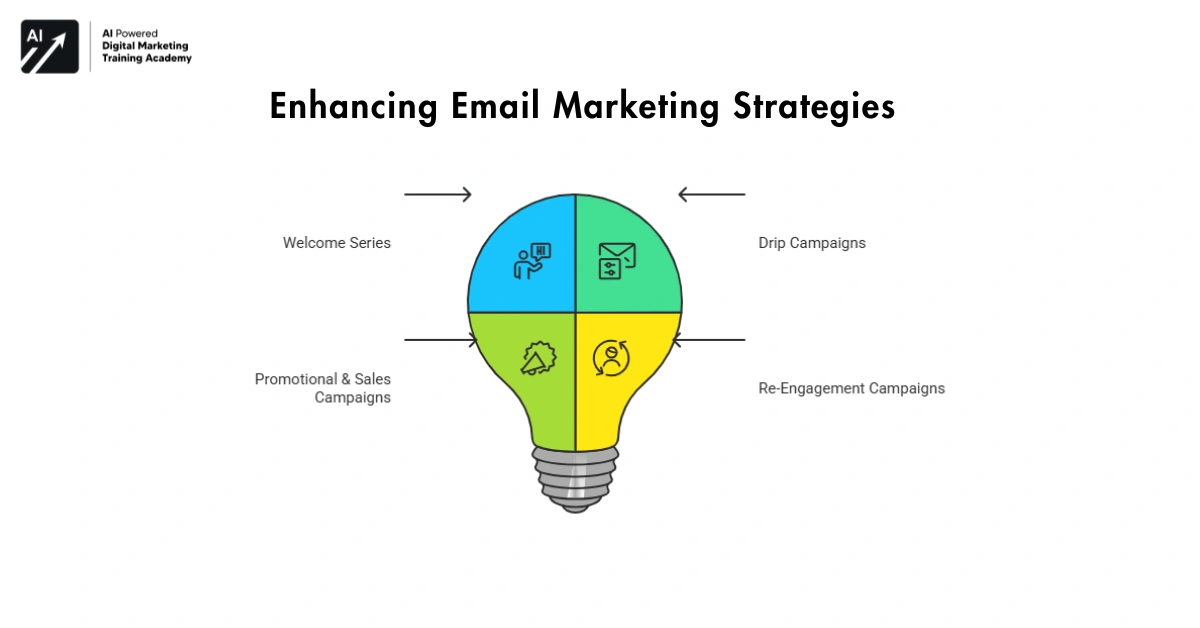
Simple promotional or any newsletter emails (to and include the “plain vanilla” HTML version) are not even close to being enough. Today’s email marketing campaigns are extremely targeted, sequenced and behavioral.
1. Welcome Series
A welcome series is the first impression for any new subscriber. Its purpose is to establish trust, introduce the brand and frame expectations.
Components of a Welcome Series:
- Email 1 – Introduction: Introduce your brand, mission, and values. Keep it simple, friendly, and personal.
- Email 2 – Value Proposition: Explain what the subscriber gains by staying on your list (guides, discounts, tips).
- Email 3 – Social Proof: Show customer testimonials, case studies, or success stories.
Best Practices:
- Send emails within the first few days of subscription
- Implementing clear CTAs (download a guide, follow social media, browse the website)reduce the number of email reminders when they first sign up.
Key Point: The better the first experience, the longer they’ll stay engaged.
2. Drip Campaigns
A drip campaign is a pre-set automated “delivery” of follow-up messages based on the behavior of the individual.
Examples of Drip Campaigns:
- Abandoned cart reminders
- Lead nurturing sequences for potential customers
- Educational email series for new users
Components:
- Trigger: What the subscriber (signup, download or buy) does.
- Sequence: A set of timed emails that lead the subscriber step by step, in a systemised way.
- Purpose: To develop trust, create value, and then convert.
Key: That drip campaigns will generate leads, develop rapport and convert much more quickly than any manual effort.
3. Promotional & Sales Campaigns
Promotions campaigns are not simply discounts and they showcase offers but still preserve value for subscribers. Best Practices: Segment by interest or previous activity Personalize subject line and content Include one focused Call to Action Monitor open rate, CTR and conversions.
Example: Sending a product launch offer email only to subscribers who clicked on similar products in the past has a high probability of conversion.
4. Re-Engagement Campaigns
Re-engagement campaigns target inactive subscribers. Their goal is to revive interest and maintain list quality.
Strategies:
- Send personalized “We Miss You” emails.
- Send out additional discounts or content to your subscriber list,
- request opinions or preferences.
Critical Insight: Unsubscribes are inevitable, but don’t let your subscribers go inactive. Prune your list of house-bound subscribers regularly.
Efficient through Email Automation
Automation is the important thing to scale the campaigns and also saves time and keeps the message consistent. No human run email marketing can sustain long term growth.
Essential Automated Campaigns
Welcome Automation:
- A set of emails sent right after someone signs up.
- You can also call it as a welcome series or intro email sequence.
Behavioral Triggers:
These are emails sent based on what a user does on your website.
Examples:
- Visiting pages
- Downloading files
- Leaving items in the cart
You can also call them action-based emails or activity-based emails.
Drip Sequences:
- A group of emails sent step by step over a few days or weeks to build a connection.
- You can also call them email series or follow-up emails.
Transactional Emails:
Emails are sent after someone does something, like buying a product.
Examples:
- Payment receipt
- Order confirmation
- Delivery or shipping update
You can also call them service emails or order emails.
Key Idea:
The main point in automation is to send the correct message to the correct person at the correct time. You can also say correct message, correct user, correct timing.
Timing & Frequency Automation
- Test the best time of day to send emails
- Automate sequences based on user activity and time zones
- Avoid sending too many emails to prevent unsubscribes
Example: A behavior-triggered sequence for abandoned carts sent within 24 hours has a 60% higher conversion rate than one sent a week later.
Tools That Improve Email Marketing
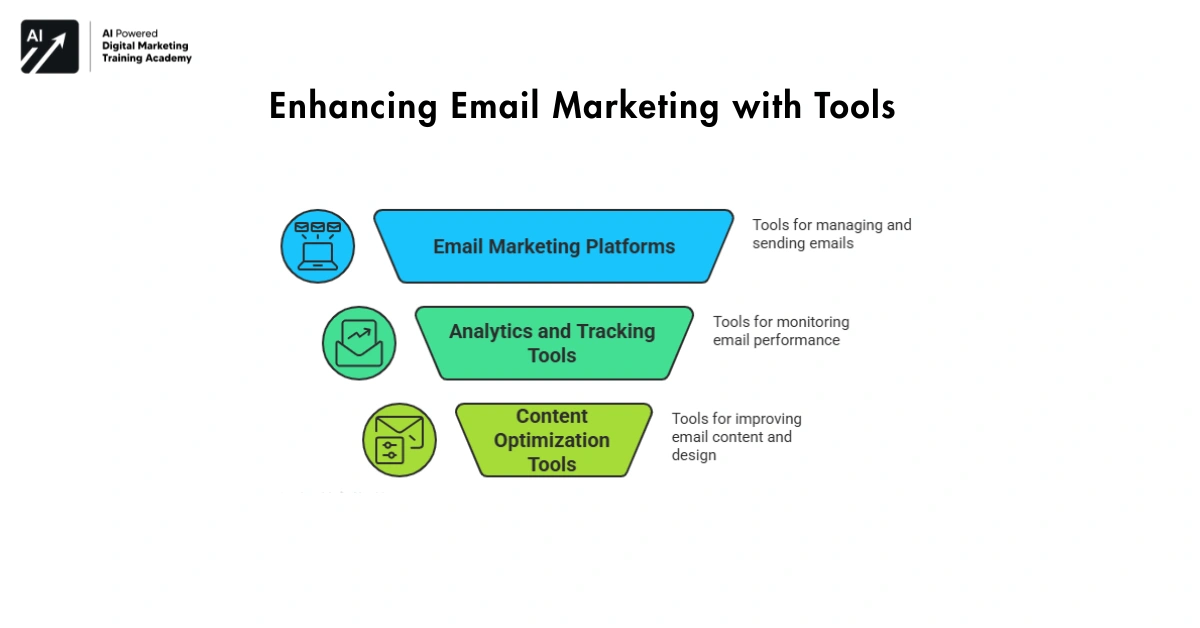
Using the right tools which makes the work easier and also helps you to connect with the right audience, and measure results more clearly. You can also say tools simplify tasks, reach the correct people, and track performance better.
Email Marketing Platforms
Mailchimp:
- Best for beginners and easy automation setup.
- You can also say good for starters or a simple workflow tool.
Klaviyo:
- Good for advanced audience grouping and online store campaigns.
- You can also call it a detailed targeting tool or ecommerce focused platform.
ConvertKit:
- Easy to use for automation and managing email lists.
- You can also say simple email tools or creator-friendly platforms.
Key Point:
Pick a platform that suits your business size, which your automation needs, and your reporting goals. You can also choose a tool which is based on your business level, email needs, and tracking requirements.
Analytics and Tracking Tools
These are the tools that help you to check and understand how your emails are performing. You can also call them data tools or performance tracking tools.
- Used to track what people do on your website after they click your email.
- You can also say it helps you monitor user actions or visitor behavior.
Email Platform Reports:
These reports show how your emails are doing.
They include:
- Open rate (how many people opened your email)
- CTR / click rate (how many people clicked links)
- Bounce rate (emails that did not reach users)
- Conversions (people who completed an action like buying or signing up)
You can also call these email performance reports.
Heatmaps:
- These tools show where people click or focus the most in your email.
- You can also say they help you understand user attention or engagement areas.
Key Point:
- Making the proper decisions based on data is very important.
- Always track and study, which improves every email campaign.
- You can also say measure, analyze, and optimize your emails regularly.
Content Optimization Tools
- Grammarly: Ensures readability and error-free content
- Canva: Design professional-looking email templates
- Subject line analyzers: Optimize open rates
Key Point: Quality content and design increase trust and engagement. Tools help maintain consistency and professionalism.
Programmatic Email Marketing
Programmatic Email Marketing System allows the businesses to create thousands of highly personalized emails automatically which will use the templates and also proper structured data.
What is Programmatic Email Marketing?
Uses the subscriber data, templates, and also triggers to generate emails automatically and sends the personalized content at scale without manual effort.
Examples:
“Best Products for City,” and “Top Courses for Skill”
Benefits
- Scales campaigns efficiently
- Reduces manual errors
- Improves the personalization and also engagement
Key Point: This Programmatic Email Marketing System only work if each message provides real value and also avoids repetitive content. Poorly executed campaigns damage the reputation as well as deliverability.
Risks & Mitigation
- Content may be either too similar or poorly connected
- Data should be correct and also templates should be well-designed, message flows should be validated
- Subscribers may feel overloaded by messages
- Limit number of messages you send and target your audiences carefully
Expanding Email Marketing Activities
Growing these efforts needs proper planning and also clear processes with regular improvement.
Replicate Content Generation
- Create templates for different newsletters and also for automated email sequences, and marketing emails
- Recruit writers or creators to maintain a consistent content supply
- Always focus on quality instead of quantity
- Track campaign performance for future use and improvement
Scaling Automation
- Use advanced triggers and conditional logic to handle multiple subscriber paths.
- Integrate email platforms with CRM and ecommerce systems for better data flow.
- Automate reporting to monitor KPIs without manual work.
Expanding Authority and Audience Reach
- Work with influencers and industry professionals for proper guest content
- Team up with brands to provide special resources
- Motivate the subscribers to forward the emails and also invite others
Key Point: Growing without keeping quality and personalization lowers engagement and returns.
Real-World Email Marketing Success
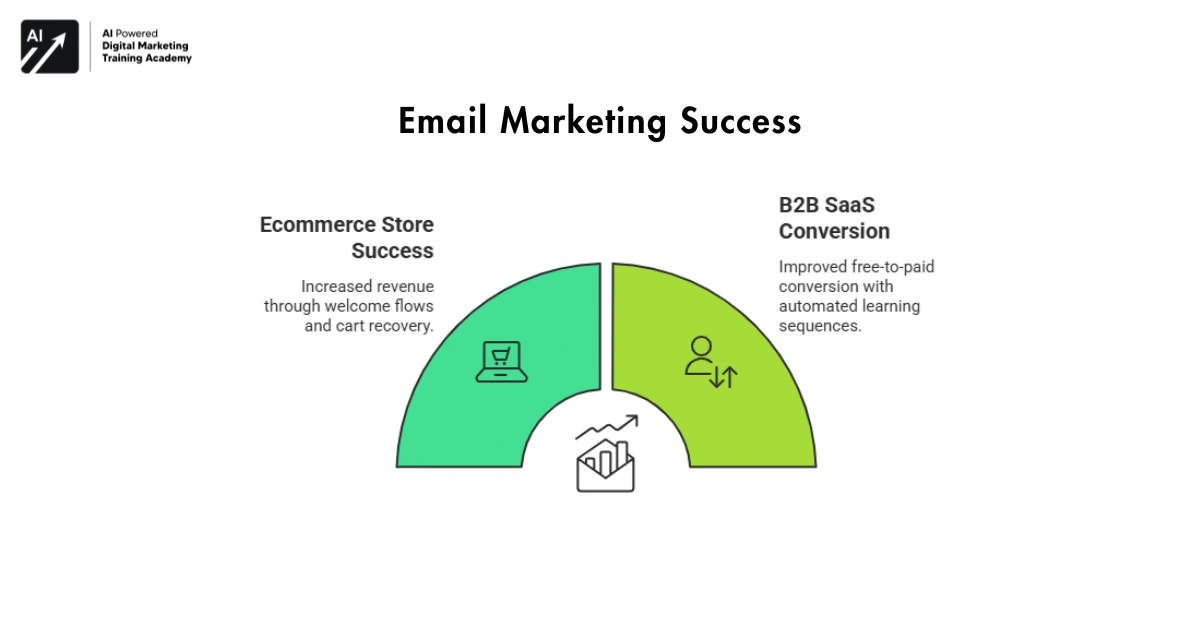
Case Study 1: Ecommerce Store
- Challenge: Low interaction levels and also customers leaving carts without buying.
- Solution: Implemented a welcome Flow, Cart Recovery Email Series, and also a personalized Product Suggestions
- Outcome: This increases 35% in email-driven revenue within 3 months
Case Study 2: B2B SaaS
- Problem: Low free-to-paid conversion
- Action: Automated learning email sequences which are based on user actions, grouped by feature usage
- Result: This will increase 25% in paid users and also 40% growth in user engagement
- Key Point: Smart campaigns, automation, and segmentation drive real results
Key Metrics for Advanced Campaigns
- Engagement rate per segment
- Conversion rate for triggered emails
- Revenue per email
- Subscriber lifetime value
- List growth and churn rates
Key Point: Tracking metrics at a granular level allows optimization of campaigns and better ROI.
Common Mistakes When Scaling
- Ignoring data and relying on generic campaigns
- Over-automating without human touch
- Sending irrelevant emails to large segments
- Not removing inactive subscribers
Key Point: Effective growth needs a balance in automation, personalization, and also quality checks
Building a Strong Email Marketing System
Email Marketing System is not about shortcuts or sending random emails. It is about creating a clear, planned, and scalable system.
- Start with a good quality, well-grouped email list
- Send useful and properly planned content
- Improve engagement and increase results
- Track performance and keep improving
When done right, email marketing becomes a steady growth system, turning subscribers into loyal customers and increasing long-term returns
Building a Scalable Email Marketing Engine
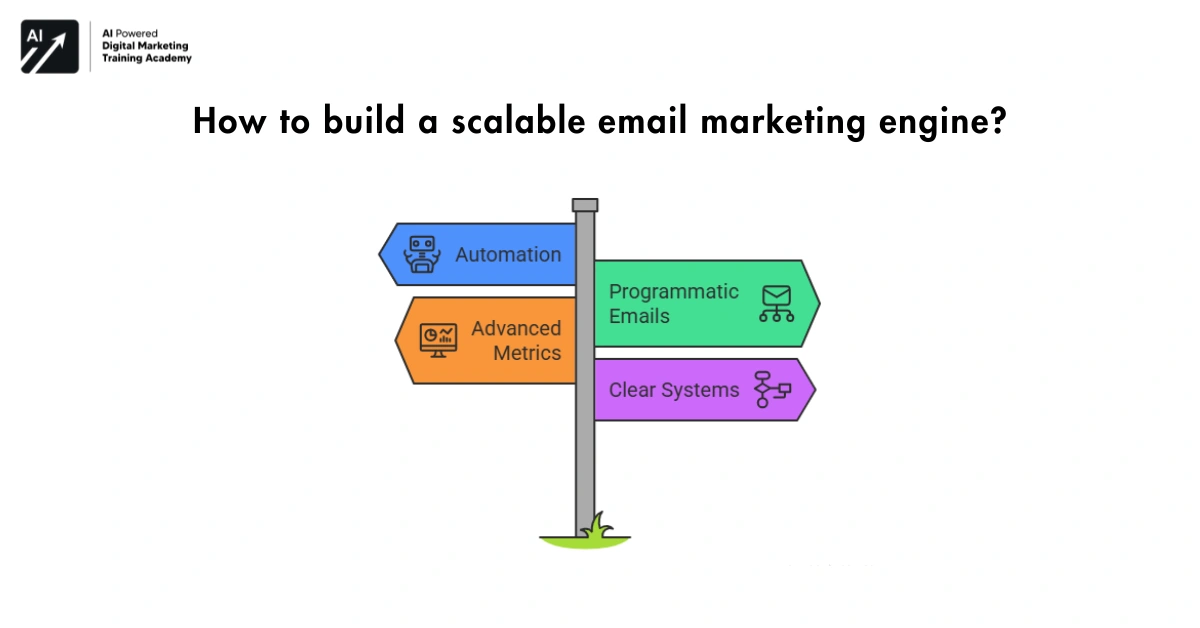
Using these advanced campaigns, automation, tools, and proper scaling which helps to turn Email Marketing System from a simple method into a reliable growth system.
Key Points:
- This automation reduces the effort, but messages should still feel personal.
- Programmatic emails scale without losing relevance.
- Advanced metrics drive actionable insights.
Scaling needs clear systems, good quality, and regular improvement with these methods, businesses can make email marketing a long-term channel that brings strong returns.
Retention Email Strategies
Getting subscribers is just the beginning where retention means keeping them interested and active, and turning them into regular customers.
Importance of Retention
- Retaining existing subscribers is cheaper than acquiring new ones.
- Loyal and trusted subscribers generate more income over time.
- Active subscribers are more likely to share your content and invite others.
Key point: Without keeping subscribers interested, all the effort put into building and growing the list is lost
Advanced Metrics for Long-Term Growth
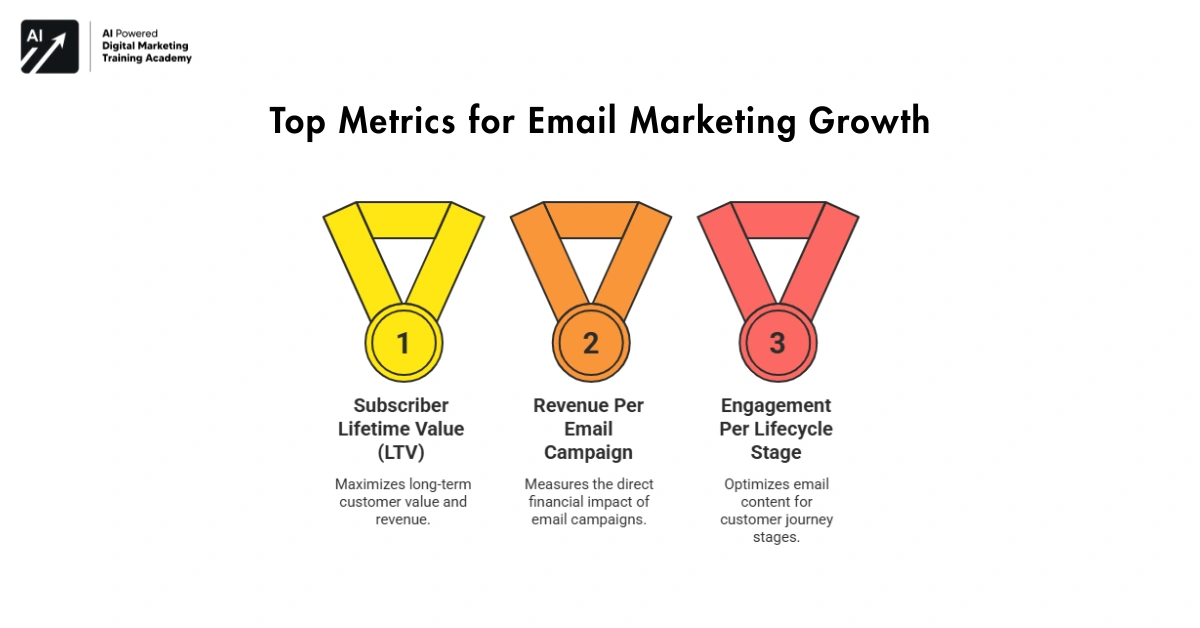
- Subscriber lifetime value (LTV)
- Revenue per email campaign
- Engagement per lifecycle stage
- Churn rate and list growth
- Deliverability and inbox placement
Critical Insight: Focusing on long-term metrics ensures email marketing supports sustainable business growth.
Common Mistakes in Long-Term Email Marketing
- Ignoring inactive subscribers
- Over-automation without personalization
- Failing to refresh and optimize content
- Not monitoring deliverability or engagement trends
Critical Insight: Long-term email marketing requires strategy, discipline, and continuous improvement.
Conclusion
Email Marketing System is not just sending emails. It is a clear system. You need a good email list, useful content, and proper timing. When you send the right message to the right people, results improve and also personalization, automation, and tracking help you grow faster. Stay away from irrelevant emails and offer value.