
Most startups don’t fail because their product is bad. They fail because they price it wrong.
A weak startup pricing strategy can make even a high-quality product look cheap, confuse customers, or reduce conversions. Many founders assume pricing is just a number-but in reality, it directly shapes how customers perceive value.
If people aren’t buying, the problem is often not your product. It’s how you price and present it. This guide explains how to fix that using practical frameworks, pricing psychology, and real-world examples.
What is a Startup Pricing Strategy?
It is the structured way to set product prices based on what customers willing to pay, how much people want the product and what the company wants to achieve. It blends pricing models, psychology and testing to maximize conversions and long-term revenue.
Why pricing matters more than product features
Customers don’t fully understand your product immediately. They rely on price as a signal.
- A ₹499 tool may feel unreliable
- The same tool at ₹2,999 feels professional
Price influences perceived quality before users experience the product.
Why Most Startups Fail at Pricing
Most founders rely on assumptions instead of structured thinking.
The myth of “lower price = more sales”
Lower pricing often reduces trust rather than increasing demand.
Example:




- ₹999 course → looks basic
- ₹4,999 course with bonuses → feels valuable
How pricing shapes perceived value
Customers evaluate price relative to:
- alternatives
- expected outcomes
- brand positioning
If pricing and value perception don’t align, conversions drop.
Real impact on revenue
Even a small pricing change can:
- increase conversion rates
- attract better customers
- significantly improve revenue
The Psychology behind Pricing (Why Customers Buy)
Pricing works because of how people interpret value-not just affordability.
What is pricing psychology
Pricing psychology explains how customers respond to price based on perception, comparison, and context rather than pure logic.
Perceived value pricing explained
Customers pay for outcomes.
Example:
- “Analytics dashboard”
- “Tool that increases sales by 20%”
The second justifies a higher price because the value is clear.
Anchor pricing strategy
Anchor pricing creates a reference point.
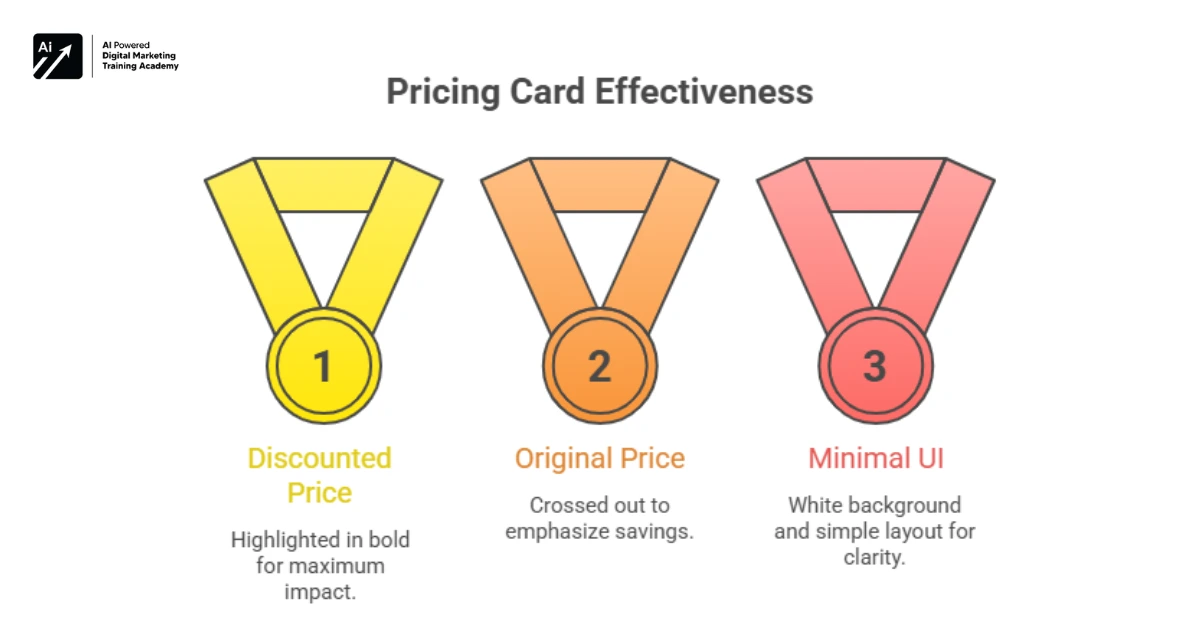
Example:
- Original: ₹9,999
- Now: ₹4,999
Another scenario:
- Showing ₹10,000 before and now ₹3,000
- makes ₹3,000 feel reasonable
Decoy pricing strategy
The decoy pricing strategy gives the users to choose a preferred option.
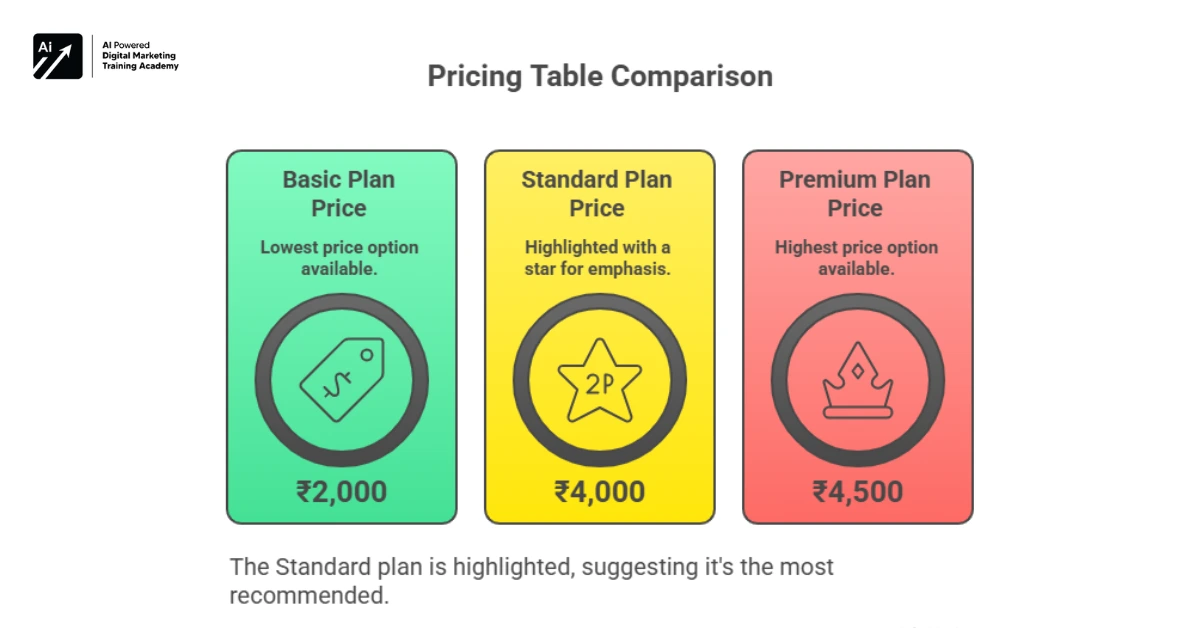
Example:
- Basic: ₹2,000
- Standard: ₹4,000
- Premium: ₹4,500
Most users choose Standard.
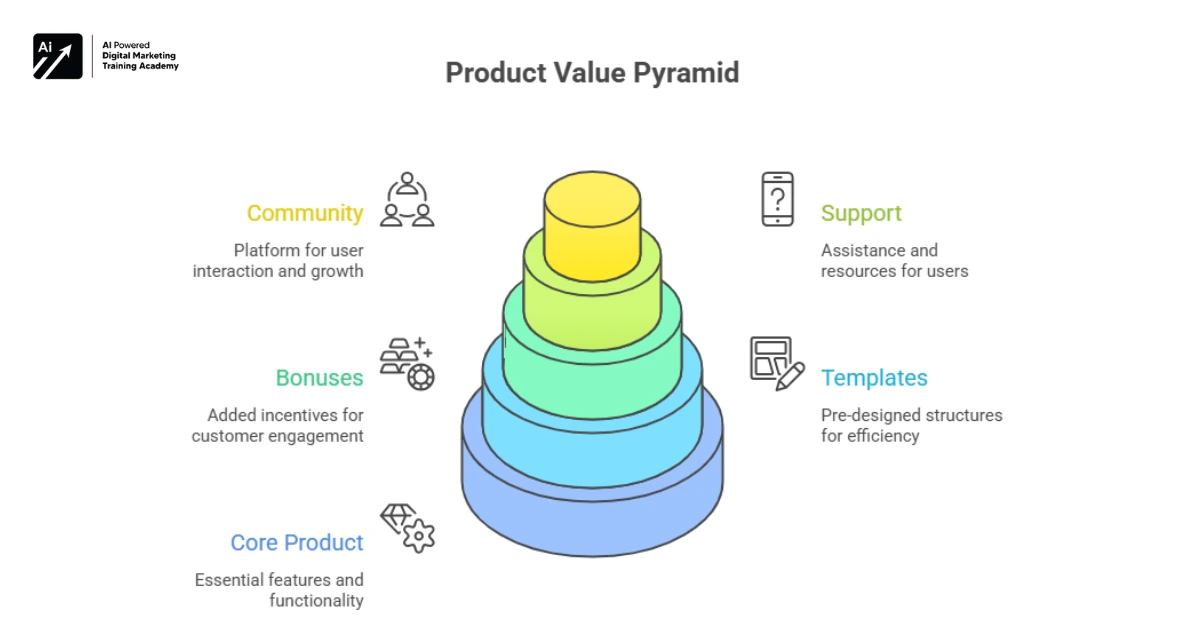
Value stacking
Value stacking increases perceived worth.
Instead of:
“Course for pricing ₹3,000”
Offer:
- Course
- Templates
- Community
- Lifetime updates
With all the above pricing ₹5,000 feels justified.
Pricing Models for Startups
Choose the right model that fits your needs is critical for execution.
 Cost-based pricing
You add margin to cost.
Example:
Cost: ₹1,000
Margin: ₹500
Selling Price: ₹1,500
Limitation:
- Ignores customer value
- Caps growth potential
Value based pricing – most recommended
You price based on results delivered.
Example:
If your tool helps generate ₹50,000, charging ₹5,000 is reasonable.
Subscription pricing
Recurring payments.
Examples:
₹999/month SaaS
₹9,999/year membership
Benefits:
- predictable revenue
- higher lifetime value
Freemium vs paid pricing
Freemium:
- free basic version
- paid upgrades
Paid-only:
- faster revenue
- stronger commitment
Premium pricing strategy
Higher price signals higher quality.
Works best when:
- strong differentiation
- clear outcomes
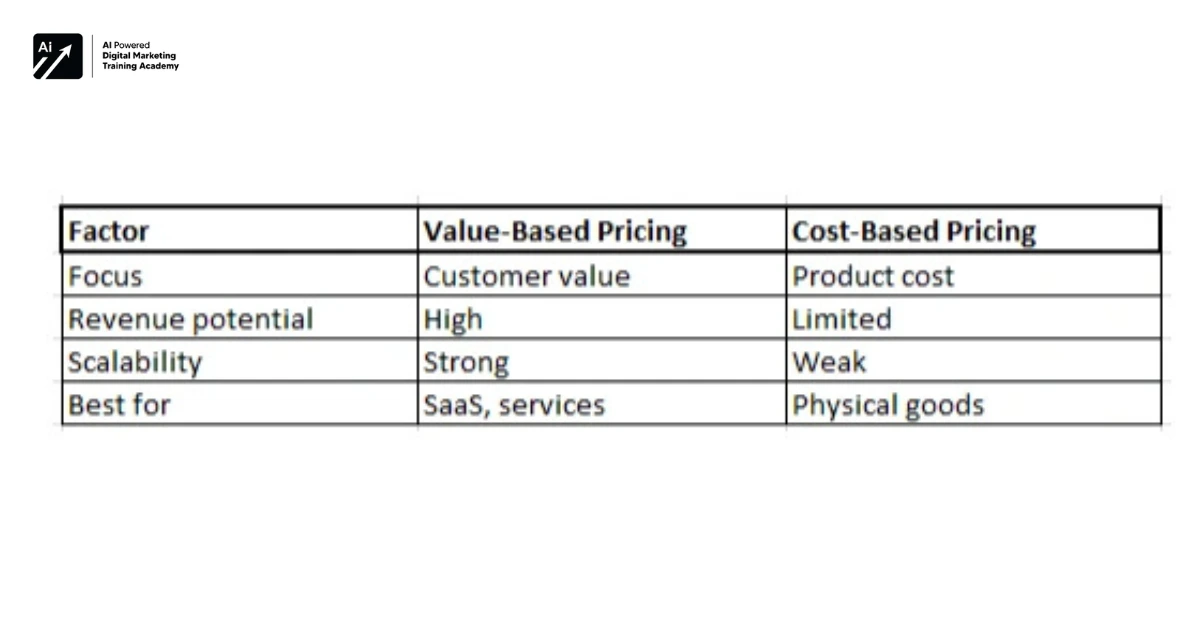
Compare Value Based with Cost Based Pricing to know Which is Better?
Conclusion:
Value based pricing is more effective for startups focused on growth.
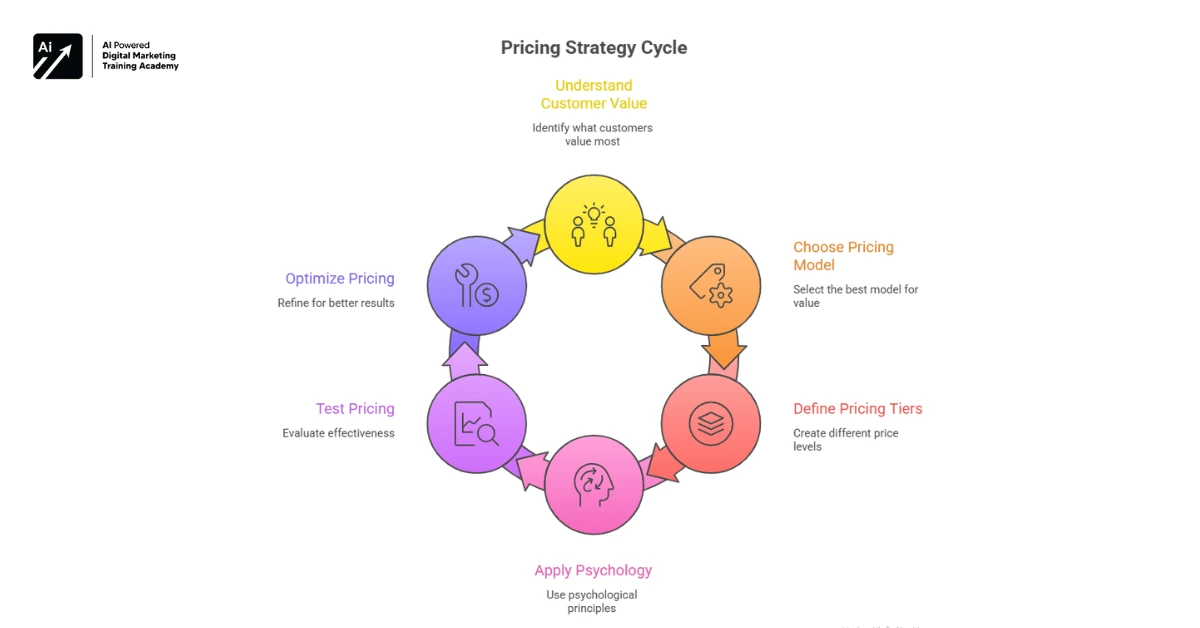
How to Price Your Product (Step by Step Framework)
Now understood models and psychology, then here is a practical system.
Step 1: Understand your customer
Identify:
- income level
- urgency of problem
- willingness to pay
Example:
A business owner values time saving tools more than a student.
Step 2: Define your value
Focus on outcomes.
Example:
- Not: “Email tool”
- But: “Help to increase conversions by 25%”
Step 3: Choose the right pricing model that fits to your needs
- SaaS → subscription
- course → one-time or bundled
- service → value-based pricing
Step 4: Create pricing tiers
Use 3 options:
- Basic
- Standard (target)
- Premium
This enables effective comparison.
Step 5: Apply pricing psychology
Combine:
- anchor pricing
- value stacking
- tiered options
Step 6: Test your pricing
Use price testing strategies:
- A/B testing
- different pricing pages
- limited-time offers
Step 7: Optimize based on data
Track:
- conversion rates
- customer feedback
- retention
Pricing should evolve continuously.
Quick Decision Framework
Which pricing model should you choose?
- Recurring value → subscription
- One-time transformation → fixed pricing
- Large user base → freemium
- High-impact outcome → value-based pricing
Real Startup Pricing Examples
SaaS example
A CRM startup:
- Free plan
- ₹1,499/month
- ₹2,499/month
Most users choose the middle plan.
Digital product example
Before:
- Course priced at ₹999 → low conversions
After:
- Course + bonuses at ₹4,999 → higher conversions
Reason:
Service example
Instead of:
₹500/hour
Offer:
“Complete website setup for ₹25,000”
Clear outcome improves buying decisions.
Common Pricing Mistakes Startups Must Avoid
Pricing too low
Leads to:
- reduced trust
- poor customer quality
Copying competitors
Different businesses have different:
- audiences
- costs
- positioning
Ignoring perception
Customers buy based on perceived value, not features.
Not testing pricing
Static pricing leads to missed revenue opportunities.
How to Know If Your Pricing Is Wrong
Look for these signs:
-
high traffic but low conversions
-
frequent discounting required
-
customers hesitate before buying
-
feedback like “too expensive” without clarity
These indicate pricing misalignment.
What to Do If Customers Are Not Buying
Improve value perception
Instead of lowering price:
- add bonuses
- improve messaging
- highlight outcomes
Fix positioning
Clarify:
- who the product is for
- what problem it solves
Run controlled experiments
Test:
- pricing tiers
- offers
- positioning
Handle “too expensive” objections
Instead of discounting:
- compare with alternatives
- break price into monthly cost
- show return on investment
Example:
₹5,000 product → ₹166/day feels more acceptable.
Key Takeaways
- pricing shapes perceived value
- value-based pricing is most effective
- anchor and decoy pricing guide decisions
- testing is essential for growth
- better pricing can increase revenue without changing the product
FAQ
What is the best strategy in pricing for startups?
Value-based pricing combined with tiered options works best. It aligns price with customer outcomes and improves conversions. They should always keep on testing the price, instead of relying on assumptions.
How do i know the price in order to set?
Begin with understanding, what customers are willing to pay and the value your product delivers. Test multiple price points and track conversion rates. Data driven adjustments lead to better results than guessing.
Should startups start with a low price?
No. Low pricing can reduce perceived quality and attract price sensitive customers. It’s better to price based on value and justify it through clear positioning and benefits.
What is value-based pricing?
This model pricing sets price according to the benefit delivered. For example, if a tool generates ₹50,000 in value and it is charging ₹5,000 is reasonable because the return is clear.
How often should we change our prices?
Pricing should be reviewed regularly, especially in early stages. Test changes every few months or when something big happens like market conditions change, product features, or customer behavior changes.
Conclusion
A good startup pricing strategy is really the most powerful growth levers available to founders.
Instead of thinking only about product improvements, focus on how the price of the product shows its value to customers. Use structured models like think about what people want and continue testing your approach.
If your product isn’t converting, don’t assume the product is the problem.
In many cases, refining your pricing strategy is what unlocks growth.