
The majority of people believe that creating quality content is enough. Every day, thousands of pages are published, many clear and easy to read. But only a small number actually rank on search results. The difference is not just content quality it comes down to proper On Page SEO Guide that helps search engines understand your content and match it with the right audience.
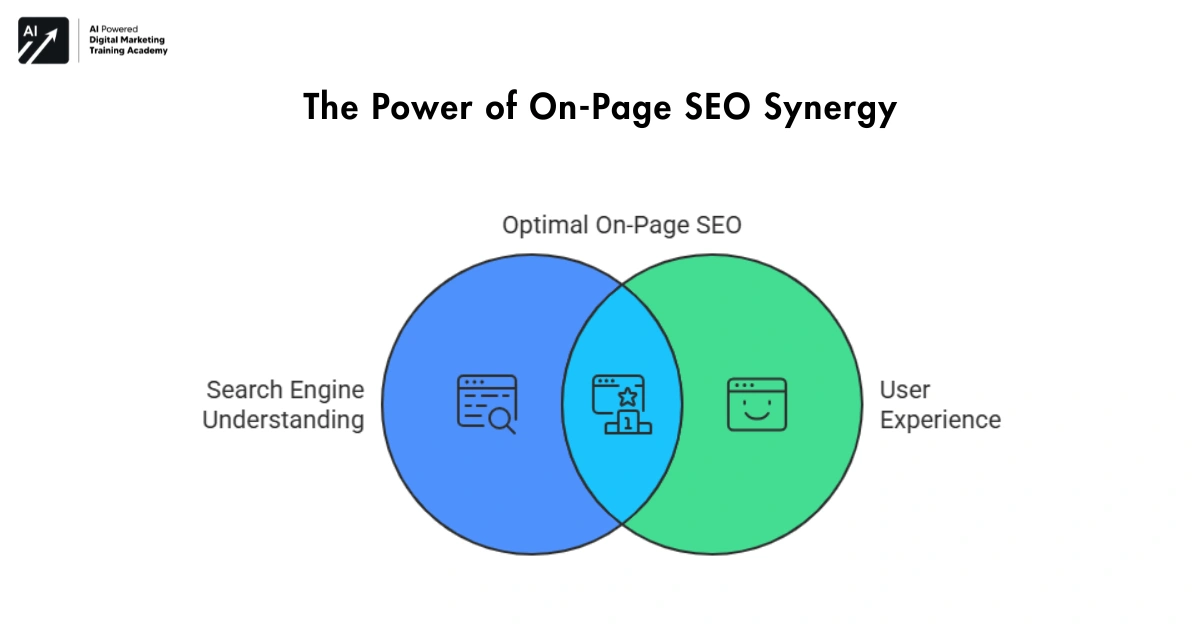
This is the depth with which search engines can filter and categorise content. If your content isn’t understood by the search engine, then it may be displayed to the wrong people even if it is fantastic.
On page SEO is the bit that transforms a standard article into a page that ranks well. It allows search engines to comprehend your theme, your goal and the value you deliver. It also improves the visitor experience by making your content a pleasure to read. Done effectively, on page SEO helps you get higher visibility, delivers targeted visitors and increases your ability to rank well. Without it your good content can disappear.
What is On Page SEO?
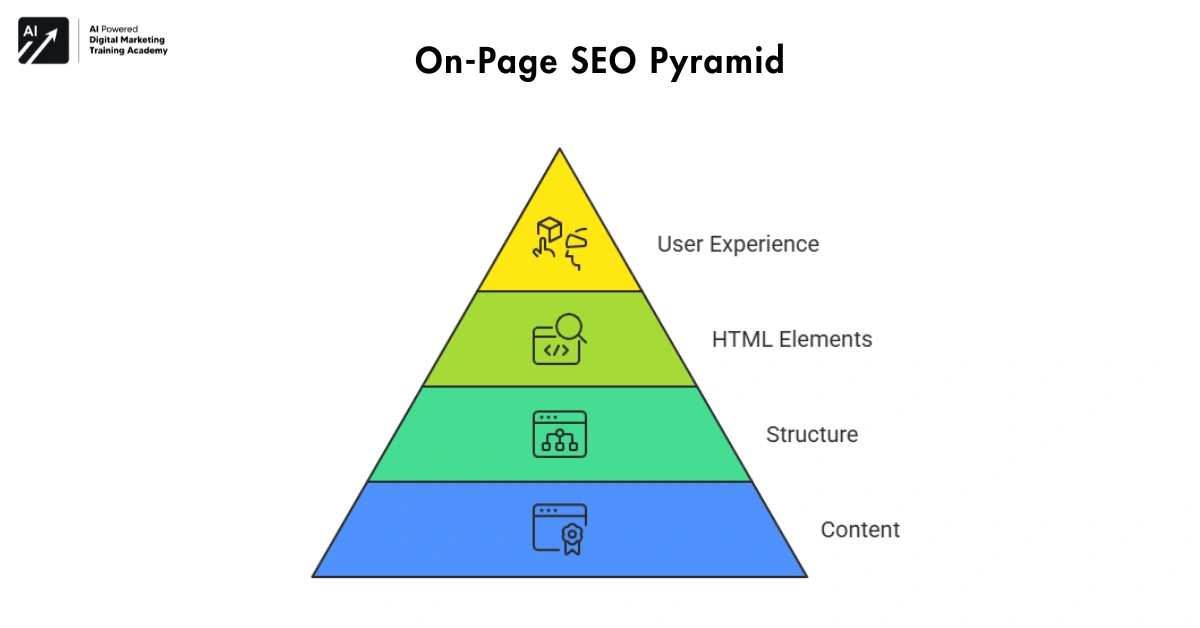
On page SEO is the process of improving everything inside your webpage so that search engines can understand it better and rank it higher.
This includes:
- Content
- Structure
- HTML elements
- User experience
Imagine it this way:
If your content were a book, on page SEO is how you number chapters, prepare headings, index etc. That way, anyone can find what they need fast. Without structure, even a great book becomes hard to use.


What exactly falls under On Page SEO?
On page SEO is not one thing. It is a combination of small elements working together.
These include:
- Title tag and meta description
- Headings (H1, H2, H3)
- Keyword usage
- URL structure
- Internal links
- Image optimization
- Content depth
- Page speed
Each element sends signals to Google and weak signals lead to weak rankings.
Why On Page SEO Matters More Than Ever
Search engines have changed. Earlier, keyword stuffing worked. Now, Google focuses on understanding meaning, intent, and usefulness.
If your page is not optimized properly:
- Google may not understand your topic
- Your page may rank for wrong keywords
- Users may leave quickly
It helps Google understand your content clearly and search engines do not “read” like humans and also they scan patterns.
They rely on:
- Headings
- Keyword placement
- Content flow
If your page is messy, Google gets confused and Clear structure = clear ranking signals. Which Improves user experience directly Users don’t read line by line and they scan.
If your content:
- Looks heavy
- Has no structure
- Takes time to load
They leave.
On page SEO improves:
- Readability
- Navigation
- Speed
That increases time spent on your page.
It increases your chances of ranking
Even strong content fails without optimization.
On page SEO helps you:
- Target the right keywords
- Match user intent
- Compete with existing pages
Ranking is not luck. It is alignment.
Step 1: Keyword Research – The Foundation
Most people get this wrong. and they pick a topic they like even though not what users search. That is the first mistake.
How to choose the right keyword
A good keyword is not just popular. It must be realistic.
Focus on:
- Keywords people actually search
- Moderate competition
- Clear user intent
Instead of choosing: “SEO”
Choose: “on page SEO for beginners”
This reduces competition and improves ranking chances.
Understand search intent deeply
Every keyword has a purpose behind it.
There are three main types:
- Informational (learning something)
- Navigational (finding a site)
- Transactional (ready to act)
If your content does not match intent: You will not rank, even with perfect SEO
Step 2: Title Tag and Meta Description Optimization
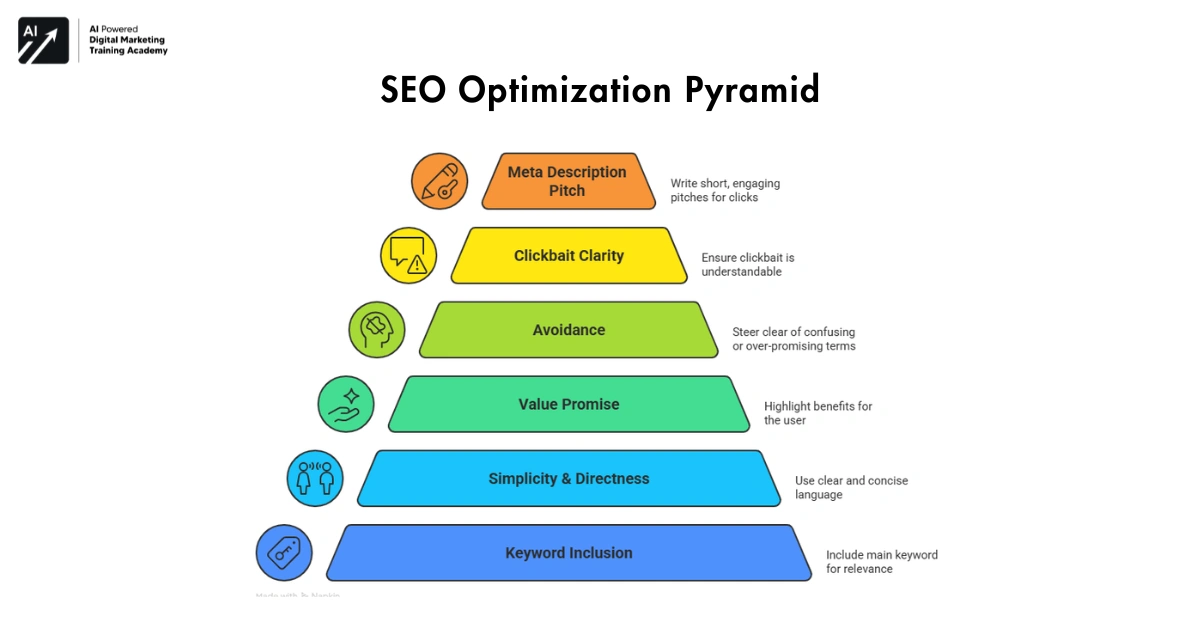
Your title is not just a heading. It is your click magnet.
How to write a high-performing title
A good title should:
- Include your main keyword
- Be simple and direct
- Promise value
Avoid:
- Confusing words
- Over-promising
- Clickbait without clarity
Example approach: Keyword + outcome
Writing meta descriptions that get clicks
Meta descriptions don’t directly impact rankings. But they control clicks.
Write them like a short pitch:
- What will the user learn?
- Why should they click?
Keep it clear and human.
Step 3: Heading Structure and Content Flow
This is where most blogs fail. They write content, but without proper On Page SEO, they don’t organize it effectively for search engines or readers.
Correct heading usage
Use headings like a roadmap:
- H1 → Main topic
- H2 → Main sections
- H3 → Detailed points
Do not skip levels randomly and structure builds clarity.
Why structure impacts rankings
Good structure helps:
- Google scan your content faster
- Users understand quickly
- Increase engagement
Bad structure creates confusion. Confusion kills rankings.
Step 4: Content Optimization That Actually Works
Content is not about length mainly it is about usefulness.
Write for humans first, not algorithms
If your content feels robotic, users leave.
Focus on:
- Simple language
- Clear explanation
- Real value
Search engines reward user satisfaction.
Smart keyword placement
Do not force keywords everywhere.
Use them:
- In headings
- In introduction
- Naturally in content
Also include:
- Synonyms
- Related terms
This builds topical relevance.
Depth beats length
A 1000-word useful article beats a 3000-word empty one.
Your content should:
- Answer questions
- Solve problems
- Remove confusion
If your content adds no new insight, it will not rank.
Step 5: URL Structure Optimization
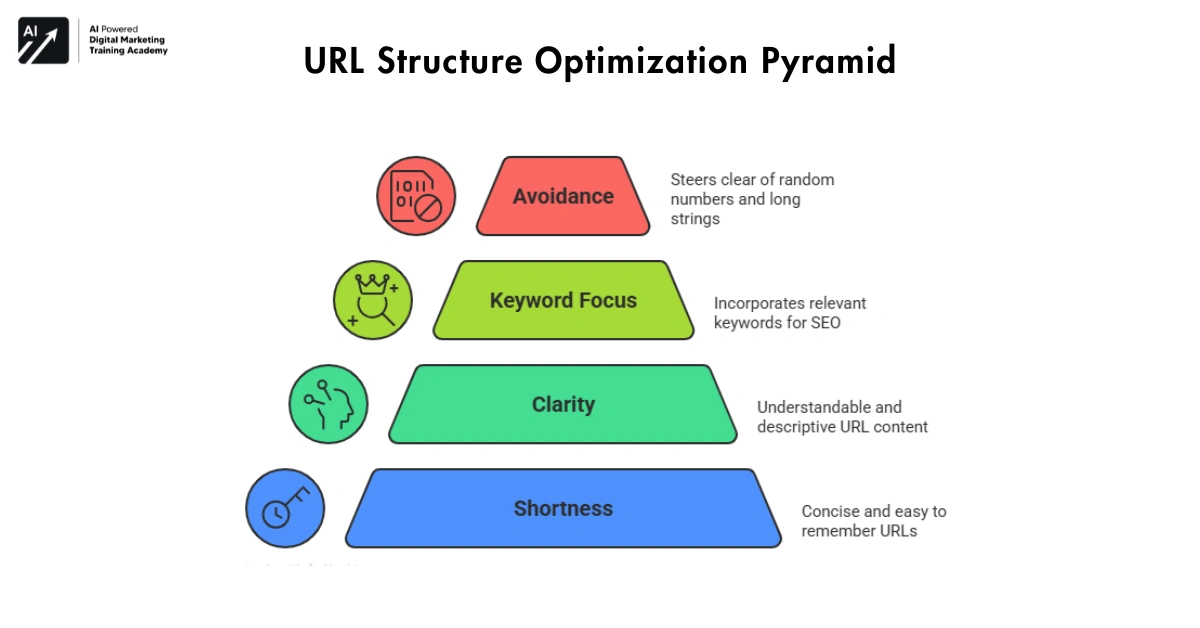
URLs are small but powerful signals.
What makes a good SEO URL
A good URL is:
- Short
- Clear
- Keyword-focused
Example: yourwebsite.com/on-page-seo-guide
Avoid:
- Random numbers
- Long strings
- Unreadable formats
Step 6: Internal Linking Strategy
This is one of the most ignored areas. But it has a strong impact.
Why internal linking matters
Internal links help:
- Distribute page authority
- Guide users
- Improve indexing
Without links, your pages stay isolated.
Best practices for internal linking
- Link related content only
- Use meaningful anchor text
- Avoid excessive linking
Every link should serve a purpose.
Step 7: Image Optimization
Images improve engagement. But they can slow your page.
Image SEO essentials
- Use descriptive file names
- Add alt text
- Compress images
Why this matters
Images help:
- Better rankings in image search
- Accessibility
- Page speed improvement
Step 8: Page Speed and Performance
Speed is not optional. A slow page loses users instantly.
How to improve page speed
- Compress images
- Use caching
- Reduce unnecessary scripts
Even a 2-second delay can reduce conversions.
Advanced On Page SEO Strategies
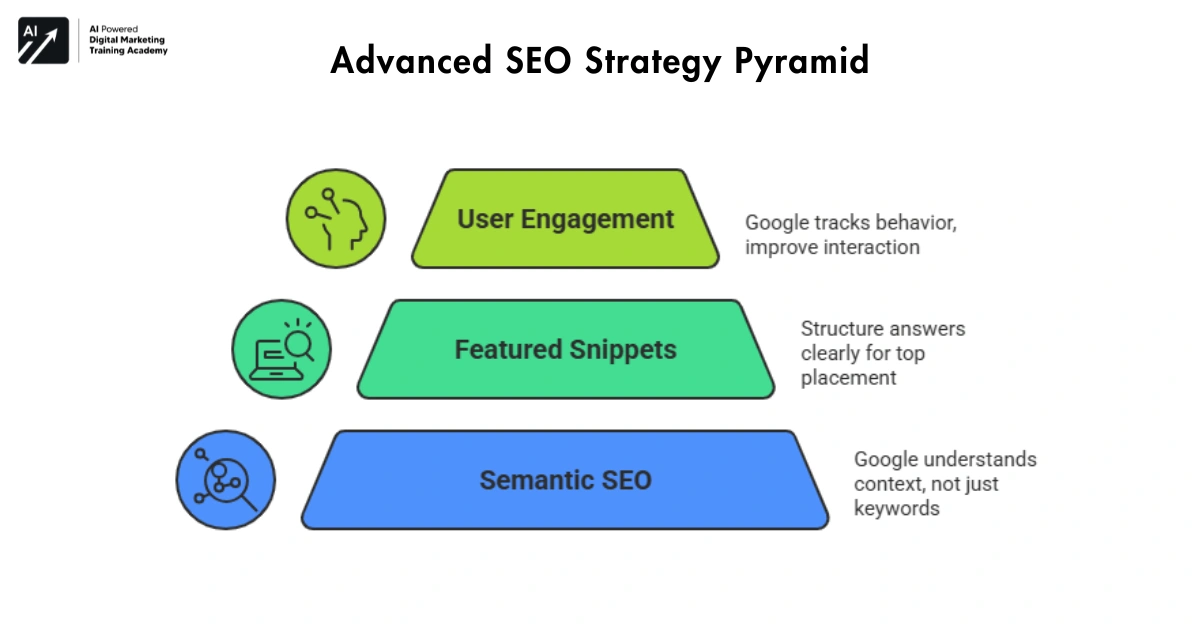
Basic SEO gets you started. Advanced SEO gets you ranked.
Use semantic SEO
Google understands context, not just keywords.
Include:
- Related phrases
- Topic clusters
- Supporting terms
This increases relevance.
Optimize for featured snippets
Structure answers clearly.
Use:
- Bullet points
- Short definitions
- Direct answers
This improves your chances of appearing at the top.
Improve user engagement signals
Google tracks behavior.
Improve:
- Time on page
- Scroll depth
- Interaction
Do this by:
- Writing engaging content
- Breaking text visually
- Adding internal links
Common On Page SEO Mistakes
Most people don’t fail because of lack of effort. They fail because of the wrong approach to On Page SEO Guide, missing critical elements that help search engines understand and rank their content.
Keyword stuffing
Repeating keywords unnaturally reduces quality.
Ignoring mobile users
Most traffic comes from mobile. If your site is not mobile-friendly: Rankings drop
Poor structure
Unorganized content leads to:
- High bounce rate
- Low engagement
Step 9: Optimize for Search Intent (Most Ignored Factor)
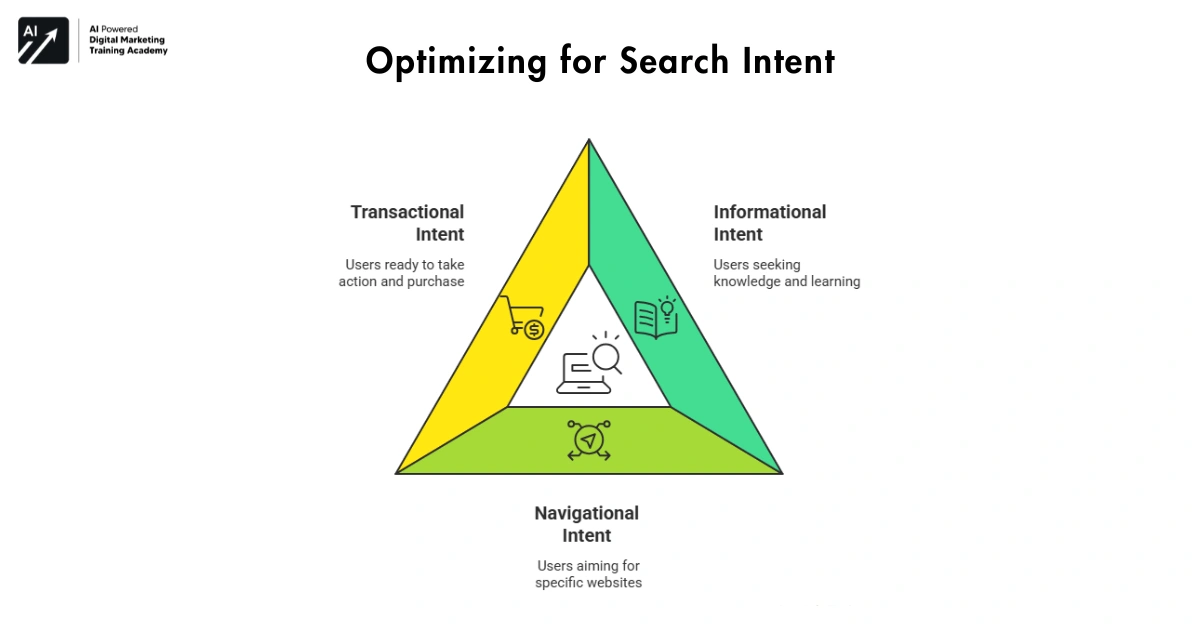
Most people think keywords are enough, they’re not. Two pages can target the same keyword.
Only one ranks and the difference is intent match.
Types of search intent you must understand
Every search falls into a category:
- Informational → user wants to learn
- Navigational → user wants a specific site
- Transactional → user wants to take action
If your content mismatches intent: Google will push it down
How to match intent correctly
Before writing, check top-ranking pages.
Ask:
- Are they guides or lists?
- Are they short or detailed?
- Are they beginner or advanced?
Then align your content. Do not fight Google’s expectation and also match it.
Step 10: Content Formatting for Readability and Engagement
Even good content fails if it looks heavy. Proper On Page SEO Guide ensures your content is structured, readable, and engaging, helping users stay longer and interact with your page.
How users actually read content
Users don’t read fully but they scan.
They look for:
- Headings
- Bullet points
- Short paragraphs
If they don’t find clarity: They leave
Formatting best practices
Make content easy to consume:
- Use short paragraphs (2-3 lines)
- Break content with headings
- Use bullet points for clarity
- Highlight key ideas
Good formatting increases:
- Time on page
- Engagement
- Ranking signals
Step 11: E-E-A-T Signals (Trust and Authority)
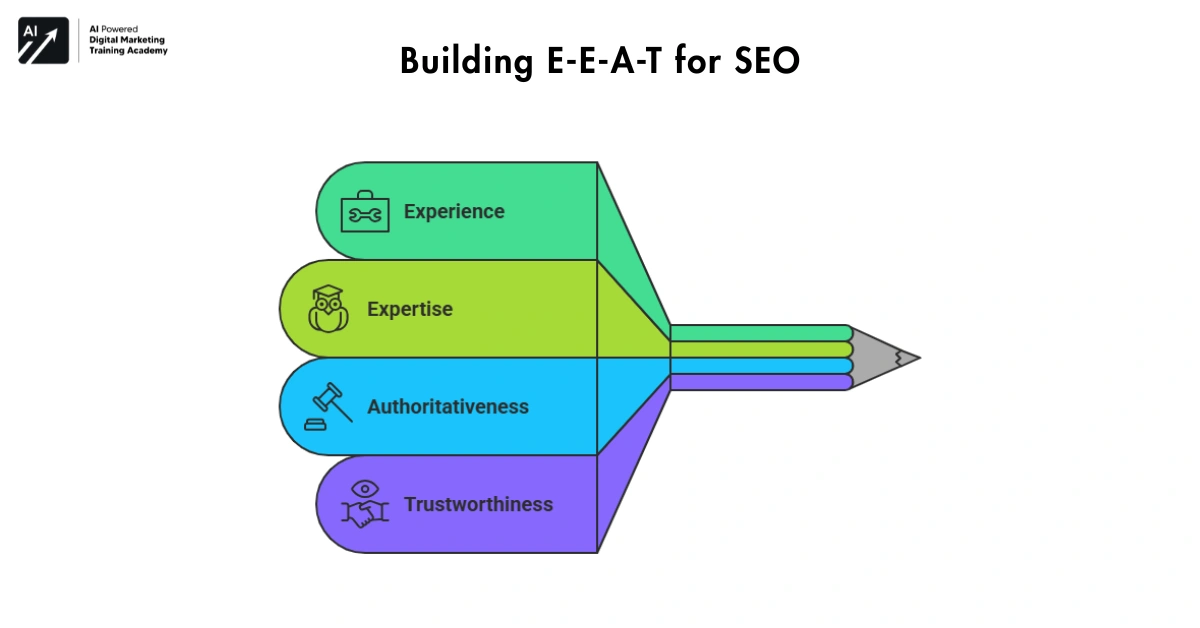
Google does not rank just content. It ranks credibility, and strong On Page SEO Guide is how you demonstrate that credibility to both search engines and users.
What is E-E-A-T?
E-E-A-T stands for:
- Experience
- Expertise
- Authoritativeness
- Trustworthiness
If your content lacks trust It will struggle to rank
How to improve E-E-A-T
You don’t need to be famous.
But you must show credibility:
- Add author information
- Use real examples
- Avoid vague claims
- Keep information accurate
Trust grows through clarity, not through complexity
Step 12: On Page SEO Checklist
Most people read blogs and do nothing. This section removes that problem.
Quick on page SEO checklist
Before publishing, check:
- Keyword placed in title
- Proper heading structure (H1 → H3)
- Clear and useful content
- Internal links added
- Images optimized with alt text
- URL is short and clean
- Page speed is acceptable
- Mobile-friendly design
Conclusion: Mastering On Page SEO for Higher Rankings
On-page SEO is not a trick it is a systematic approach to making your content understandable, trustworthy, and competitive. When implemented correctly:
- Search engines understand your content clearly, allowing them to match it with the right user queries.
- Users trust your content more, as a well-structured, readable page delivers real value.
- Your rankings improve consistently, giving you long-term visibility and targeted traffic.
Many websites fail not because their content is weak, but because they ignore on-page SEO. Optimizing title tags, meta descriptions, headings, URLs, internal links, images, page speed, and user experience is what separates pages that rank from those that remain invisible.
By focusing on on Page SEO Guide you ensure your content is aligned with search intent, easy to navigate, and credible. This system doesn’t just increase traffic it attracts the right audience, keeps them engaged, and positions your website as an authority in your niche.
Remember: Content quality alone is not enough. On Page SEO Guide transforms good content into content that ranks, drives traffic, and delivers measurable results. Master this system, and your pages will consistently outperform competitors, regardless of how much content is published every day.