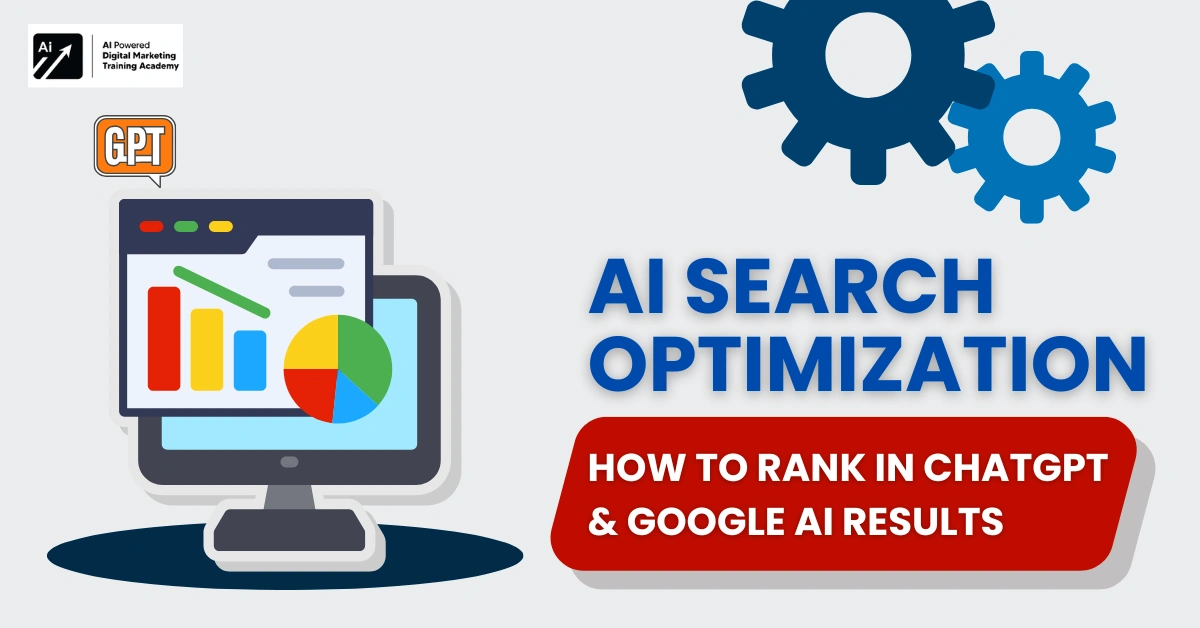

Search is changing faster than a lot of marketers believe. For the last few decades, Google rankings were driven by traditional SEO, focusing on keywords, backlinks, and related strategies. Today, AI Search Optimization is becoming the new standard for ensuring content is visible and usable in AI-driven search results.But in 2026, the way users are searching for information will be indeed different.
This shift has introduced a new concept: AI Search Optimization (AEO). The goal of AEO is to ensure your content is comprehensible, reliable and ready for AI, allowing it to be added to answers generated by AI. Here’s a blog explaining what AEO is, why SEO in the traditional sense no longer works as well as it used to, and how to create content to rank in an AI world.
What is AI Search Optimization ?
AI Search Optimization involves writing content to be easily “read, retrieved and returned as an answer”.
Difference Between SEO and AI Search Optimization
The main concern of traditional SEO has always been:
- Ranking the web pages
- Optimizing with keywords
- Building the backlinks
AEO focuses on:
- Answering questions clearly
- Structuring information logically
- Becoming a trusted source for AI summaries
Why This Shift Matters
AI systems prioritize:
- Clarity over keyword density
- Authority over volume
- Structure over length
Therefore, do not expect your search engine optimization-focused content to rank well on AI searches, including ChatGPT and other AI-driven platforms, without restructuring it for clarity, direct answers, and credibility.




How AI Finds Answers in 2026
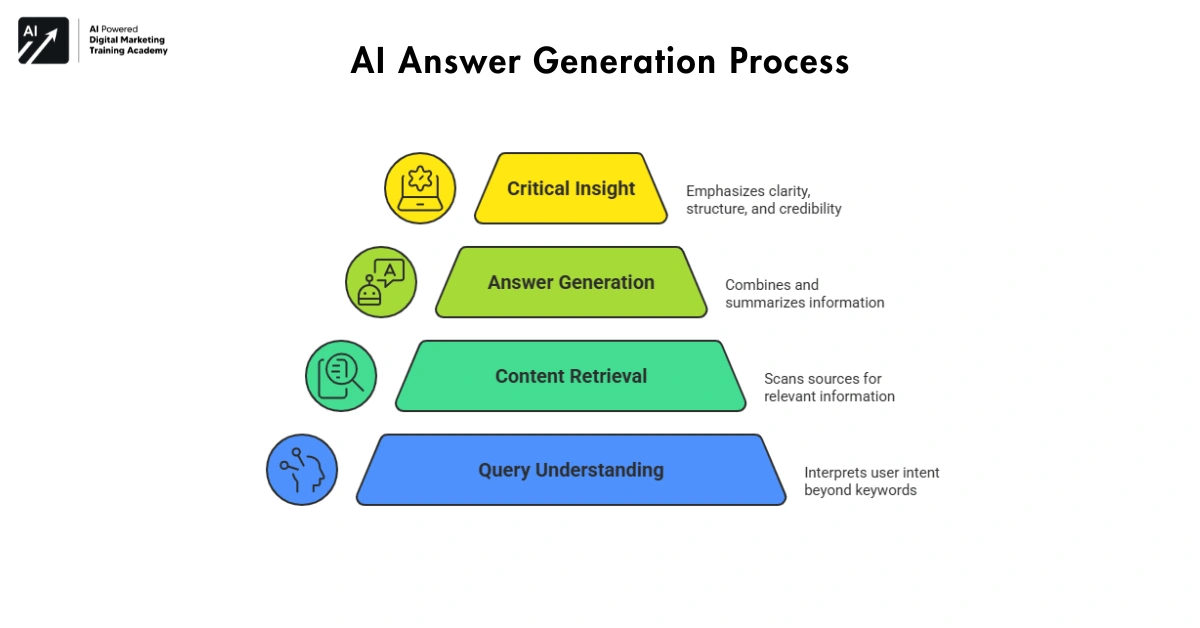
To optimize for AI, you must understand how it selects content.
Step 1 : Query Understanding
AI interprets user intent, not just keywords.
Example:
A user searching for “how to grow business online” in Google is actually asking for:
- Strategies
- Examples
- Step-by-step guidance
Step 2 : Content Retrieval
AI scans multiple sources and identifies:
- Relevant content
- Structured answers
- Authoritative insights
Step 3 : Answer Generation
Instead of showing links, AI:
- Combines information
- Summarizes key points
- Generates a final response
Critical Insight
If your content is not:
- Clear
- Structured
- Credible
It will not be used in AI-generated answers.
Why does traditional seo no longer suffice?
Many websites still depend solely on traditional seo techniques and that creates a gap.
Limitation of Keyword Optimization
Using too many keywords or exactly targeting the phrase will not mean you will appear in AI’s response – AI is about sense, not repetition.
Backlinks Have Limited Value
Although backlinks are still relevant, they are no longer sufficient to ensure answers will be retrieved from AI.
AI also evaluates:
- Content clarity
- Relevance
- Usefulness
Content Length vs Content Quality
Long content without structure is ignored.
AI prefers:
- Precise answers
- Well-organized sections
- Clear explanations
Core Principles of AI Search Optimization
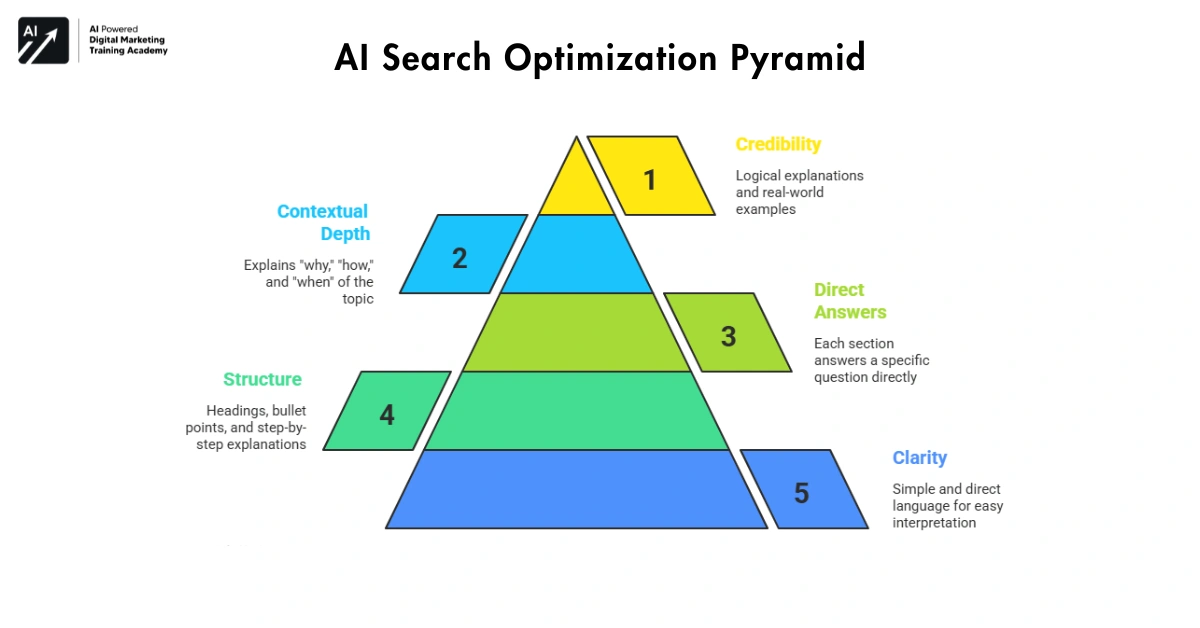
To rank in AI search, your content must follow certain principles.
1. Clarity Over Complexity
Do not use hard or new words
Write in a way that is:
- Simple
- Direct
- Easy to interpret
2. Structured Information
Follow these steps for Structure formation
- Use Headings like H1, H2, H3
- Include Bullet points
- Give step-by-step explanations
- This helps AI extract information easily.
3. Direct Answering Approach
Every section should answer a specific question.
Example:
- Instead of: Digital marketing is most important for business development.
- Use: How does digital marketing help businesses to grow?
4. Contextual Depth
Explain not just “what,” but also:
- Why it matters
- How it works
- When to apply it
5. Credibility Signals
AI favors trustworthy sources.
Include:
- Logical explanations
- Real-world examples
- Consistent reasoning
Content Structure for AEO (Practical Framework)
Most blogs fail because they are not structured for extraction.
Ideal AEO Structure
- Clear introduction
- Question-based headings
- Concise answers
- Supporting explanation
- Actionable steps
Example Structure
- What is AEO
- Why AEO matters
- How AEO works
- Steps to implement AEO
This structure aligns with how AI processes content.
Writing Content That AI Can Use
Use Question-Based Headings
Instead of generic headings, use:
- “How does AI search work?”
- “Why is AEO important?”
Provide Direct Answers First
Start each section with a clear answer and then expand.
Avoid Fluff
- AI ignores content that adds no value.
- Every paragraph must serve a purpose.
Technical Optimization for AEO
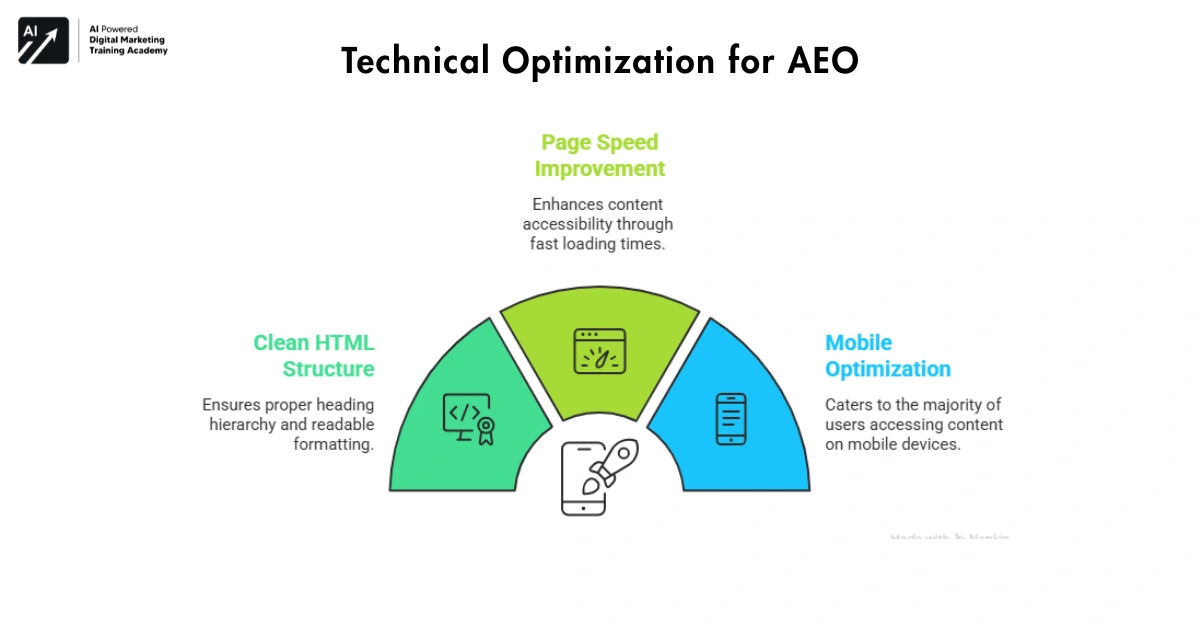
Content alone is not enough.
Use Clean HTML Structure
- Proper heading hierarchy
- Readable formatting
Improve Page Speed
Fast-loading pages improve content accessibility.
Mobile Optimization
Most users access content on mobile devices.
Role of Authority in AI Search
AI systems prefer reliable sources.
What Builds Authority
- Consistent publishing
- Topic depth
- Internal linking
Topical Authority
Instead of writing random blogs, focus on:
- One topic cluster
- Multiple related articles
Common Mistakes in AEO
Writing Only for Keywords
This leads to poor readability.
Ignoring Structure
Content without proper structure is hard for AI to read.
Lack of Depth
Surface-level content is ignored.
Future of AI Search Optimization
Shift from Search Engine to Answer Engine
Users will rely more on:
- AI assistants
- Voice searcH
- Direct answers
Content Will Become More Contextual
Generic content will lose visibility.
Trust Will Become a Ranking Factor
Reliable sources will dominate.
Building an AEO Strategy (Step-by-Step)
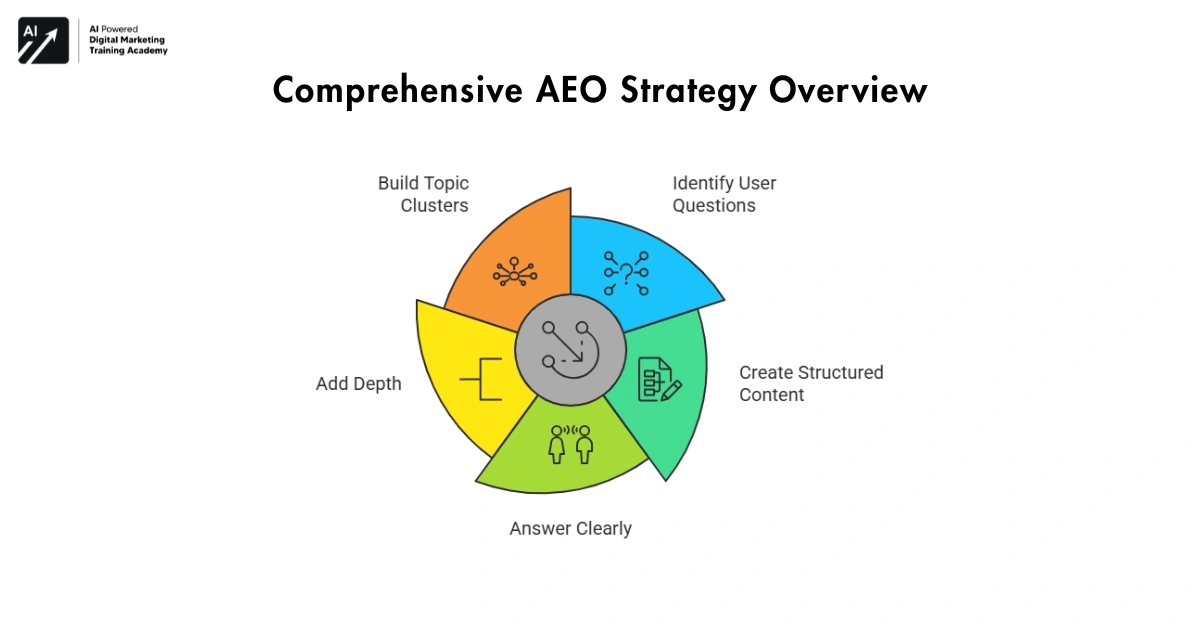
Step 1 : Identify User Questions
Focus on real queries, not just keywords.
Step 2 : Create Structured Content
Use clear headings and logical flow.
Step 3 : Answer Clearly
Avoid vague explanations.
Step 4 : Add Depth
Explain concepts with reasoning.
Step 5 : Build Topic Clusters
Cover related topics in multiple blogs.
Second-Order Effects of AI Search
Reduced Website Traffic
Users may not click links if answers are available instantly.
Increased Importance of Brand Trust
Users will trust recognized sources more.
Content Quality Gap
Poor quality content will also fade away.
Key points to remember
Artificial Intelligence search emphasizes clarity and presentation
- SEO alone is no longer enough
- Authority and depth matter more than keywords
- Structured content improves visibility
Conversion Path Optimization
Getting traffic is not just a goal, converting that traffic into revenue is the main goal.
What is a Conversion Path
A conversion path is the journey a user takes from:
- First visit
- Interaction
- Final action (signup, purchase, inquiry)
Key Elements of an Effective Conversion Path
- Clear entry point in landing page along with content
- Logical flow with no confusion and distractions
- Single focused call-to-action
- Minimal friction like fast load, simple forms
Critical Insight
Most websites fail not because of low traffic, but because:
- Users don’t know what to do next
- Too many choices create confusion
- Simplifying the path often increases conversions without increasing traffic.
Content Positioning Strategy
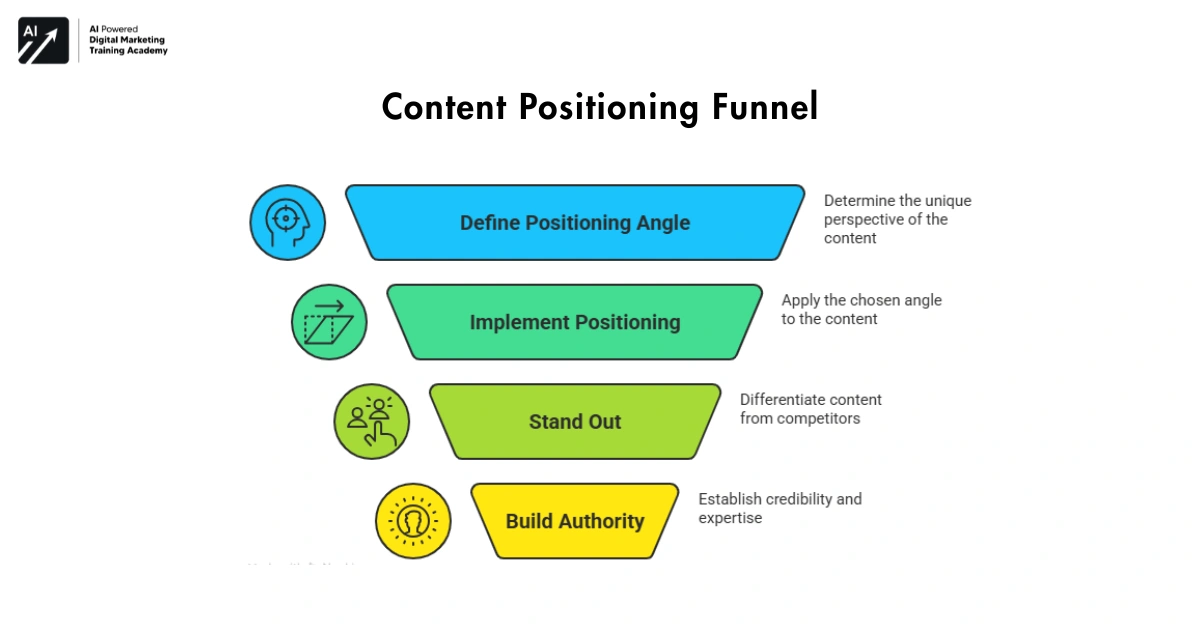
Two blogs can cover the same topic but get completely different results. The difference is positioning.
What is Content Positioning
Positioning is how your content is perceived compared to others.
It answers:
Why should someone read your content instead of another?
Types of Positioning Angles
Beginner-friendly like simple explanations
- Expert-level deep analysis
- Challenging common beliefs
- Case-study with real examples
Strategic Insight
- If your content has no clear angle:
- Blends with competitors
- It becomes replaceable
If your content has strong positioning:
- It stands out
- It builds authority
Practical Example
Topic: Online business ideas
Generic approach:
- List of ideas
- Positioned approach:
- Only ideas that work with proof and execution steps
- Same topic, completely different impact.
Conclusion
AI Search Optimization is not a replacement for traditional SEO, but an upgrade. When searching results are answering questions rather than providing links, content creating will have to evolve to meet new expectations. Instead of writing for the search engines, focusing solely on keywords to rank higher, it will become more important to have content that is well-structured, concise, and actually valuable.
The ones who become experts at using language in a way that machines understand, and people trust, will succeed. Those who jump aboard AEO will still have an edge when it comes to how people think content should be presented, and those who have yet to learn how to optimize for search engines will inevitably drop in ranking.