
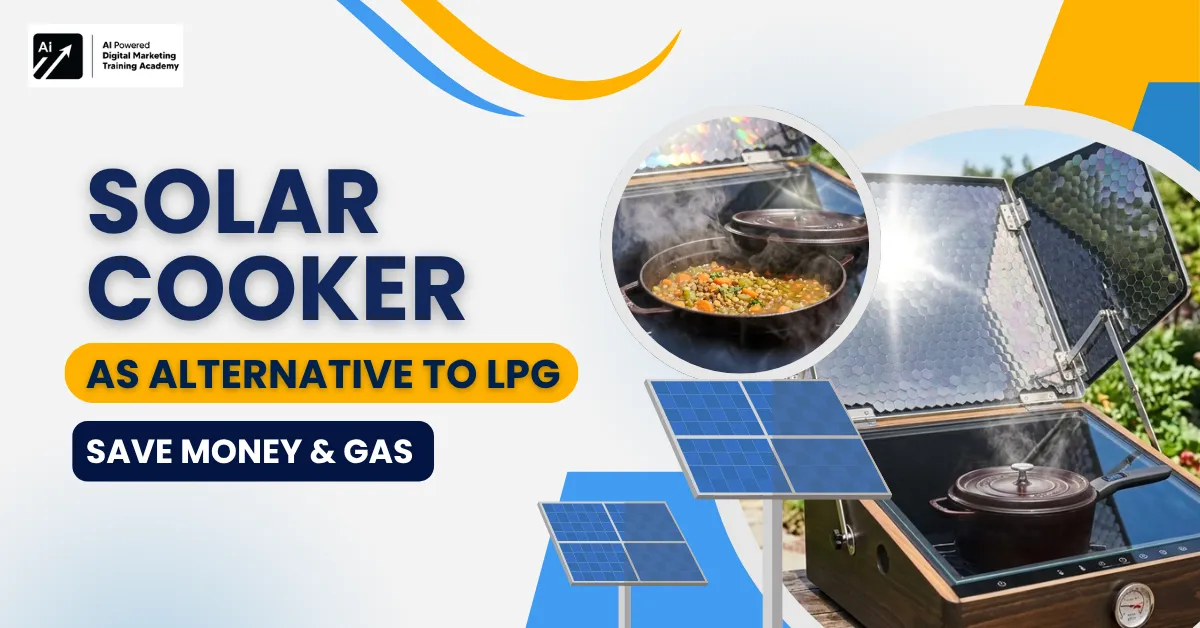

LPG shortages in India are not just rare disruptions, they are becoming into recurring challenge by supply constraints, increase in prices and global energy instability. This is where solar cooker as alternative to LPG becomes relevant.
For many households and small businesses, this raises a big question: how to cook reliably without LPG gas and at affordable cost. But beyond talk, most people want to know one thing, does it actually work in real Indian conditions?
This blog answers that with a practical, evidence-based approach.
A solar cooker uses sunlight to generate heat for cooking with no LPG or electricity. It works by concentrating on solar energy and reduce gas dependency, especially in consistent sunlight areas.
Why LPG shortages are pushing households to look for alternatives
India imports major portion of its LPG, with global price fluctuations and supply issues. For households, this translates into rising refill costs and uncertain availability.
Example:
- A family using one cylinder per month may face budget pressure as prices increase.
- A home-based food business risks income loss during supply delays.
India gets 5-7 hours of good sunlight daily. So, solar is a best cooking alternative in many areas.




What is a Solar Cooker and How it Works?
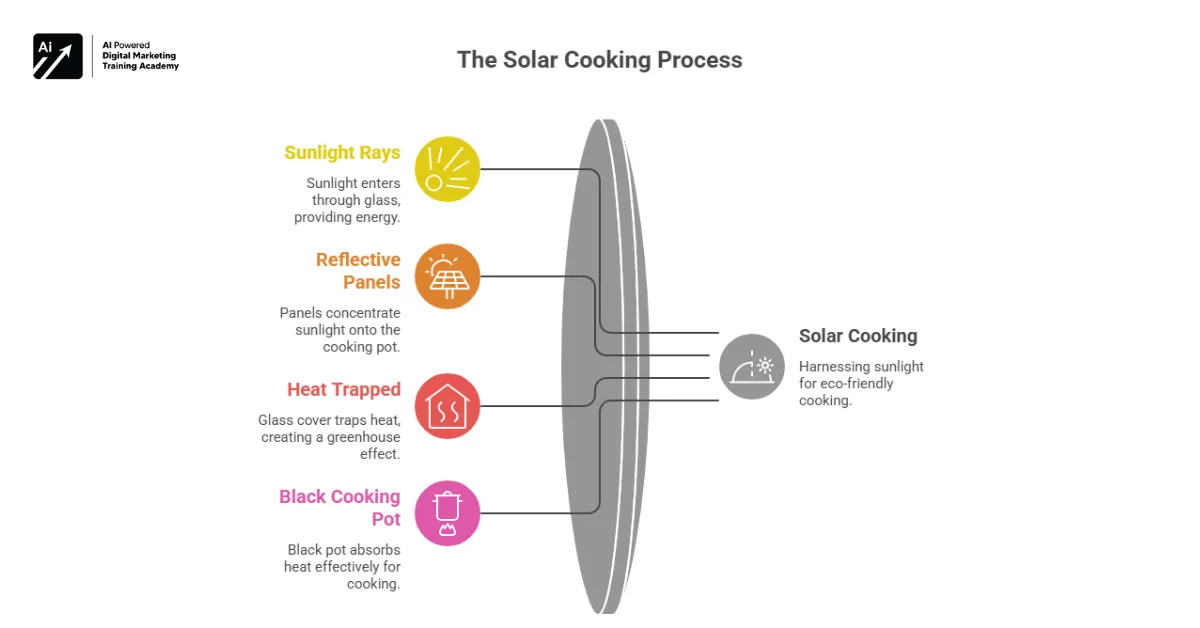
It turns the Sunlight into heat and traps it inside the cooking chamber. It’s a simple process but need the right setup.
Basic mechanism:
- sunlight enters through glass or reflective panels
- heat is absorbed by dark cookware
- insulation retains heat for cooking
Types of Solar Cookers Used in India
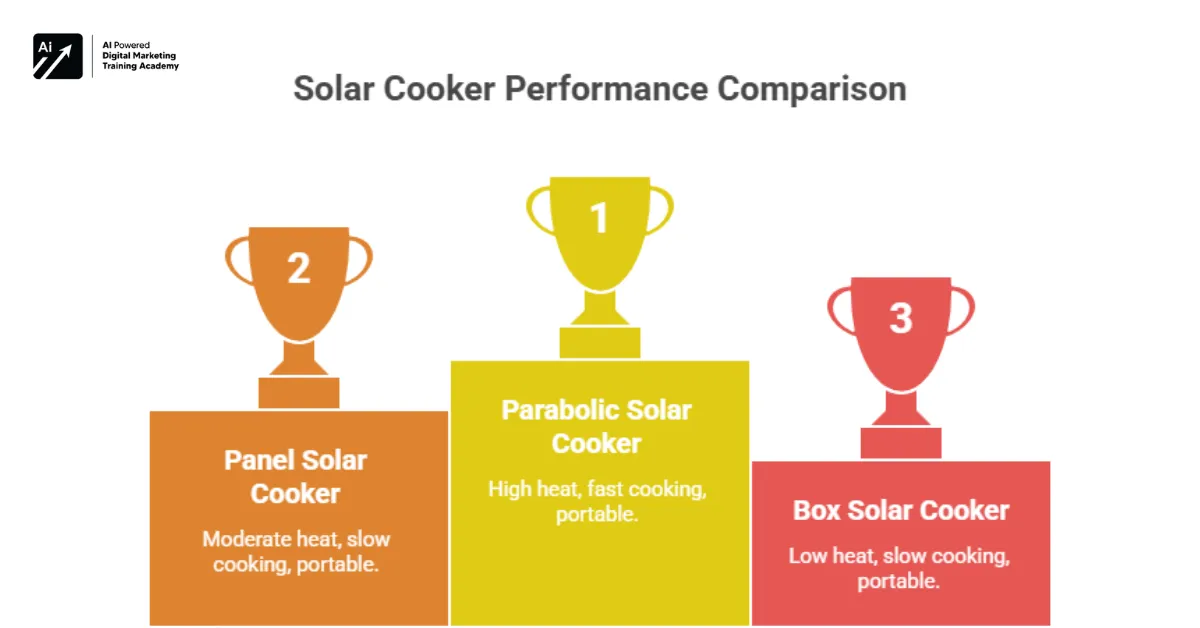
1. Box Solar Cooker
- affordable and widely used
- ideal for slow cooking
- example: rice, dal, vegetables
2. Parabolic Solar Cooker
- high heat concentration
- supports frying and faster cooking
- example: boiling water quickly
3. Panel Solar Cooker
- portable and low-cost
- suitable for small meals
- example: reheating food
Is Solar Cooking Practical in India?
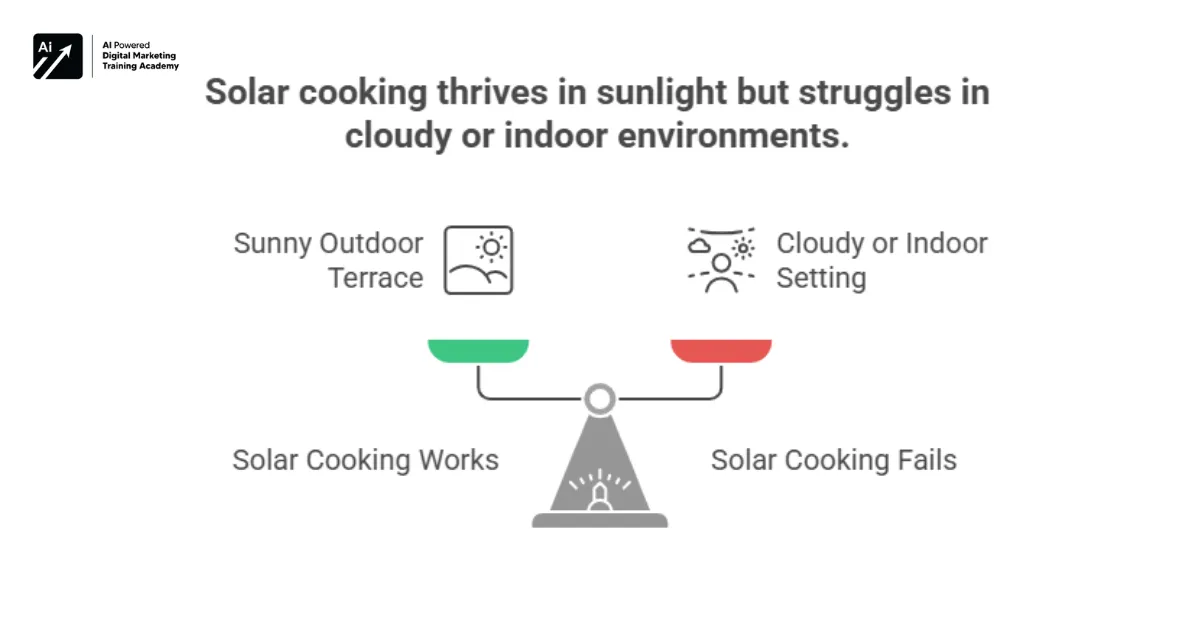
Solar cooking is not universally practical. It depends heavily on conditions.
When Solar Cooking Works Well
Solar cooking is effective when:
- you have direct sunlight for 4-6 hours
- cooking can be planned in advance
- meals involve boiling or steaming
Examples:
- cooking lunch on a terrace during peak sunlight hours
- preparing rice or dal in the afternoon
When Solar Cooking Does Not Work
Solar cooking becomes unreliable when:
- weather is cloudy or rainy
- cooking is needed early morning or night
- fast or high-heat cooking is required
Examples:
- making chapati or frying snacks
- cooking dinner after sunset
Urban vs Rural Usability
Urban (apartments):
- limited sunlight due to high-rise shadowing
- restricted balcony direction
- lower practicality
Rural / independent homes:
- open spaces and better sunlight
- higher usability and efficiency
Solar Cooker as alternative to LPG: Cost, Savings and ROI
Cost is one of the strongest drivers for adoption, but it must be evaluated against its usability.
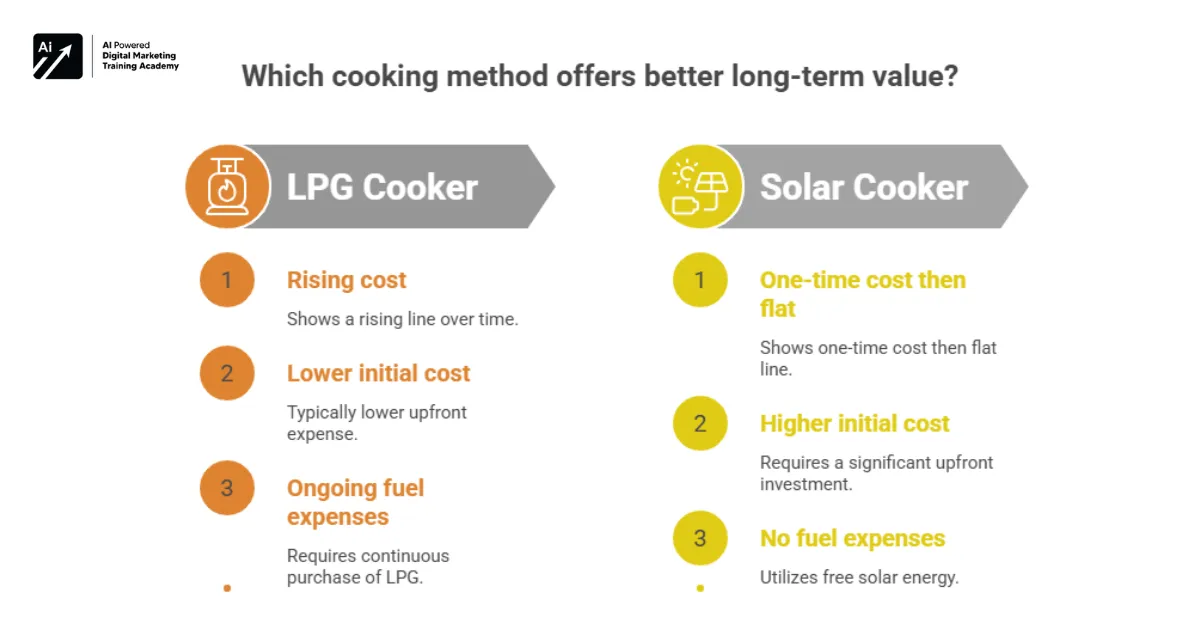
Initial Investment vs Running Cost
- Solar Cooker costs ₹2,000-₹10,000
- LPG costs around ₹900-₹1,200 per refill
Potential Monthly Savings
If solar cooking replaces:
- 30% of LPG usage → saves ₹300-₹400/month
- 40% usage → saves up to ₹500/month
Payback Period
Most households recover the investment within:
-
6–18 months
Benefits and Limitations of Solar Cooking
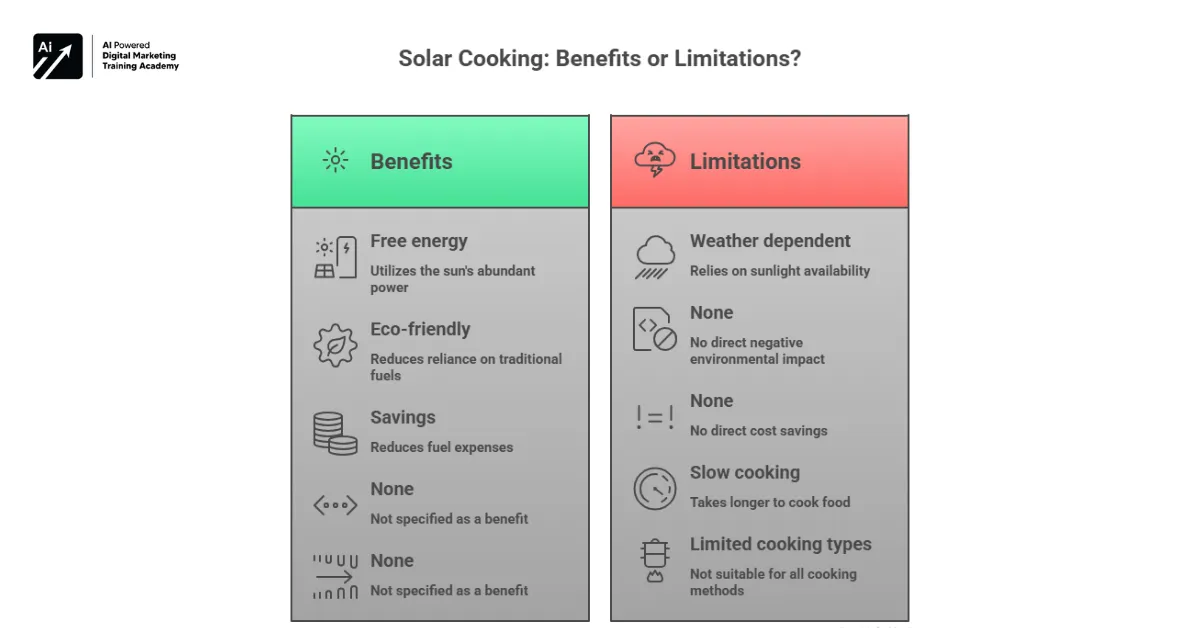
Need to understand both sides, in order to set realistic expectations.
Key Benefits
- zero fuel cost
- reduced gas dependency
- eco-friendly cooking
- low maintenance
Example:
- a family using solar for lunch can reduce LPG usage by up to 30–40%
Practical Limitations
- slow cooking (2-4 hours)
- weather dependency
- limited cooking methods
- requires planning
Cooking Suitability Table (High Value Addition)
How to Use a Solar Cooker Efficiently (Step-by-Step)
Correct usage significantly improves results.
Setup and Positioning
- place in direct sunlight
- align with sun direction
- preheat for 15–20 minutes
Cooking Best Practices
- use black cookware
- cut food into smaller pieces
- keep lid closed
Common Mistakes to Avoid
- frequent opening (heat loss)
- using shiny utensils
- cooking in weak sunlight
Comparing Solar Cooking with Other LPG Alternatives
It is one of several options available during a gas shortage.
Induction Stove
- induction: fast but electricity dependent
- solar: slower but zero cost
Biogas
- biogas: reliable but setup required
- solar: simpler but weather dependent
Biomass
- biomass: cheap but polluting
- solar: clean but slower
Can Solar Cooker Replace LPG Completely?
Short Answer
No, solar cooking cannot fully replace LPG in most Indian households.
Realistic Role of Solar Cooking
Solar cooking works best as:
- a supplementary cooking system
- a cost-saving method
- a backup during shortages
Who Should Consider Solar Cooking (And Who Should Not)
Ideal Users
- households with terrace access
- rural families
- cost-conscious users
- sustainability-focused individuals
Not Suitable For
- apartments with limited sunlight
- users needing quick cooking
- high-volume commercial kitchens
How to Choose the Best Solar Cooker for Your Home
Budget
- low budget → box or panel cooker
- higher budget → parabolic cooker
Usage
- daily cooking → box or parabolic
- occasional use → panel cooker
Space
- terrace → any type
- small balcony → compact box cooker
Government Support and Future of Solar Cooking in India
Solar cooking aligns with India’s goals of:
- reducing LPG imports
- promoting renewable energy
- improving energy security
However, adoption remains limited because of awareness and usability issues.
Practical Tips to reduce LPG Dependency using Solar Cooking
A hybrid approach gives the best results.
Example Workflow
Morning:
- prepare ingredients
Afternoon:
- cook using solar cooker
Evening:
- use LPG for quick cooking
Decision Framework: Should You Use Solar Cooking?
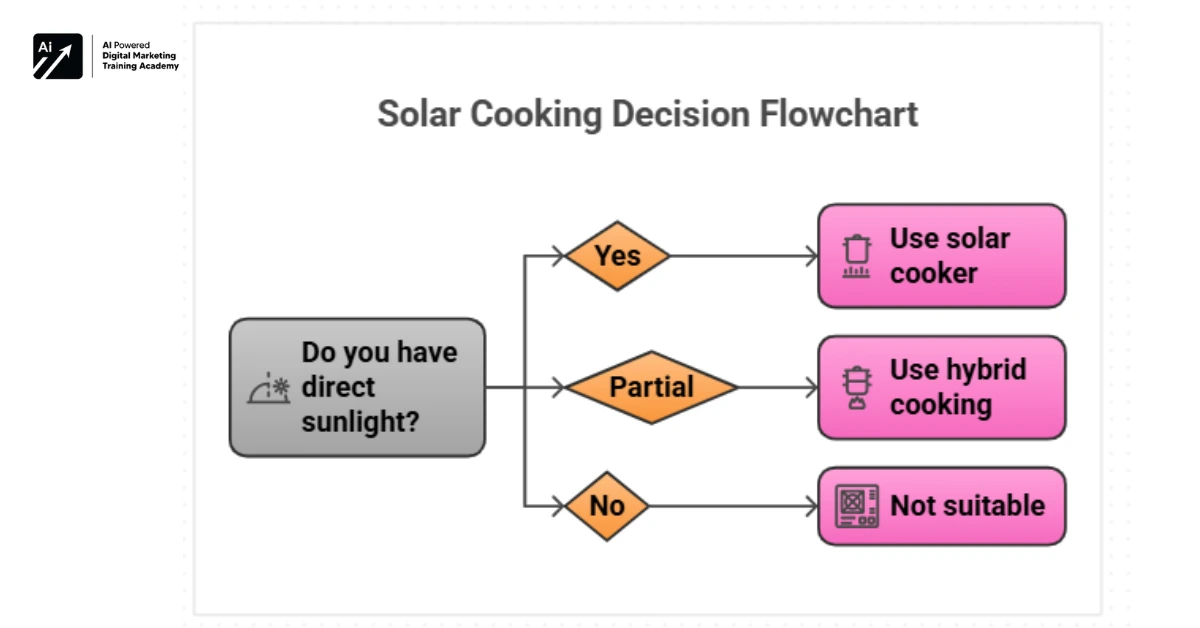
Use this quick guide:
- Have full sunlight + terrace? → Strongly recommended
- Partial sunlight? → Use hybrid model
- No sunlight access? → Not suitable
FAQs
Can a solar cooker replace LPG completely?
No, solar cookers cannot fully replace LPG because they depend on sunlight and are slower. They work best as a supplementary method for daytime cooking.
How much money can solar cooking save?
Using Solar cooking can save ₹300–₹500 per month by reducing LPG usage by 20–40%, depending on how frequently it is used.
What are the disadvantages of solar cookers?
This include slow cooking, dependency on sunlight and only useful for limited types of cooking. These make it unsuitable for urgent or night-time cooking.
Is solar cooking slow?
Yes, it usually takes 2-4 hours. This depends on how sunlight and what type of food. It requires planning, but works really well for slow-cooked meals.
Which solar cooker is the best for Indian homes?
For homes box solar cookers are really good because they are affordable and easy to use.
On the hand parabolic solar cookers are great for cooking food quickly but the thing is, they cost a lot more, than box solar cookers.
Conclusion
Solar cooking is not going to replace LPG. It is a better way to use less gas and be more energy independent.
The best strategy is a mix of both
- use solar cooking for meals during the day
- rely on LPG for speed and flexibility
If used correctly, solar cooking reduces costs, work as backup during shortages and supports a sustainable lifestyle without messing up daily cooking routine.