
To Build a startup isn’t just about having a great idea, it’s about making the right calls in uncertain situations, frequently with limited resources. That’s why studying Indian startup success stories matters.
Below examples go beyond motivation. They Reveal how the companies solved problems, scaled operations and built sustainable businesses in one of the most competitive markets.
Most content focuses on what startups achieved. This blog focuses on how they succeeded with practical lessons you can apply.
Why are Indian startup success stories so valuable?
Indian startups operate in a highly diverse and price sensitive market. In order to Succeed here requires efficiency, adaptability and deep customer understanding.
These case studies matter because they show:
- how businesses grow without unlimited funding
- how companies adapt to changing demand
- how simple strategies outperform complex ones
For example:
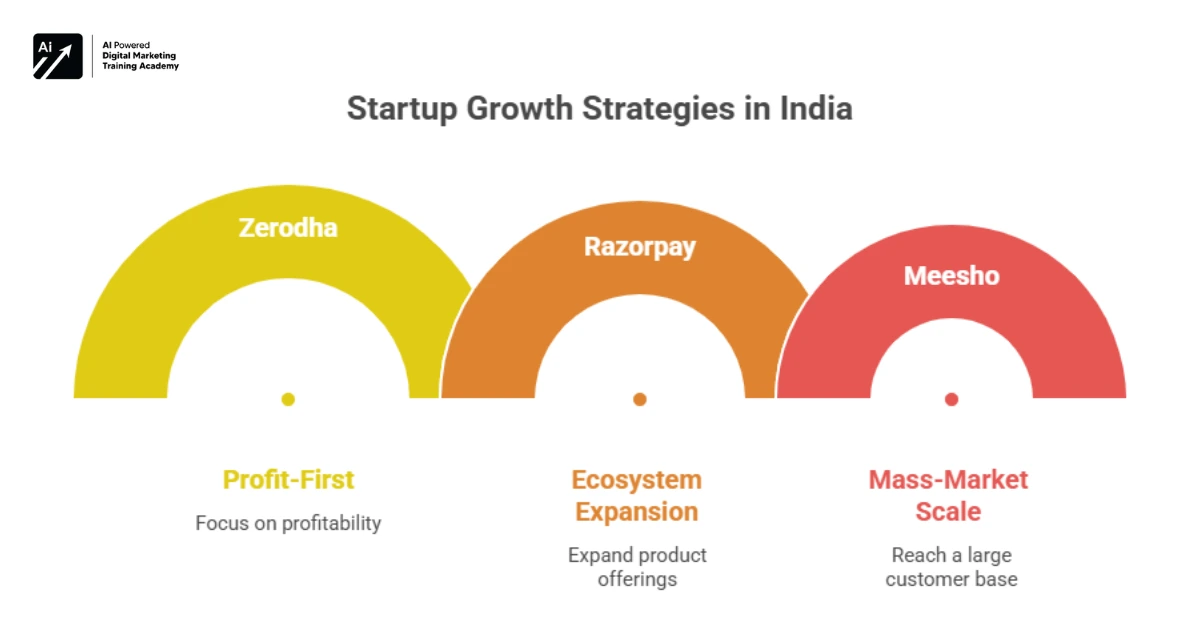
- some startups focus on profitability early
- others scale by targeting underserved markets
When analyzed together, these stories reveal clear strategic patterns.
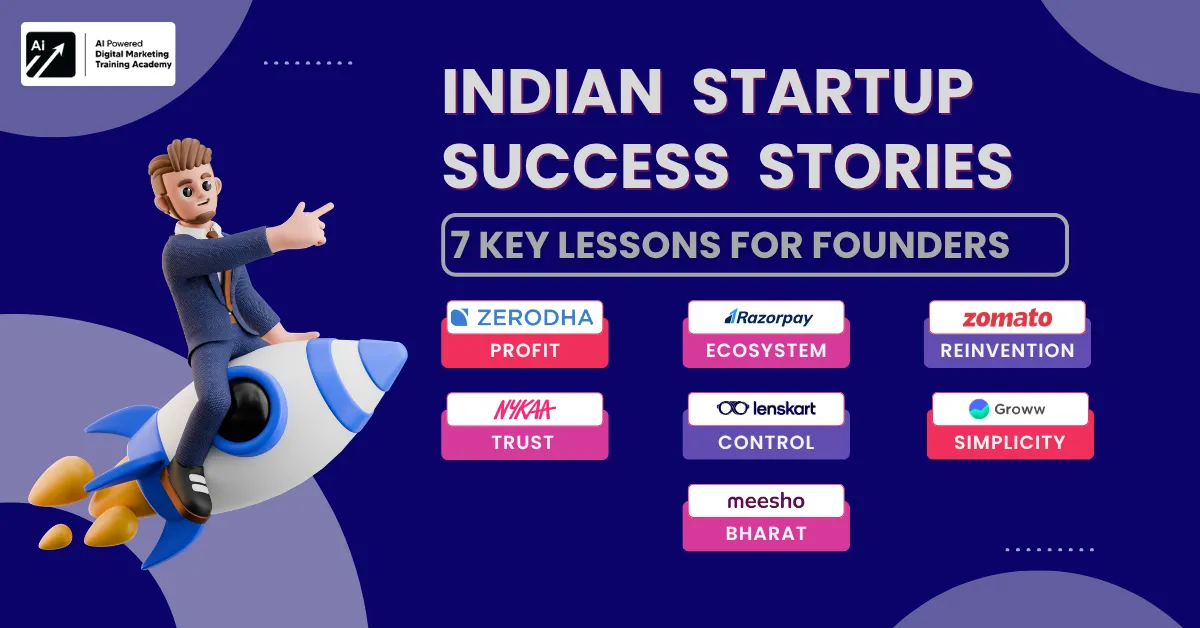
7 Indian Startup Case Studies and Their Core Strategies
Zerodha – Profit-First Business Model
Zerodha built a large brokerage platform without relying on aggressive funding or discounts.




Instead, they focused on:
- lean operations
- in-house technology
- sustainable revenue
How it works:
By keeping costs low and avoiding heavy marketing spend, maintained strong margins.
Example:
- minimal advertising, relying on organic growth
- simple pricing model without hidden charges
Why it matters:
This reduces dependency on external capital.
Lesson:
Profitability is a strategic choice, not a late stage goal.
Razorpay – Ecosystem Growth Strategy
Razorpay expanded business beyond payments to build a full financial ecosystem.
They introduced:
- payroll systems
- lending solutions
- banking services
How it works:
Each product solves a related need for the same customer.
Examples:
- a business using payments can also manage salaries
- lending becomes easier with existing transaction data
Benefits:
- higher retention
- increased revenue per user
Lesson:
Expand around customer needs, not just product features.
Zomato – Reinvention and Adaptability
Zomato evolved multiple times to stay relevant.
It shifted from:
- restaurant discovery
- to food delivery
- to logistics support
How it works:
They don’t stick to one model, they adapt as customer demands shift.
Examples:
- entering delivery when user behavior changed
- building logistics to control service quality
Challenge:
Often changing needs flexible operations.
Lesson:
Change fast to last long.
Nykaa – Content + Trust-Based Growth
Nykaa built trust before pushing sales.
They invested in:
- educational content
- tutorials
- product guides
How it works:
Smart customers decide quickly and with confidence.
Examples:
- makeup tutorials explaining product use
- offline stores reinforcing online credibility
Outcome:
- strong brand loyalty
- lower dependency on discounts
Lesson:
Trust reduces customer acquisition cost over time.
Lenskart – Vertical Integration Strategy
Lenskart controls its entire value chain.
They manage:
- manufacturing
- distribution
- retail
How it works:
Owning operations improves speed, cost efficiency and consistency.
Examples:
- faster delivery cycles
- better pricing control
Benefit:
- higher margins
- consistent customer experience
Lesson:
Control the system to control outcomes.
Groww – Simplicity as a Growth Driver
Groww removed complexity from investing.
They simplified:
- onboarding
- interface
- financial language
How it works:
Reducing friction increases user adoption.
Examples:
- beginner-friendly UI
- clear investment flows
Misconception:
Simple products are not easy to build. They require deep user insight.
Lesson:
Simplicity accelerates scale.
Meesho – Mass Market Disruption
Meesho focused on underserved markets.
They targeted:
- Mostly on Tier 2 and Tier 3 cities
- small sellers
- social commerce users
How it works:
They reduced entry barriers for both sellers and buyers.
Examples:
- zero commission model
- low-cost product offerings
Outcome:
- rapid adoption across non-urban regions
Lesson:
Large markets are built by serving the underserved.
Key Startup Lessons from Indian Companies
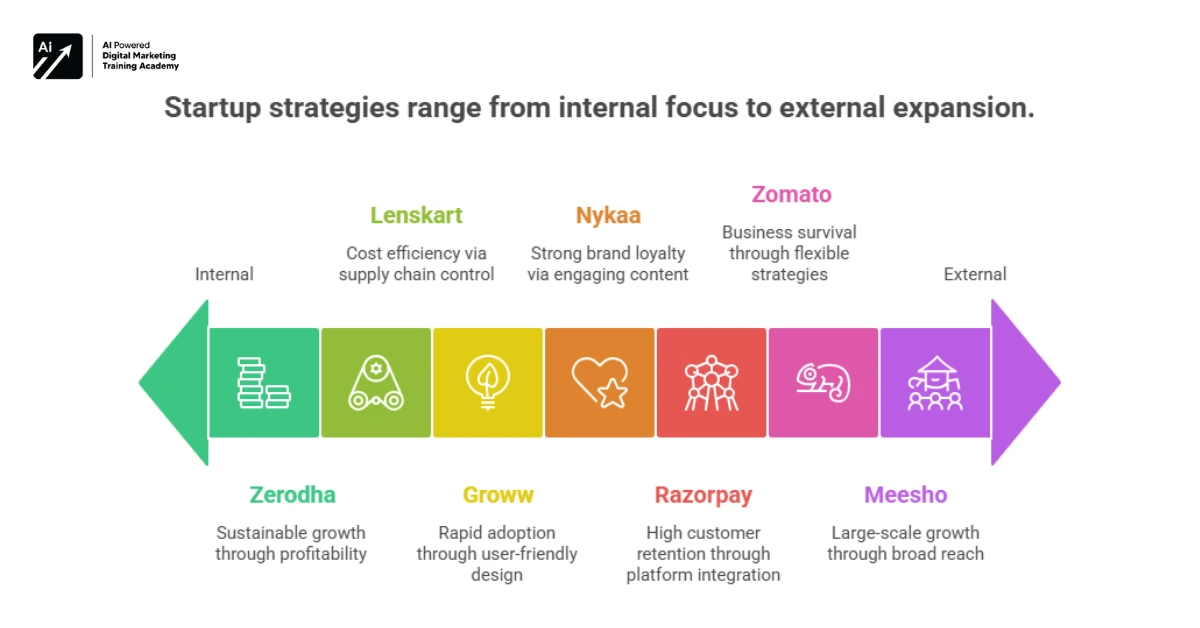
When we analyze these startups together, clear patterns emerge.
Insights:
- There is no single success formula
- distribution often matters more than product
- simplicity enables scale
- adaptability ensures survival
How Successful Indian Startups Grow
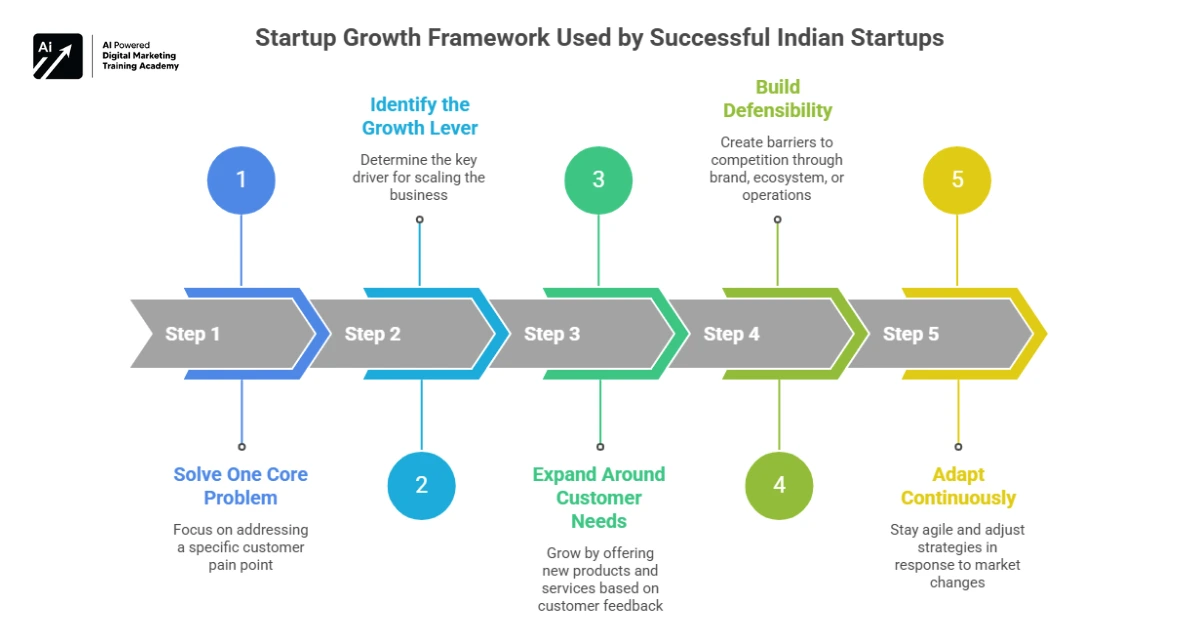
You can apply this structured approach:
Step 1: Solve One Core Problem
Avoid overbuilding early.
Step 2: Identify Your Growth Lever
Examples:
- pricing (Zerodha)
- content (Nykaa)
- simplicity (Groww)
Step 3: Expand Around the Customer
Like Razorpay, solve adjacent problems.
Step 4: Build Defensibility
- brand trust
- ecosystem
- operational control
Step 5: Adapt Continuously
Markets evolve. Your business must evolve with them.
Real-World Scenario:
- SaaS startup → focus on one tool → expand features → build ecosystem
- D2C brand → use content → build trust → open offline stores
Internal Learning:
Explore deeper strategies in your startup growth strategies and how to scale a startup guides.
Common Mistakes Founders should Avoid
Many failures follow predictable patterns.
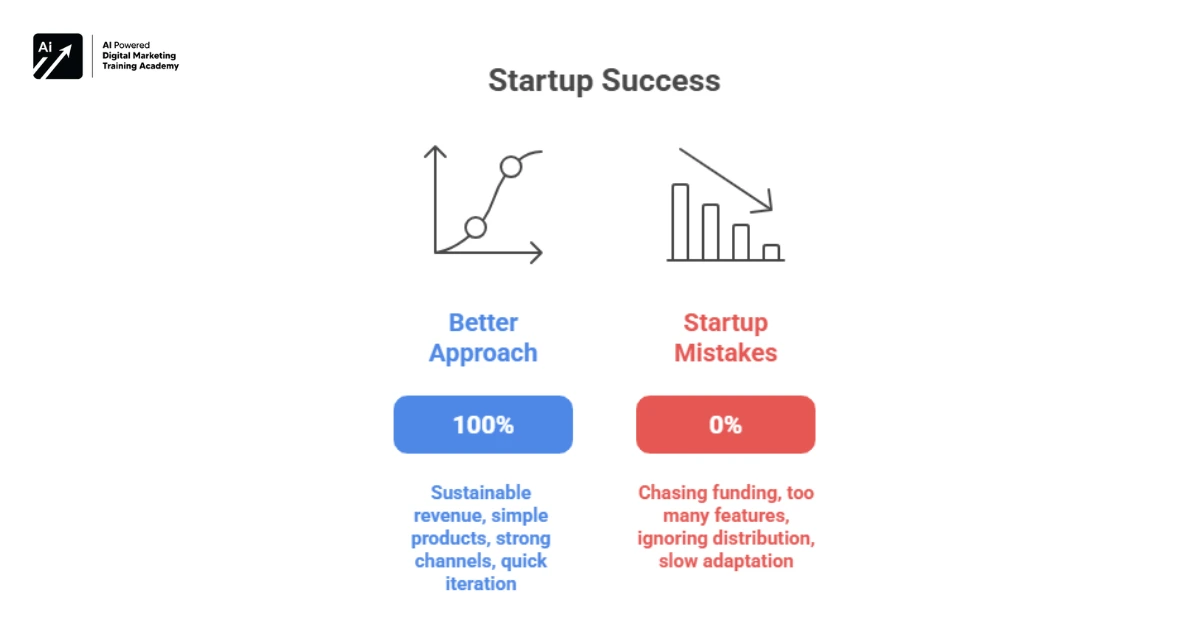
1. Chasing Funding Over Revenue
Leads to unsustainable growth.
2. Overcomplicating Products
Too many features confuse users.
3. Ignoring Distribution
Without reach, even strong products fail.
4. Not Adapting Quickly
Markets change faster than business plans.
Solution Approach:
-
validate early
-
simplify aggressively
-
focus on user needs
FAQs
What are the most successful Indian startups?
These are some of the most successful Indian startups include Zerodha, Razorpay, Zomato, Nykaa, Lenskart, Groww and Meesho. They succeeded through strong strategy, execution and market understanding.
What can early stage founders learn from Indian startups?
They have to learn, how to build sustainable business models, focus on customer needs and then scale effectively. Key lessons include profitability focus, simplicity, adaptability and strong distribution strategies.
Why do startups fail in India?
Due to lack of product-market fit, poor revenue models, weak distribution and inability to adapt. Overdependence on funding without sustainable growth is another major reason.
How do Indian startups scale quickly?
They scale by targeting large underserved markets, simplifying user experience, and leveraging digital platforms. Ecosystem expansion and strong distribution also accelerate growth.
Which startup strategy works best in India?
There is no universal strategy. Success depends on the market and execution. However, simplicity, cost efficiency, and customer-focused approaches consistently perform well.
Conclusion
These Indian startup success stories show that success is not about copying ideas. It is about understanding strategy and applying it correctly.
Each company succeeded because it:
- focused on a clear advantage
- executed consistently
- adapted to change
If you are building a startup, start with one problem, build deeply and evolve as the market changes.
That is how sustainable businesses are built.