
Startups in India now rank among the globe’s biggest hubs. Fintech, SaaS, biotech, and even deep-tech local leaders launch world-ready firms. Still, starting one? That rarely goes smoothly. Starting, many founders face hurdles with money, guidance, bringing people on board, and reaching customers.
That is exactly why top accelerator programs for startups in India have become powerful growth engines.
Not only do these initiatives offer funding. Mentorship, advisory support, connections to investors, and clear paths for expansion come bundled within them. Because of such resources, early-stage companies gain momentum quickly while lowering setbacks along the way.
This overview reveals top startup accelerators across India, how they operate, explained alongside tips on picking the ideal match for your business.
What Are Startup Accelerator Programs
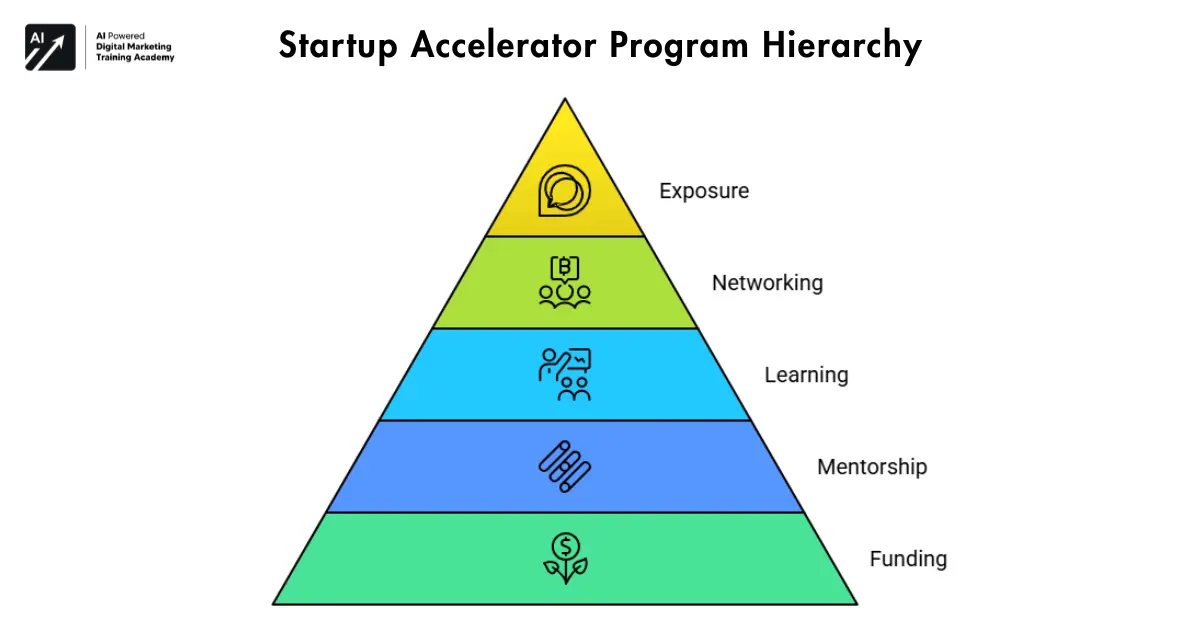 Startup accelerator programs are short-term, cohort-based programs designed to help startups grow rapidly within 3-6 months. Unlike traditional investors who only provide capital, accelerators actively work with founders.
They provide:
- Seed or pre-seed funding
- Mentorship from industry experts
- Structured learning sessions
- Investor introductions
- Demo Day exposure
Because of this hands-on approach, startup accelerator programs in India significantly increase a company’s survival and fundraising chances.




Accelerator vs Incubator Key Difference
Most founders mix them up, yet accelerators and incubators have distinct roles.
- Incubators help idea-stage startups over a longer duration.
- Accelerators focus on growth-stage startups with MVP or early traction.
So, if there’s a product ready but growth feels out of reach, working alongside an accelerator could make sense.
Why Join Top Accelerator Programs for Startups in India
Jumping into a leading accelerator for early-stage companies in India might just shift how fast you move. Growth spikes often follow such steps.
1. Access to Seed & Pre-Seed Funding
Starting out, many accelerators put in seed funds ranging from twenty thousand to half a million dollars. In return, they take between six and ten percent ownership shares. That initial support gives young companies room to create offerings, bring on staff, and also push up their outreach reach.
2. Mentorship from Experienced Founders
When someone shows you how they actually made it in business, you avoid so many wrong turns. Guidance shapes better ways to reach customers, set rates that stick, adjust growth paths slowly, wisely.
3. Investor Access & Demo Days
On Demo Day, founders face investors who back early-stage companies. Because of this exposure, several startups secure bigger investments once they finish the program.
4. Faster Product-Market Fit
What keeps things moving are regular check-ins and clear goals. Progress doesn’t drift by chance, it gets shaped through weekly updates and measurable results.
List of Top Accelerator Programs for Startups in India
Right now, take a look at the key initiatives helping Indian founders grow their businesses.
1. PedalStart
PedalStart targets fresh startup ventures, often open to different fields. A typical deal involves $20K to $100K in exchange for 6-9% ownership stake. What stands out is how deeply they involve guidance from experienced mentors. Working alongside founders, it checks on concepts, adjusts plans, then gets businesses ready when bigger investments come into play.
2. Y Combinator
One of the biggest names in startup support, Y Combinator stands out worldwide. Backing comes in half a million dollars, often via SAFE agreements or direct equity paths. From India, multiple companies have passed through its doors, then gone on to lock in huge funding wins across several figures in millions. People who’ve gone through it often stay connected, making connections easier to find.
3. Techstars
A slice of your company, usually 6 to 9 percent, goes to Techstars when they put in $20,000 to $100,000. You get guided sessions, training events, along with connections to investors across continents. Startups in India often gain more visibility thanks to that global reach.
4. Surge
Led by Peak XV, Surge backs young companies in India and parts of Southeast Asia. Funding comes together with guidance and continued support from venture capitalists over time.
5. Antler
Antler backs founders before launch, sometimes shaping teams alongside them. Working begins when ideas first take shape, with support built into the beginning stages.
6. 500 Global
Funding arrives early through 500 Global, along with doors cracked open to millions of global connections. Startups aiming abroad find this spot just right.
7. T-Hub
Home to one of India’s biggest startup communities, T-Hub hosts growth initiatives alongside networking opportunities with funders and big companies.
8. BIRAC
BIRAC offers aid via grants plus quick financial support for bio-tech ventures. When it comes to medicine or living systems, chances are these fits your needs quite well.
9. Startup India Seed Fund Scheme
Backed by the Startup India Seed Fund Scheme, the nation’s venture support program, early-stage companies receive funding through both loans and cash incentives.
10. Mass Challenge
Getting into Mass Challenge means no equity taken from founders. They keep control yet still get guidance and support.
11. Indian Angel Network
Backed by angel funding, plus ties to seasoned investors who guide early-stage growth.
12. Marwari Catalysts
Zeroing in on entrepreneurs in smaller Tier-2 and Tier-3 cities, this initiative opens doors connecting them to resources and investors once out of reach.
Eligibility Criteria for Startup Accelerator Programs in India
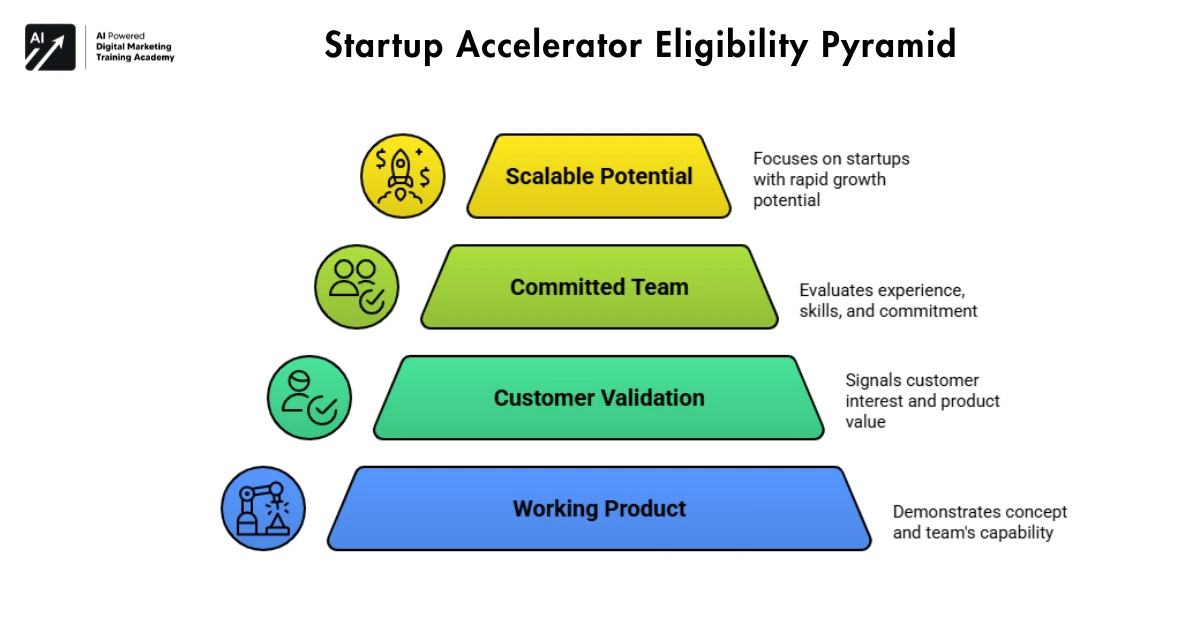 Before you apply to an accelerator consider the following. Accelerators look for different signals when it comes to startups, they would like to invest in. The key is that accelerators receive so many applications (anywhere from 1,000s to 10,000s) and often look to invest in startups that have a high potential for growth and high potential for exit.
Each program has its unique set of requirements that have to be satisfied. However, there are certain basic requirements that are the same for all programs.
1. A Working Product or MVP
Many accelerators prefer to work with startups that already have a Minimum Viable Product (MVP). This does not mean the product has to be complete or even close to market ready, but simply that it demonstrates the concept and idea.
Working on the prototype that he is proposing is always a good way to help him to better understand what he has in mind. A working product is also an indicator of whether or not the founding team can carry out what they propose.
2. Early Customer Validation
Accelerators look for many different types of signals that suggest that customers are really interested in a product. Some common ones include:
- First paying customers
- Beta users testing the product
- Early revenue
- Partnerships with businesses
Even a little bit of traction is significant and shows that a startup is providing a valuable service.
3. A Committed Founding Team
Team is one of the most important variables that impact the success of a startup. Accelerators are very focused on founders.
They usually evaluate:
- Experience and background
- Technical or industry skills
- Ability to work together as a team
- Long-term commitment to the startup
A strong and balanced team often increases the chances of getting selected.
4. Scalable Business Potential
Accelerators are generally suited for startups that can scale up quickly. This generally refers to companies with strong technologies, online business models, or are highly scalable.
Accelerator programs typically focus on the following industries: SaaS, fintech, AI, health tech, and deep tech.
Government vs Private Accelerator Programs in India
Usually, public initiatives rely on grants or low-cost funding. Innovation often gets support alongside efforts to grow employment.
Still, some private accelerators pull in bigger investors while opening doors abroad. Pick carefully what fits short term might shape what happens down the road.
Funding Structure in Top Accelerator Programs for Startups in India
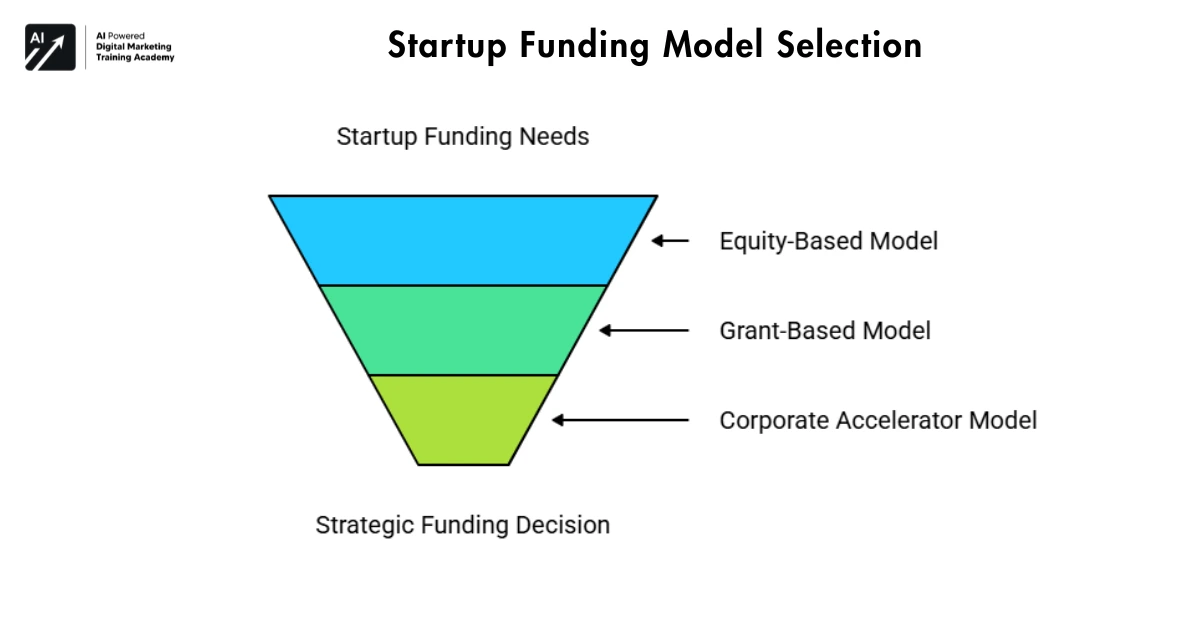 Funding models need attention because surprises can still happen when they’re ignored.
Equity-Based Model
Programs at Y Combinator or Techstars put in money they take between 6% and 10% of the company’s ownership. Sure, the sharing room grows smaller. Still, smart gains sometimes matter more than tight control.
Grant-Based Model
Money from government programs doesn’t require giving up ownership. Founder control stays intact because of it.
Corporate Accelerator Model
Value often hides in beta tests and big contracts, not just money handed out.
How to Choose the Right Accelerator
Before applying, evaluate:
- Your startup stage
- Industry alignment
- Equity terms
- Alumni success stories
- Long-term value
Pick a partner who fits your future, not just needs cash. Growth matters more than funding when picking a collaborator.
Common Mistakes Founders Make
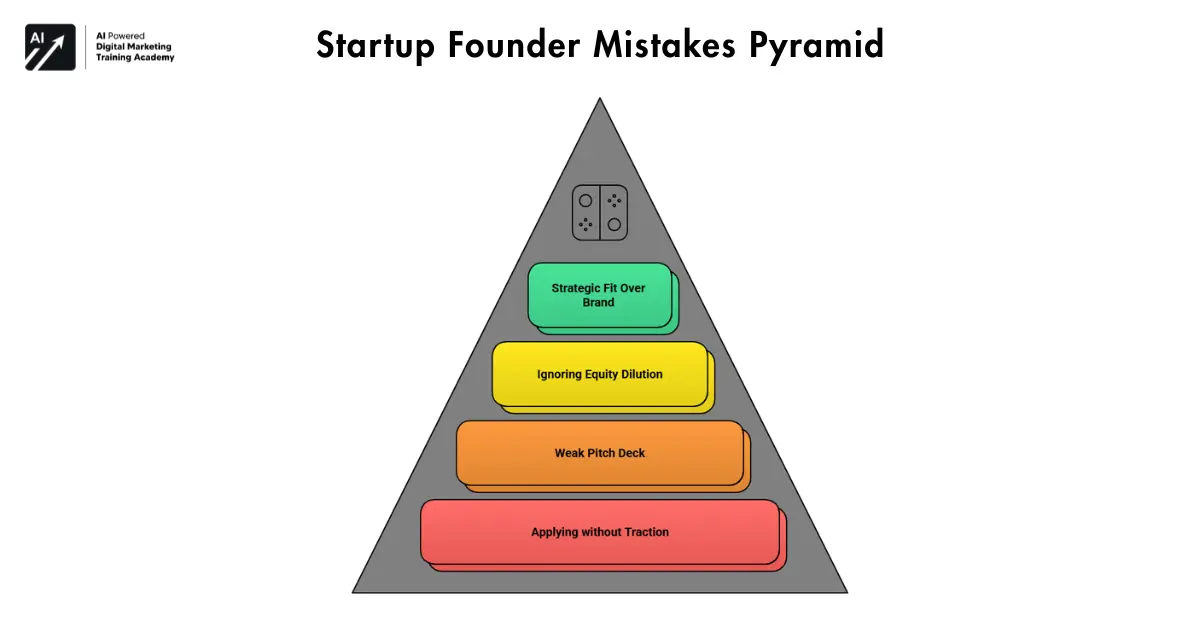
- Applying without traction
- Weak pitch deck
- Ignoring equity dilution
- Choosing brand name over strategic fit
Missing out on these errors makes approval more likely.
Final Thought
Startups in India are growing fast. Plenty of ways to fund them now, along with clear paths to follow, giving leaders solid chances they did not have long ago.
However, selecting from the top accelerator programs for startups in India requires research and clarity. Evaluate funding models, mentorship quality, and industry focus carefully.
Pick one that fits well, it might turn your startup path from a gradual rise into a sudden leap forward.