

In today’s hyper-digital economy, it’s not the most difficult thing to build a product. The real challenge is to build your product in a way that it is loved, used and recommended by great people.
Somewhere in the middle is a magical place called Product-Market Fit (PMF) it’s where every startup founder and tech entrepreneur dreams to be
But what is it that makes modern digital products different this time? One of the strongest, but silent enablers is the API Application Programming Interface.
In this blog post, I will provide an overview of what APIs and product-market fit means, API basics and how smart use of APIs can help you reach product-market fit faster.
What is Product-Market Fit?
The Definition of PMF
Product-Market-Fit is when your product fits a market so well that your users become stick with them eagerly and happily.
Your product becomes something that a customer can’t live without




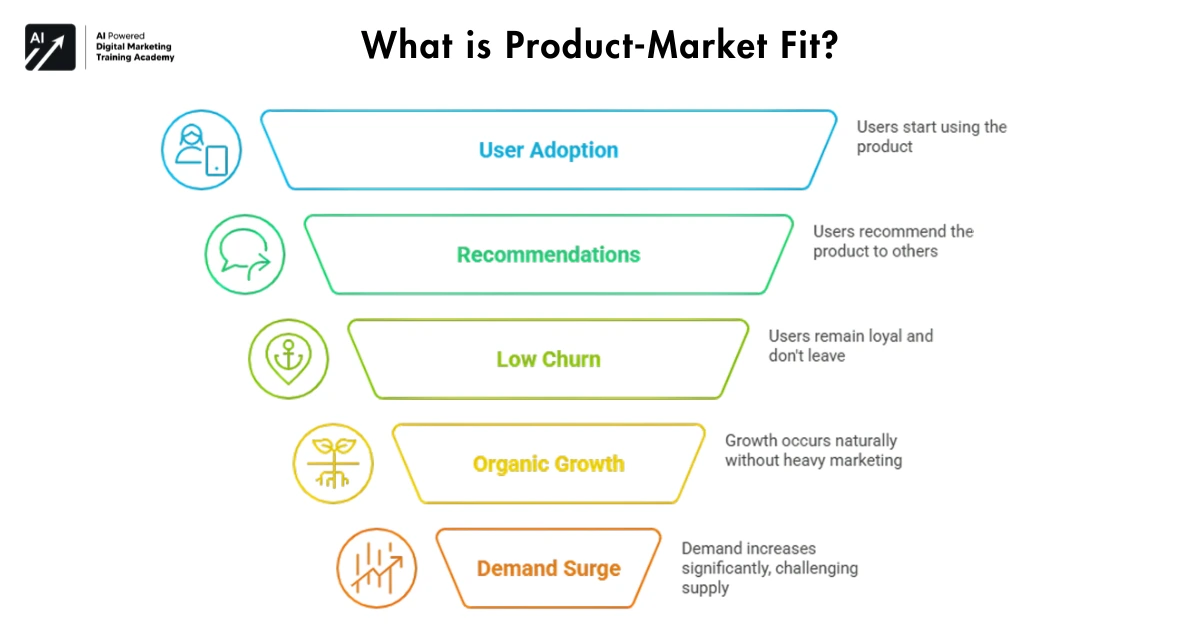
You must know you have product-market fit when
- You have people actually using your product
- They are recommending it to friends and colleagues
- Churn rates are low
- Growth becomes organic
- You’re struggling to keep up with demand
This is really important because it proves that people finally sees the product in a market it belongs
What Are APIs?
API Meaning Explained Simply
APIs (Applications Programming Interfaces) are the set of rules and programming tools that you can use to determine how different software applications can communicate with each other
APIs allow developers to tap into the features or data of another app, without having to understand how that app was built on the inside
You might compare an API to a restaurant menu you tell the kitchen what you’d like, and they prepare it for you behind the scenes
You don’t have to learn the recipe or the cooking, only what to ask for.
Similarly, APIs enable software to request particular data or services and get the data on the spot
Why APIs Are Important for Product Development
Accelerating Time to Market
You can’t build everything from first principles, it’s a waste of resources and time. When you use APIs, you’re able to build and launch your product faster while incorporating third-party solutions
This is particularly significant during MVP (minimum viable product) development, the point of which is testing your product idea promptly on the market
For example, you don’t need to create your own payment gateway, just use APIs of Razorpay or Stripe.
Need user login functionality? Link with Google or Facebook login APIs
This effectiveness is what enables you to validate your product quickly and reach PMF commissioner
Enabling Real-Time User Experiences
Current users anticipate immediacy, ease of use, and intelligence in their experiences.
APIs help these come to life by powering real-time interactions
- Flight data APIs current ticket prices, instantly brought in by the call
- UPI APIs carry out payment transactions in a few seconds
- Weather APIs to get latest weather in your apps
- Map APIs enable tracking delivery or locating nearby places
All of these are driven by APIs running quietly behind the scenes
Supporting Personalization and AI
APIs also open the door to machine learning, natural language processing, and user behavior detection.
For example
- AI Chatbots can be powered by ChatGPT or OpenAI APIs
- Recommendation APIs recommend items using user activity
- Analytics APIs Monitor user engagement and drop off
All these hooks give you a chance to refine your product based on actual usage another step in the direction of product-market fit
API-First Product-Market Fit in the Wild
Let’s look at a couple practical examples where APIs are the backbone of delivering value
Travel Booking Platforms
Applications such as MakeMyTrip, Goibibo and Skyscanner display flight listings across several airlines. These apps do not maintain flight data themselves they rely on airline APIs
When a user is searching for flights, the app calls APIs from IndiGo, Vistara, or SpiceJet to retrieve
- Real-time availability
- Flight timing
- Prices and seat info
With this API integration, you have a seamless desktop consolidation experience that users adore.
The app actually serves a purpose right now, providing a solution where each person has to check multiple sites. That’s PMF in action
UPI-Based Payment Apps
Apps like Google Pay, PhonePe and Paytm rely on APIs to connect with banks and the Unified Payments Interface (UPI).
Here’s how it works
- When you type in the amount and hit ‘Send’, the app uses bank APIs to set the transaction in motion
- Its UPI system accepts it and sends back confirmation all within seconds
- You receive API-driven push notifications in real time
Such frictionless payments wouldn’t exist without an API.
It wasn’t that these apps were dealing with money that made them successful but that they made the experience frictionless, thanks to APIs
Food Delivery Platforms
Apps such as Zomato and Swiggy function through a convoluted web of APIs:
- Restaurant APIs for getting live menu information
- Location API’s To trace the deliver agent
- Payment APIs to collect money
- Notification APIs to inform customer about the progress
All these components work in tandem to solve one customer problem: “I want good food, delivered quickly.”
If a product nails these well users will not bother with anything else
this is nothing more than product-market fit delivered through great APIs
Market-Ready Magic = APIs + Product
To appreciate the power of APIs, consider how much drudgery they save. Imagine building
- A secure login system
- Your own payment gateway
- A chatbot from scratch
- A maps-based delivery tracker
All of this could take years. APIs allow you can add powerful features seamlessly to your MVP, turning it into something that looks and feels polished, almost overnight
Not only is this convenient it’s strategic. You get to test your idea quicker, iterate based on feedback,
and ship features that your users actually care about
Use APIs If You Don’t Want to Build It from Scratch
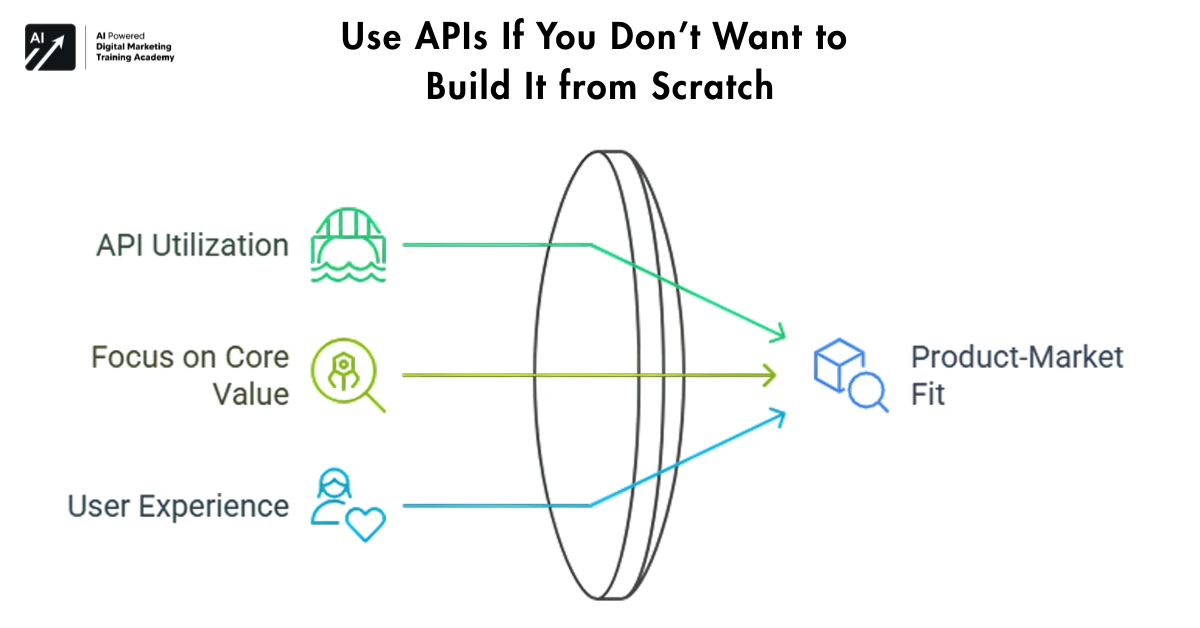
One of the unsung benefits of using APIs in general is that it leave you available to work on your product product one which is where you one provide unique value.
- Instead of losing precious minutes composing login forms, you concentrate on developing a smart search engine for tourists
- You’re maintaining your code because you have a great user experience, not because the payment module was a pain to code
It’s this type of laser focus that helps teams to identify and double down on what truly drives product-market fit.
Conclusion
the discipline of PMF is supplying something that people want, and delivering it well.
It’s almost impossible in today’s digital ecosystem to achieve without using APIs. They enable startups and developers to innovate smarter, faster, and more efficiently
When executed well, APIs make your product
- Launch faster
- Solve user problems effectively
- Integrate with existing systems
- Deliver real-time, reliable performance
- Scale without friction
So whether you’re creating a fintech platform, an edtech solution or a food delivery app welcome APIs They’re not just technical tools
they form the tactical bricks and mortars for a product-market fit